It seems that almost everyone is obsessed with their body image and that’s understandable considering the wide range of odd, shaped bodies we see every day. Even though there are so many variations, the functions and organs of the body are all too similar. Here are a few trivia facts about our bodies. They can be a thing of beauty or not and they can be a bit disgusting or not. Beauty is definitely in the eye of the beholder.
Did you know that approximately 1 in every 18 men have a third nipple. People who have the condition will sometimes suffer from atelophobia, the fear of being imperfect. Celebrities Tilda Swinton, Carrie Underwood, Lily Allen, and Mark Wahlberg have third nipples. Mark Wahlberg’s third nipple was airbrushed out of his famous Calvin Klein underwear ad.
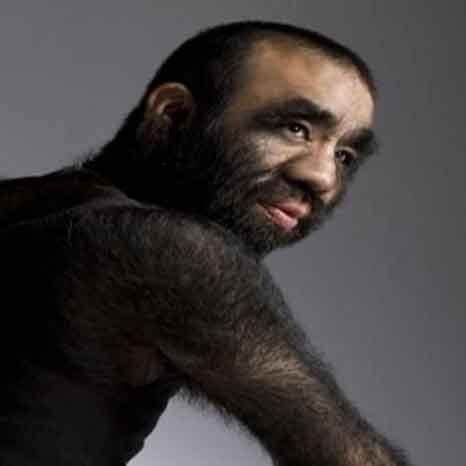
If you have a fear of facial hair, you could be suffering from pogonophobia. In ancient times beards were a sign of strength and wisdom and were only cut or sheared off as punishment or if someone was in mourning.
Were you aware that your left lung is slightly smaller than your right. It’s to allow room for your heart.
Did you know that women need more sleep at night than men. Women need an extra hour of sleep but sometimes don’t get it. Not getting that extra hour is believed to be one reason why women are more susceptible to depression than men.
My cat’s hairballs creep me out. I discovered recently that human beings can also have hairballs and they’re even more disgusting than the cats. The largest human hairball ever removed from the body measured 15 inches in diameter and weighed 10 pounds. The patient also happened to suffer from a condition called trichophagia (the eating of one’s own hair).
The heart is life. Over the course of a lifetime the human heart beats 3 billion times. Your heartbeat mimics the music you listen to and can trigger physiological changes that increase or decrease your blood pressure. The heart is a massive blood pump circulating blood through an average body every 23 seconds or approximately 4000 gallons of blood each day.
There aren’t many things that make my skin crawl but some insects can really creep me out. Many people fear snakes and thank god I’m not one of them. This planet is covered with every sort of creature and there are still many we haven’t discovered. That thought creeps me out as well. I hate waking up in the morning and occasionally finding bug bites on my body . . . ooooh! They say spiders love to visit us stupid humans while we sleep. I thought I’d pass along a few more facts to help you sleep, so here are some creepy facts about some really creepy things.
The female salamander inseminates herself. At mating time the male deposits a conical mass of sperm covered in a jellylike substance. The female then draws the jelly into herself, and in doing so fertilizes her own eggs.
Bombyx mori, a silkworm moth, has been cultivated for so long that it can no longer exist without human care. Because it has been domesticated, it has lost the ability to fly.
Some insects, after their head is severed, may live for is much as a year. They react automatically to light, temperature, humidity, chemicals, and other stimuli.
There are locusts that have an adult lifespan of only a few weeks or so, after having lived in the ground as grubs for 15 years.
There is an average of 50,000 spiders per acre in green areas. Essential to the balance of nature, spiders annually destroy 100 times their number in insects.
Snails produce a colorless, sticky discharge that forms a protective carpet under them as they travel along. The discharge is so effective that snails can crawl along the edge of a razor without cutting themselves.
Cockroaches have quite a capacity for survival. If the head of one is removed carefully, so as to prevent them from bleeding to death, the cockroach can survive for several weeks. When it dies, it is from starvation.
There are more different kinds of insects in existence today than the total of all kinds of all other animals put together.
The male praying mantis Literally loses his head after courting the female. The latter is known to decapitate the earnest suitor, and she often completely devours him.
Trinervitermes, a species of termites that is native to the African savanna, builds mountains that are only about 12 inches high. However, the termites bore shaft deep into the ground for access to water. Holes have been found below these termite mounds that go more than 130 feet into the earth.



 everyuselessthing.com