Most Americans are raised get an education, get a job, make money, and then make more money. There’s nothing like starting your work life in your early twenties with a huge student loan debt that will take you years to pay off. Money seems to be the driving force in this country and the pursuit of it is all consuming. In reality, it’s the same almost everywhere else as well. I think a lot of that make-money mindset was passed down through the Great Depression generation like my parents who were concerned with little else. It’s not a bad thing to chase money but how you go about is even more important. Make as much money as you can but try just as hard not to harm or destroy others in the process.
Today’s post involves a short history of money.
At the age of 12, Andrew Carnegie worked as a millhand for $1.20 a week. A half-century later, he sold his steel company for nearly $500 million.
Not a single bank existed anywhere in the 13 colonies before the American Revolution. Anyone needing money had to borrow from an individual.
Although he is famous for inventing the cotton gin, in 1793, Eli Whitney made no money from his invention because he did not have a valid patent on it.
Henry Ford shocked his fellow capitalists by more than doubling the daily wage of most of his workers in 1914, 11 years after he had established his first automobile factory. He knew what he was doing. The buying power of his workers was increased, and their raised consumption stimulated buying elsewhere. Ford called it the “wage motive.”
Paul Revere, the American silversmith and patriot, designed paper money for the Commonwealth of Massachusetts, which issued the money in defiance of English law even before independence was declared. The notes were handsome but soon depreciated. Some of them subsequently were used as wallpaper in barbershops.
When Jacob A. Riis published his classic book How the Other Half Lives, in 1890, the fortunes of about 1% of the US population totaled more than the possessions of the remaining 99%. The pattern hasn’t changed all that much. Today, the fortunes of about 8% of the US population total more than the possessions of the remaining 92%.
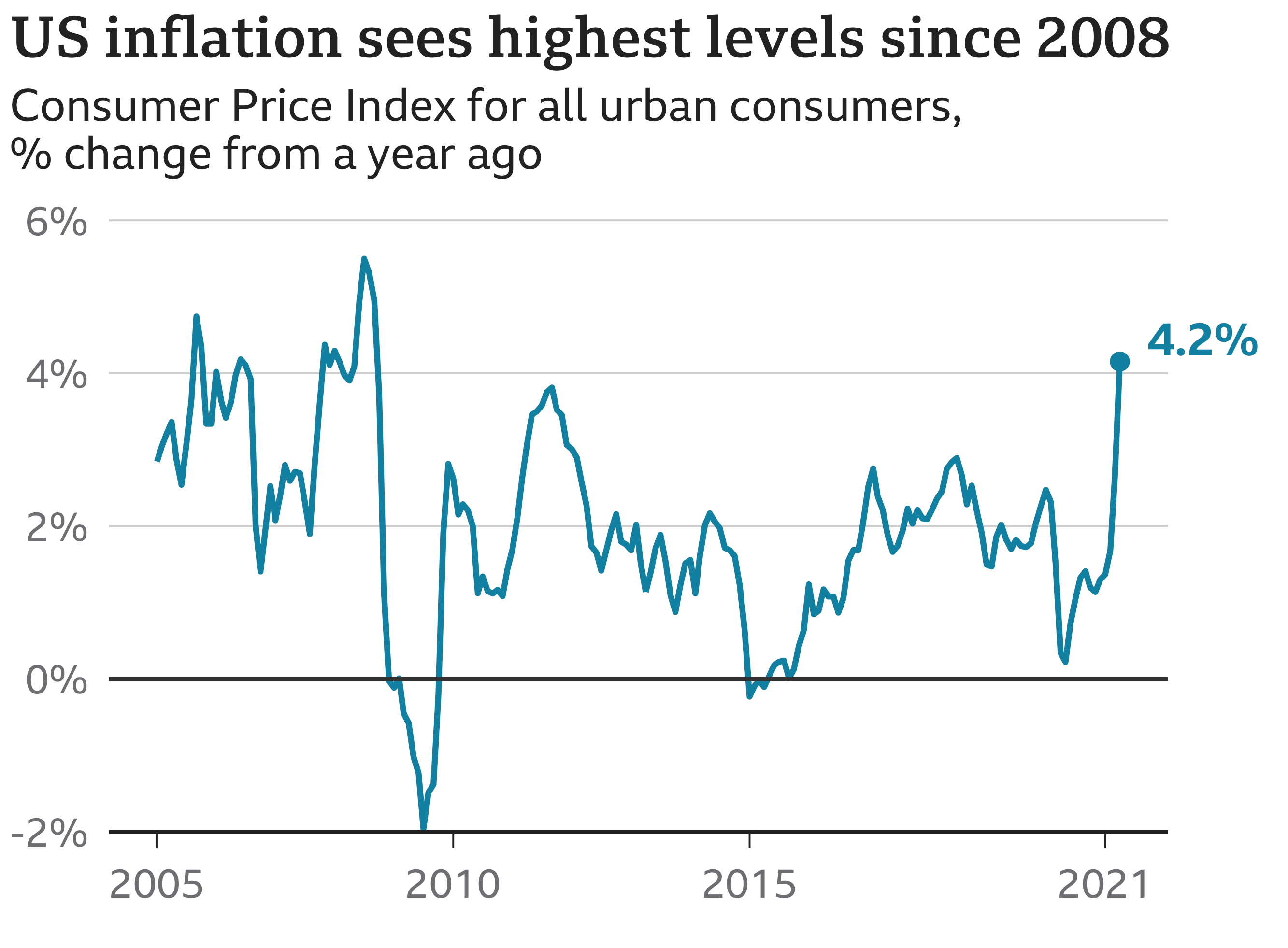
We hear all of the economy experts constantly raising fears about rising inflation. Here is why!At the height of inflation in Germany in the early 1920s, one American dollar was the equal of 4.2 trillion German marks.
Let’s talk about shopping. I’m not a shopaholic by any means but my better-half is. She keeps me posted on many things and it never ceases to amaze me how the prices have soared since the pandemic. I’m not here to say that’s a good thing or a bad thing but it is a thing we have to deal with. I myself do a lot of food shopping and I track food prices fairly closely to save a buck here or to save a buck there. It usually takes a lot to surprise me but the prices in the last year have been rising at a ridiculous rate. I don’t know whether it’s just the ability of every business in the country to gouge the crap out of the population or maybe there is some other logical reason for it. Honestly, I think it’s a little bit of both. Just to satisfy my bizarre curiosity I decided to do some price matches from the 1950’s against our present prices. This list is primarily products that everybody uses and needs, and I retrieved the 1950’s numbers from my archives which are unquestionably accurate and for the present-day numbers you can thank Google. Prepare yourself to be truly depressed.
1950’s v. 2022
Bread (1 lb.) $ .14 / $1.75
Bacon (1 lb.) $ .77 / $7.61
Butter (1 lb.) $ .87 / $5.00
Eggs (Doz.) $ .72 / $3.42
Milk (Gal.) $ .44 / $4.41
Potatoes (10 lb.) $ .57 / $6.00
Coffee (1 lb.) $ .51 / $2.99
Sugar (5 lbs.) $ .47 / $ .59
Gas (Gal. Reg.) $ .26 / $4.02
Postage $ .03 / $ .50
I’m all for getting the people who supply these goods to us a fair wage and a fair price but to see this much of a change in some of these categories leads me to believe some of these prices are not fair. It seems that everyone these days is an expert on just about everything so I’m sure I’ll get some trolls complaining about this post. These are my opinions and if you disagree with me, I’d recommend that you start a blog, do some research, post your own information, and then answer all of the lame-ass email criticisms you’ll likely to receive from people just like you. Merry Christmas!
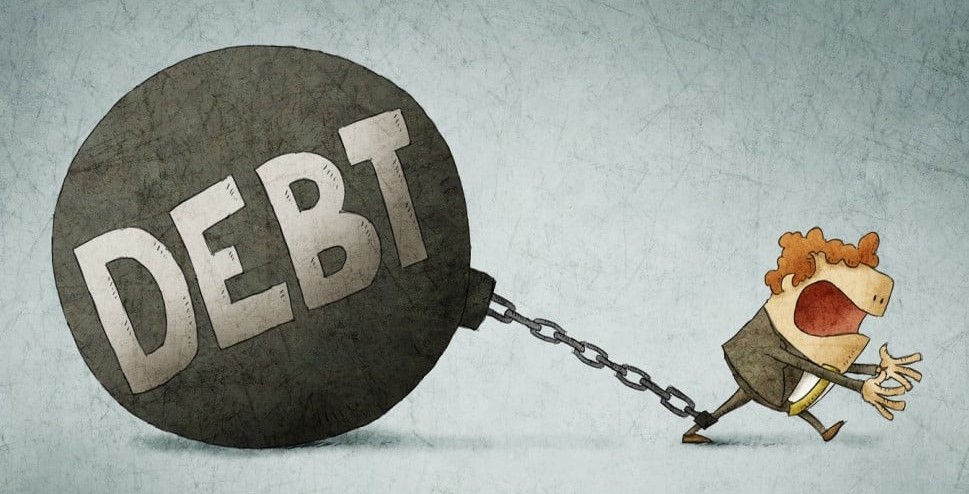
With tax time approaching I decided to harken back to maybe not a better time, but a time when our citizenry lived within their means. There was a national debt, but it was a mere drop in the bucket compared with our current situation. It motivated me to take a look back and see how our economics have changed in the intervening years.
In 1900, the United States treasury showed a surplus of nearly $47 million in income over expenditures. The last time the federal budget was balanced was in 1969.
President Carter’s “lean and tight” budget of $500 billion for the fiscal year 1979 equals the spending of $690,000 a day since the birth of Christ. To dispose of this amount of money in a year, the government has to spend $951,000 a minute, $57 million an hour, or $1.37 billion a day, including holidays and Sundays.
Andrew Carnegie, one of the richest Americans ever, practically became allergic to money as he grew richer and older. He was offended, he said, just by the sight and touch of it, and never carried any. Because he had no money with him with which to pay the fare, Carnegie was once put off of a London Tram.
According to the 1970 US Census, only 5000 Americans had a net worth of $10 million or more.
The longest jury trial ever in the United States federal courts began on June 20, 1977 and ended on July 10, 1978. It took the judge almost an hour to read the verdicts on 49 separate questions. During this antitrust action, by SCM Corporation against Xerox, it is estimated that both sides spent well in excess of $60 million in attorney’s fees.
The federal government keeps billions of dollars – much of it taxes collected by the Internal Revenue Service – in bank accounts that draw no interest. Banks turnaround and invest much of these deposits in U.S. Treasury bills, on which the government frequently pays more than 9% interest. Incredibly, the government is paying the banks to borrow back its own money.
It costs $4000 per inch to build an interstate highway project on the fringe of New York City in the late 1970s – over 215 million per mile. Just imagine what the current costs must be.
Until there was a pay raise in 1814, US Congressmen were paid six dollars per diem when Congress was in session. I think it might be just a little higher these days.
To finance the Civil War, a 3% income tax on all incomes over $800 was enacted by the federal government in 1864. It was the first time in income tax was enacted in the United States. The law was discontinued in 1872. The United States Supreme Court declared the law unconstitutional in 1894. Not until 1913, with the adoption of the 16th amendment, the income tax become law.
In the 1800s, big industry began to set up trusts to monopolize production and distribution. The first big trust was Rockefeller’s Standard Oil Corporation, in 1882. The first international trust was Nobels Dynamite Trust, in 1886.
I thought for this post I would reintroduce Number Freaking. If you like statistics and far out and freaky explanations of numbers, this is it. I posted about it a number of months ago and the response was excellent. It just goes to show how many freaky people are hanging around out there reading this blog. Enjoy!
WEATHER
On average there are 40-60 flashes of lightning somewhere in the world every second. 1.58 billion lightning flashes are estimated to occur each year on this planet.
At any given moment there are an estimated 2000 thunderstorms occurring worldwide.
There are an estimated 5,844,000 thunderstorms that occur each year.
It is estimated that 695,000,000,000,000 (trillion) gallons of water are unleashed by thunderstorms annually. To put that into a better perspective, Lake Michigan contains 1300 trillion gallons, Lake Huron 935 trillion, and Lake Ontario 433 trillion.
TELEVISION
One of the most expensive pilot shows on American TV was Lost, costing $12 million and the plane that provided the wreckage on the beach cost the production company $200,000.
The total running time of the TV series Friends was 99 hours and 10 minutes (238 episodes). The final episode recorded 52.5 million viewers which is somewhere between the populations of South Korea and Italy.
And for those of you who love The Simpsons their total running time amounted to 139 hours and 35 minutes.
ANT INVASION
The total number of ants on earth is estimated to be in the area of 826.8 billion tons.
It is estimated that there are 300 million trillion ants on the earth (that is 300 quintillion – followed by 20 zeros).
The highest estimate of the total number of insects on earth is at six septillions. That’s 6 trillion trillion – followed by 24 zeros).
MISCELLANEOUS
Money depreciates in value over time. Allowing for inflation a dollar from 1867 was worth about $12.50 in 2005, and a dollar from 1624 at least $20.41.
In 1867 Alaska cost the United States, $7.2 million. In modern dollars this would amount to $90 million.
In 1624 the island of Manhattan was purchased from the Indians for $24. In modern dollars that would convert to $489.84.
Isn’t “Number Freaking” just the best. Its definition explains everything simply and it’s easy to understand. “Number Freaking is something we do because we have a brain, it’s jazz math, the accountancy of the absurd, forensic speculation, surreal calculation, the art of playing with numbers just because we can.”






 everyuselessthing.com