Is it just me or is the media using the term “genius” way too often. It seems that if your successful at anything you’re a genius until the novelty wears off and then your back to being a regular schmuck like everyone else. Real geniuses are a rarity, and they bring their own baggage along with them. They are usually a genius in a specific area but in other areas not so much. I went to college with a guy who could pick up a #2 pencil and in mere minutes, completely copy works by Michaelangelo. It was effortless and left many of us absolutely amazed. What most people didn’t know was that he was something of a recluse. He hated groups of people and was barely able to attend classes. Many times, he would complete wonderful projects at his apartment and then contact his fellow students to deliver them to the teacher. He was unable to speak before groups of more than 2 or 3 without panicking. Was he a genius? Yes! Was he happy? I don’t honestly know.
I decided to checkout a few well know geniuses to get a better feel about how they handled their gift. Here are a few facts.
The eccentric English chemist and physicist Henry Cavendish (1731-1810) had no appropriate instruments for that purpose, so he measured the strength of an electrical current in a direct way. He shocked himself with the electrical current and estimated the pain. He still managed to live to be nearly 80 years old.
The first person to work out the manner in which a telescope handled light according to strict scientific principles was the German astronomer Johann Kepler. His eyesight was so bad, however, that it was useless for him to try to use a telescope himself.
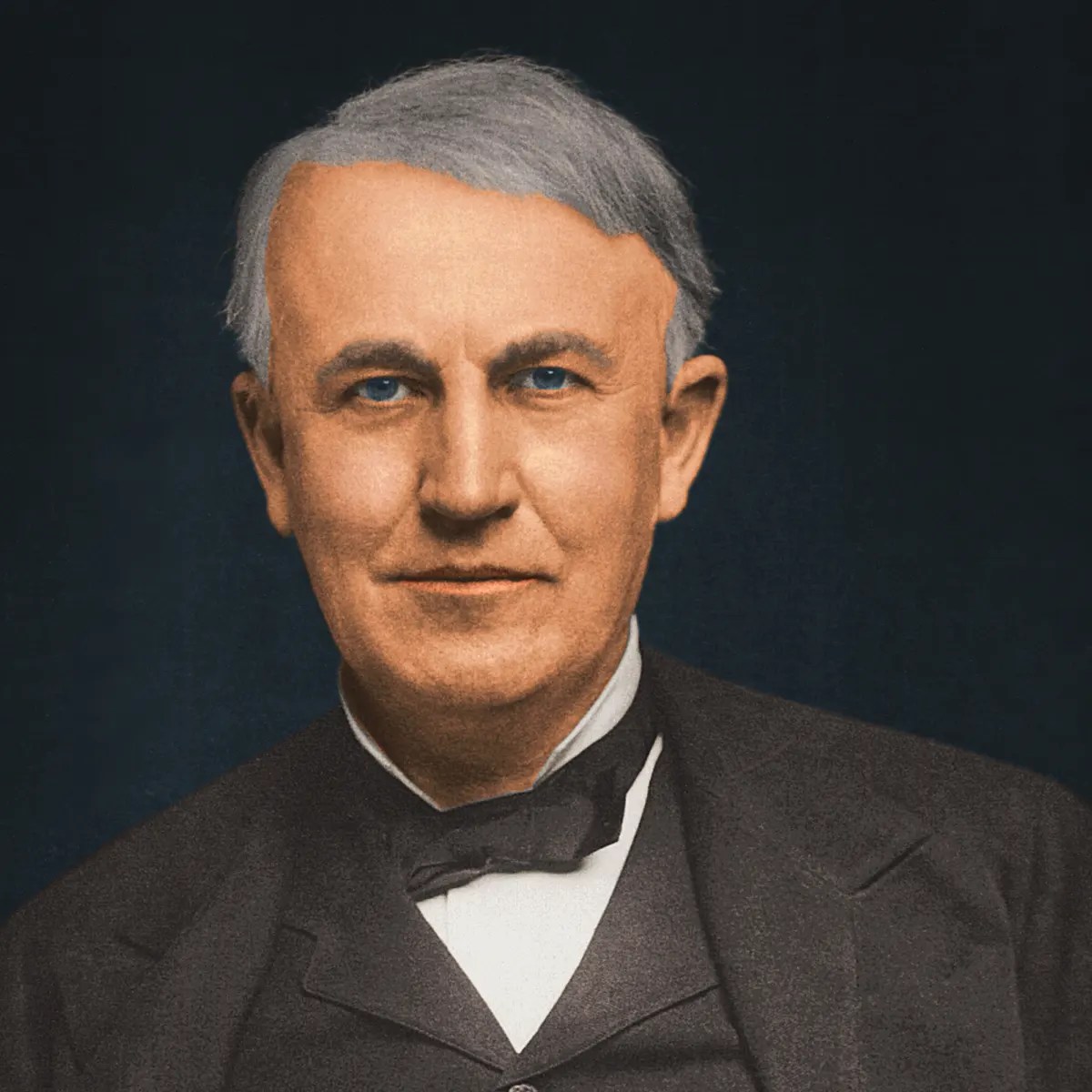
Thomas Edison, who bordered on being totally deaf, do not think of the phonograph in terms of music and entertainment. He was interested in the business and educational potential of the invention.
Henry Ford in 1921 proposed that milk be made synthetically. His disregard for dairy cows as being inefficient and unsanitary stemmed from unpleasant experiences on his father’s farm. Milking had been an exasperating and disagreeable labor.
Charles Dickens believed that a good night’s sleep was possible only if the bed was aligned from north to south. In this manner, he thought, the magnetic currents of the earth would flow straight through the resting body.
Geniuses require powers of concentration. But even that can be carried too far. In 1807, the mathematician Johann Karl Frederich Gaus was caught up in a problem while his wife lay sick upstairs. When the doctor told him his wife was dying, Gaus waved him away and never looking up from his problem, muttered, “Tell her to wait a moment till I’m through.”
Louis Pasteur, whose work on wine, vinegar, and beer led to pasteurization, had an excessive fear of dirt and infection. He refused to shake hands, and he carefully whipped his plate and glass before dining.
Sigmund Freud never learned to read a railway timetable. It was necessary that he be accompanied on any journey.
Actual geniuses are rare. While most people hold them in awe after their deaths, they’re lives are sometimes difficult and a little strange. They are usually so involved with their projects and inventions, that everything else is no longer something that interests them. Many are anti-social and virtual recluses. There always seems to be a balance of sorts. Super intelligence balanced with a lack of social graces or concerns with others. It’s a terrible price to pay. Here are a few trivia tidbits of some of our better-known geniuses.
Thomas Edison established an “invention factory” with the hope of producing one new invention every ten days. In one four year period he obtained 300 patents, or one every five days. In all he patented nearly 1300 inventions.
Alexander Graham Bell was working to improve the telegraph when he invented the telephone.
Charles Dickens believed that to get a really good night’s sleep the bed must be aligned north to south. In this manner, he thought, the magnetic currents would flow straight through the recumbent body.
The botanist, George Washington Carver, who is best known for his pioneering work with peanuts, developed 536 dyes when experimenting with plant leaves, fruits, stems, and roots.
Ben Franklin
Margaret Mead’s first foray into the observation of human behavior occurred before she was a teenager. As a young person of eight or nine years, she recorded the patterns of speech of her younger sisters.
Ben Franklin was cautious in performing his famous kite experiment in which he charged a Leyden jar with electricity drawn from the clouds. The first two men who tried to duplicate his experiment were electrocuted.
Lewis Carroll, by his own account, wrote 98,721 letters in the last thirty-seven years of his life.
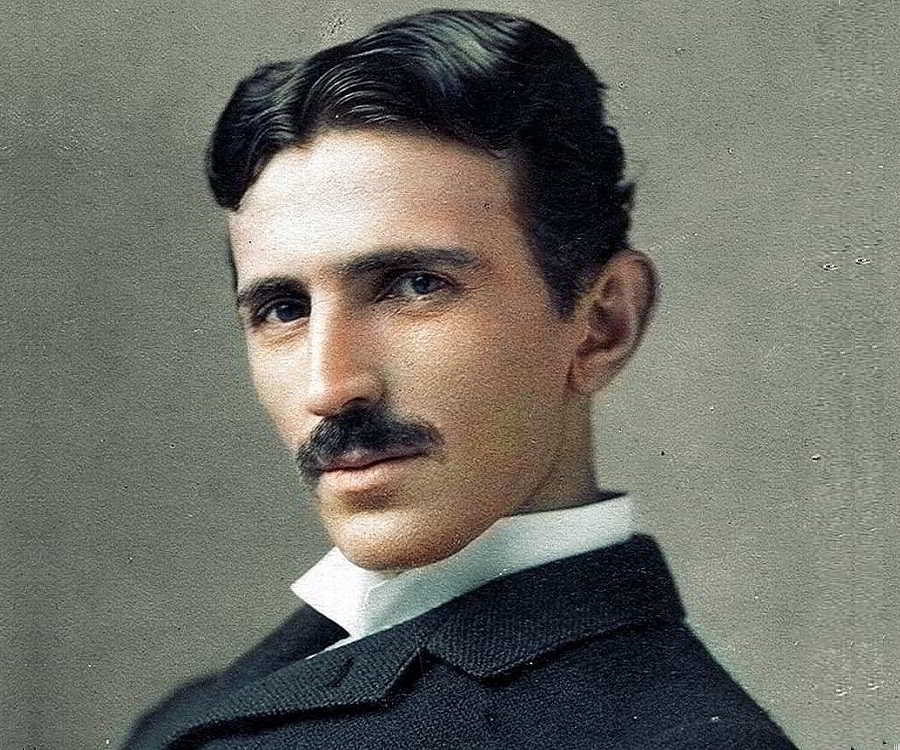
There was an intention in 1912 of giving a Nobel Prize jointly to Nickola Tesla and Thomas Edison. Both were deserving of the honor but Tesla refused because of his intense dislike of Edison. The Nobel Prize was instead given to a Swedish inventor of lesser merit.
I’m a bit of a history nut and because it’s the Christmas season I began wondering, how the Christmas we celebrate came to be. Of course, having a trace of Celtic blood in me leads me directly back to the Druids and some of their odd and unusual celebratory customs. As far as I can tell that’s where the tradition of mistletoe began as it was a part of many of their holiday ceremonies. As I read through a number of books there was absolutely no history of kissing under the mistletoe in the days of the Druids. The tradition of hanging a sprig in the house is supposedly linked to them as well. That came much later with the earliest recorded mention in some sort of music from 1784.
In illustrations of Charles Dickens, A Christmas Carol, there appeared pictures of people kissing under the mistletoe. It’s quite likely that those illustrations popularized the custom. Leave it up to us Americans to take an old Bronze Age custom and turn it into just another reason to be kissing on someone.ofofofI was also curious of where the custom of bringing a tree into the house originated. As best I can determine it started with the Germans who got it from the Romans, who got it from the Egyptians who got it from the Babylonians. Who knows what’s true and what isn’t. It seems that those pesky Babylonians passed down a lot of crazy traditions to anyone who’d listen. Apparently, there was some sort of Babylonian fable concerning an evergreen tree that grew out of a dead tree trunk. Sounds stupid to me but any reason is a good reason when you want to throw a party or orgy.
The first written record of a decorated Christmas tree comes from Latvia, in the 1500’s. Local merchants decorated a tree and danced around it in the marketplace. When they became too tired to dance, they set it on fire. I’m sure glad that custom didn’t make it to the present day. Around that same time the Germans in their infinite wisdom passed a law to limit the size of a Christmas tree to just over four foot high. You gotta love them Germans.
Jump ahead a hundred years when it became common in Germany to decorate Christmas trees with apples. During the 1700’s in parts of Austria and Germany, evergreen tips hung from the ceiling and were decorated with apples, gilded nuts and red paper strips. The first mentions of using lighted candles came from France in the 18th century. Those quirky French must have a fondness for the occasional house fire. As Europeans emigrated to America, they brought their customs with them. The Christmas tree was introduced in the United States and grew from tabletop size to floor-to-ceiling. If you’re going to live in America, everyone knows things must be bigger and better.
In the 1880’s trees began to be sold commercially in the United States and were normally harvested from the forests. The first glass ornaments were introduced again from Germany and were mostly balls. Toys and figurines also became more common during those years. Sears, Roebuck & Company began offering artificial Christmas trees for sale – 33 limbs for $.50 and 55 limbs for $1.00. There was nothing that Sears Roebuck won’t rush to sell to make a few bucks.
The 1900’s brought us the first Christman tree farms because the surrounding forests were being overharvested. W.V. McGalliard planted 25,000 Norway spruce on his farm in New Jersey to get the ball rolling. President Theodore Roosevelt actually considered banning the practice of having Christmas trees out of his concern about the destruction of the forests. His two sons disagreed and enlisted the help of conservationist Gifford Pinchot to convince the President that the tradition was not harmful to the forests. In 1966 the National Christmas Tree Association began its time-honored tradition of having the Grand Champion grower present a Christmas Tree to the First Lady for display in the Blue Room of the White House. Currently there are approximately 25-30 million real Christmas trees sold each year in the United States. Almost all of these come from farms.
Just a tip from a former college student who worked part-time on a Christmas tree farm in Edinboro, Pennsylvania in the 1960’s. It was the worst job I ever had. I smelled like pine trees for months and ruined most of my clothes because of the sap. That job convinced me to say the hell with tradition, just get me one of those beautiful artificial trees. I never looked back.







 everyuselessthing.com