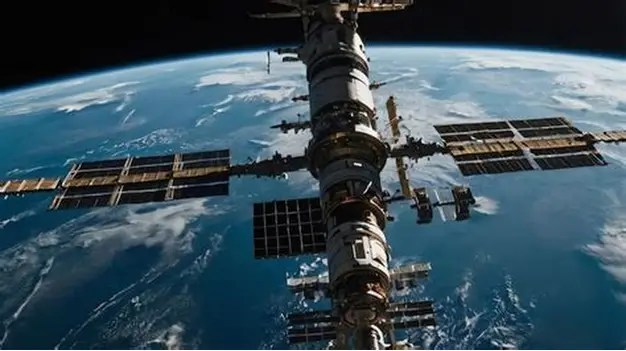
I’ve been fascinated for decades about anything related to space travel. I can thank my mother for that when shortly after Sputnik made its appearance she showed up in my bedroom with paint brushes and paints. She then proceeded to turn my bedroom into a huge space mural filled with planets, stars, meteorites, and spaceships.. She knew I loved anything related to space travel because I was already a sci-fi junkie at the ripe old age of five. Today’s post contains information that I’ve picked up along the way concerning the space race and weird little factoids that you may never have heard before. I hope you enjoy them.
Our galaxy is so wide that, at the speed of light, it would take you 100,000 years to cross it.
A meteorite the size of the school bus would destroy the entire eastern seaboard of the United States.
The volume of the Earth’s moon is the same as the volume of the Pacific Ocean.
A solar flare is basically a gigantic magnetic arch-like horseshoe magnet-that attracts itself inward, back to the surface of the sun.
The famous Halley’s Comet returns to earth every 76 years. It last appeared in 1986 and will reappear here again in 2062.
A solar flare, ejected from the sun’s surface, can reach speeds of 190 miles per second or 306 kilometers per second.
It takes 3 minutes for the sunlight that is reflected from the moon to reach our eyes.
Astronauts are not permitted to eat beans before they go into space because the methane gas released while passing wind can damage spacesuit materials.
A light-year is the distance light travels in one year or 870,000,000,000 miles or 9.4 5 trillion kilometers.
A Martian day lasts 24 hours, 37 min., and 23 seconds. And Earth Day last 23 hours, 56 min., and 4 seconds.
🔭🔭🔭
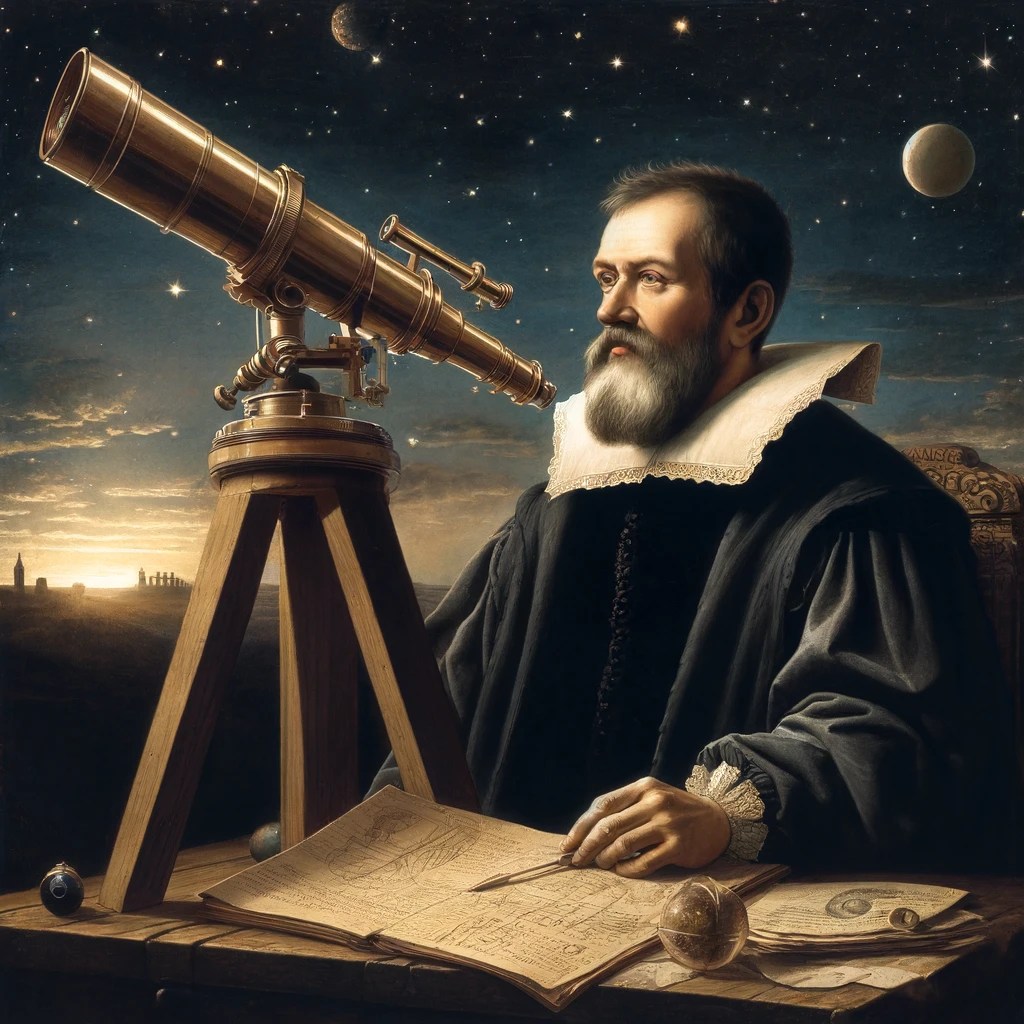
Here’s a salute to one of the greatest minds of all time.
Galileo Galilei
Here’s fair warning to some of you out there with outrageous or ridiculous theories. Galileo got into trouble with the Inquisition for his many theories, and spent some serious time in prison. The fact that he was correct made no difference.
Misconceptions are a common occurrence. We all have them, and most times don’t even realize it. We repeat things we’re told as a child based on the misconceptions of our parents who based it on the misconceptions from their parents and on and on it goes. How many times have your young children arrived home from school with some fantastic fact told to them by others. It’s amazing how young children just know so much about everything (rightly or wrongly) and feel the need to spread their knowledge. Let’s take a look at a few.
The Pilgrims did not build log cabins, nor did they wear black hats with a conical crown or belts with huge silver buckles.
Albert Einstein, who was awarded the Nobel Prize for physics in 1921, was honored not for his famous theory of relativity published 16 years earlier, but for his lesser-known work on the photoelectric effect.
Until the time of Galileo, an argument used with potent effect was that if the earth moved, and if it indeed rotated on its axis, the birds would be blown away, clouds would be left behind, and buildings would tumble.
Samuel F.B. Morse did not really invent the telegraph. He managed to get all the necessary information for the invention from the American physicist Joseph Henry, and later denied that Henry had helped him. Henry later sued and proved his case in a court of law. It is true that Morse did invent Morse Code.
Charles Darwin rarely used the term “evolution”. It was popularized by the English sociologist Herbert Spencer, who also popularized the phrase “survival of the fittest”.
Because of the story in Genesis that Eve had been created out of Adam’s rib, it was widely believed during the Middle Ages that men had one rib fewer than women.
To protect woolen clothing from moths, people for generations have stored them in cedar chests or have built closets lined with cedar. There is no evidence whatsoever that a cedar chest or closet repels moths.
Sir Edmund Hillary and Tenzing Norkay deservedly received much praise when they were the first to climb to the summit of Mount Everest. Less known is the fact that they had a roster of 12 other climbers, 40 Sherpa guides, and 700 porters to help them along the way.
Everyone in the Middle Ages believed as did Aristotle that the heart was the seat of intelligence.
According to legend, it was the cowboy and the six-gun that won the West. Actually, it was the steel plow, barbed wire fencing, and the portable windmill that made it possible for pioneers to settle there.
These above facts just prove my point. Misconceptions go back to the beginning of the human race and will continue to be perpetuated for as long as there’s at least four people left alive. One to tell the initial story, the second to repeat the story, the third to believe the story and then tell it to the fourth.


 everyuselessthing.com