Archive for the ‘chewing gum’ Tag
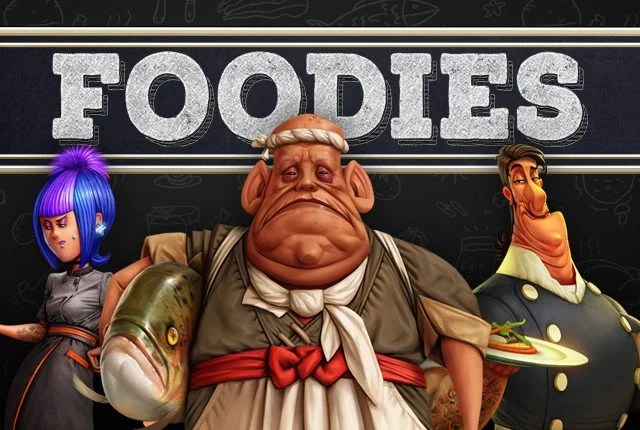
Are you a “foodie”? Everyone I ask gives me the same answer. YES! Being a “foodie” means much more than just eating three squares meals a day. It refers to someone who is obsessed with food, it’s preparation, it’s presentation, and of course the flavor. I think I just inadvertently booted myself from the “foodie” ranks because I’m no longer concerned with all of that. Years ago when I was into cooking, canning, and wine-making, I was most certainly a “foodie”. Now that I’m fully into being retired the term doesn’t apply to me any longer. Todays post will be a short quiz for those of you who still identify yourselves as “foodies”. As always the answers will be listed below.
- Italy leads the world in pasta consumption with 61.7 pounds each per person per year. What country is second?
- Black-eyed peas are not peas. What are they?
- Where was the first automated fortune cookie machine manufactured?
- What does VVSOP mean on a cognac bottle?
- What color did blue replace in 1995 when it was introduced to the standard package of M&M’s candies?
🥗🍚🍔🦐
- On average, how many calories a day are American astronauts given to eat while on missions to outer space?
- What do herring, cabbage and carrots represent at New Years Eve feasts in Germany and Scandinavia?
- How much caffeine must be removed from coffee for it to be called decaffeinated?
- What popular soft drink contained the drug lithium, now available only by prescription, when it was introduced in 1929?
- What did the Wrigley Company do to promote its chewing gum nationwide in 1914?
🐮🐮🐮
BONUS
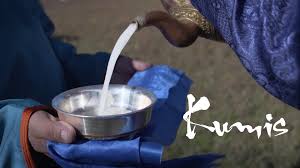
What is the cordial kumiss made from?
❤️🍔❤️🦐❤️🍚❤️🥗❤️
Answers
Venezuela at 27.9, Beans, Japan, Very Very Superior Old Pale, Tan, 3000, Herring represents good luck; cabbage, plenty of silver; and carrots, gold in the year ahead, 97%, 7UP, It mailed a stick of Doublemint gum to every person listed in the U.S. phonebooks, BONUS: Fermented mare’s or cow’s milk.
Misconceptions are a common occurrence. We all have them, and most times don’t even realize it. We repeat things we’re told as a child based on the misconceptions of our parents who based it on the misconceptions from their parents and on and on it goes. How many times have your young children arrived home from school with some fantastic fact told to them by others. It’s amazing how young children just know so much about everything (rightly or wrongly) and feel the need to spread their knowledge. Let’s take a look at a few.
- The Pilgrims did not build log cabins, nor did they wear black hats with a conical crown or belts with huge silver buckles.
- Albert Einstein, who was awarded the Nobel Prize for physics in 1921, was honored not for his famous theory of relativity published 16 years earlier, but for his lesser-known work on the photoelectric effect.
- Until the time of Galileo, an argument used with potent effect was that if the earth moved, and if it indeed rotated on its axis, the birds would be blown away, clouds would be left behind, and buildings would tumble.
- Samuel F.B. Morse did not really invent the telegraph. He managed to get all the necessary information for the invention from the American physicist Joseph Henry, and later denied that Henry had helped him. Henry later sued and proved his case in a court of law. It is true that Morse did invent Morse Code.
- Charles Darwin rarely used the term “evolution”. It was popularized by the English sociologist Herbert Spencer, who also popularized the phrase “survival of the fittest”.
- Because of the story in Genesis that Eve had been created out of Adam’s rib, it was widely believed during the Middle Ages that men had one rib fewer than women.
- To protect woolen clothing from moths, people for generations have stored them in cedar chests or have built closets lined with cedar. There is no evidence whatsoever that a cedar chest or closet repels moths.
- Sir Edmund Hillary and Tenzing Norkay deservedly received much praise when they were the first to climb to the summit of Mount Everest. Less known is the fact that they had a roster of 12 other climbers, 40 Sherpa guides, and 700 porters to help them along the way.
- Everyone in the Middle Ages believed as did Aristotle that the heart was the seat of intelligence.
- According to legend, it was the cowboy and the six-gun that won the West. Actually, it was the steel plow, barbed wire fencing, and the portable windmill that made it possible for pioneers to settle there.
These above facts just prove my point. Misconceptions go back to the beginning of the human race and will continue to be perpetuated for as long as there’s at least four people left alive. One to tell the initial story, the second to repeat the story, the third to believe the story and then tell it to the fourth.
EASY PEASY!