I’m what most of you crazy avid sports fans would call a “fair weather fan”. I confess to that description to a certain degree. Only one sport has ever been all-consuming for me and that is baseball. I spent the better part of my youth playing baseball in Little League, high school teams, American Legion teams, and one local semi-pro team. Playing baseball was my life. Being on the field and playing was heaven for me but it has made watching modern baseball absolute torture. I was never bored while I was playing but watching it now is painful.
Todays blog will return me to those early years of baseball and will test those of you super-fans who have knowledge of the history of the sport. Here are some nicknames of well-known players from the past. Lets see how you do! As always the answers will be listed below.
WHO?
High Pockets
The Iron Horse
Goose
Little Poison
Three Fingered
Gabby
Bucky
Rube
The Trojan
Lippy
⚾⚾⚾
Answers
George Kelly, Lou Gehrig, Leon Goslin, Lloyd James Warner, Mordecai Peter Brown, Charles Leo Hartnett, Stanley Raymond Harris, George Edward Waddell, John Joseph Evers, and Leo Durocher.
I seem to be on a sports mission this week even though I’m not a devoted sports fan. Fortunately, or unfortunately I have a family member who is a professional sports analyst and as I watch him a lot of sports information and misinformation has made its way into my brain. I then decided to look for some of the more obscure and interesting facts about baseball that you may never have heard before. I think you’ll find them interesting.
Abner Doubleday
Though a U. S. Army officer, Abner Doubleday, is generally hailed as having invented baseball at Cooperstown, New York, in 1839. Games called baseball, embodying the idea of hitting a ball and running bases were mentioned in English publications as early as 1744 and later in America 14 years before the Declaration of Independence.
During the baseball rivalries between the two major leagues in the 1890’s, the Pittsburgh Nationals, taking advantage of a technicality, signed a player from another club. For that reason, the Nationals president, J. Palmer O’Neill, and his club later became known as the Pittsburgh Pirates
Hugh L. Daily
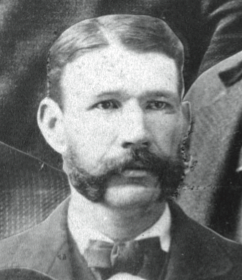
Between 1882 and 1887, Hugh L. Daily played second base, shortstop, and pitched for several major league baseball teams. As a pitcher, he won 74 games, including a no-hitter, and he registered a long-standing record of striking out 19 batters in a game. Not bad for a man with only one arm.
The first formal rules for playing baseball required the winning team to score 21 runs.
Hoyt Wilhelm
The famous knuckleball baseball pitcher Hoyt Wilhelm hit a homerun in his very first time at bat in the major leagues, and never hit another in more than 400 times at bat in a 20-year career. In his second season, he hit a triple and never had another, and two doubles and hit only one more of them. His career batting average was .088.
Ty Cobb
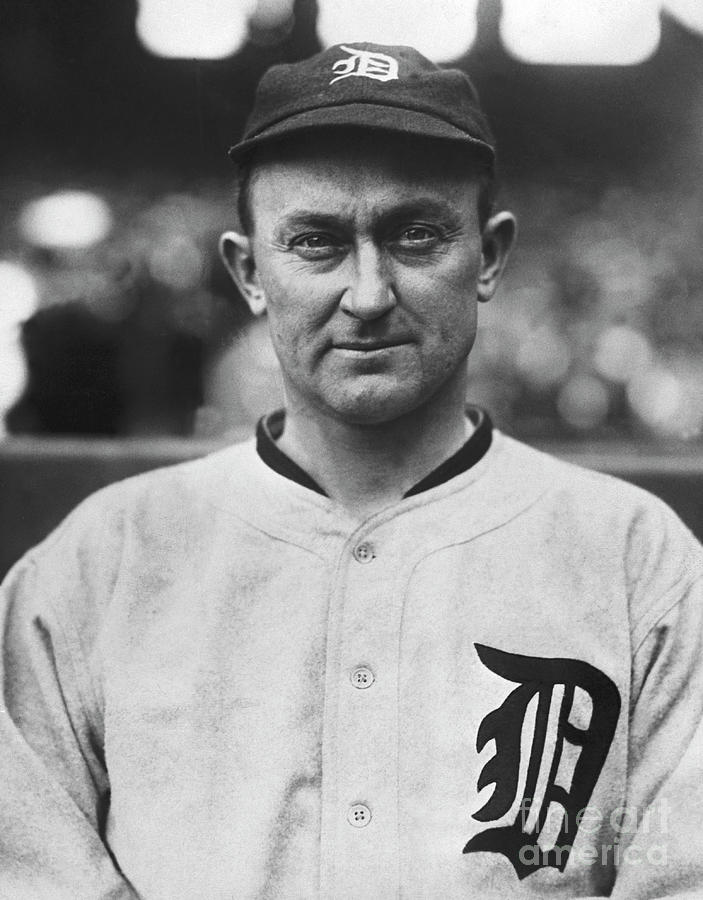
Ty Cobb, of the Detroit Tigers played slightly more than a score of baseball seasons in the American League. He banged out 4,191 hits and posted a lifetime batting average of .367.
To boost attendance, the St. Louis Browns of the American League signed up a midget in the 1951 season. Eddie Gaedel was 3’7″ tall and wore uniform number 1/8th. He went to bat only once, in a game against the Detroit Tigers, and walked on four pitches. Midgets are now banned by the major leagues.
Babe Ruth
For 62 years, baseball’s greatest slugger, Babe Ruth, alone held the record (nine) for pitching the most one-season shutouts in the American League. In 1978 he became the co-holder, with Ron Guidry, of the record.
Let me state categorically that I love baseball. I played it for many years and have many great memories from those times. The game has changed considerably in the last few years, and I think some of these new technological changes will probably please most fans and TV networks. I’ve always been complaining in recent years that watching baseball is like watching paint dry and with the addition of the pitch-clock it might just improve things, I hope. Today I’m going to reach back into the archives of the early years of the game for some stories you might enjoy. Here are two that made me smile.
A ground ball that takes a bad hop is an infielder’s nightmare. I have lots of scars and bruises of my own because of them so I know what I’m talking about. Once in a while injures do occur but it’s all part of the game. Fortunately, most bad-hop grounders aren’t nearly so serious.
In September 1948 the Boston Red Sox were at bat against the Philadelphia Athletics. They had Ted Williams on third and Billy Goodman at bat. Goodman hit a sharp, twisting grounder towards Philadelphia shortstop Eddie Joost. Joost got in front of the ball, but he couldn’t handle it. It hit his glove, ran up his arm and disappeared into the sleeve of his shirt. Joost dropped his glove and began to search all over for the ball. It was under and inside his shirt! He started to unbutton the shirt, but that just took too long. Finally, he pulled his shirttail out of his pants and the ball dropped out and rolled away. Goodman reached first safely and then stood on the bag, grinning. Ted Williams, who could’ve scored easily from third base, was still standing on the base, laughing too hard to run.
Because I’m a native of Pittsburgh I always look for humorous stories about Pittsburgh players and even their managers. This story takes care of both of those requirements because it involves Danny Murtaugh, who became a two-time National League Pennant winning manager for the Pirates. This story took place when he was playing for Houston in the minor leagues.
Murtaugh, as many other players, had his moments controlling his temper. During one of the Houston games Murtaugh was at bat with a three-and-two count. He took the next pitch which was a screaming fastball, a strike was called, and he was out. He lost his temper for a moment and tossed his bat high into the air above home plate. Unfortunately for Murtaugh the umpire had absolutely no sense of humor. “You’d better catch that bat before it lands or I’ll fine you $20.00,” the umpire roared. Murtaugh judged the flight and speed of the bat and caught it just before it hit the ground. It was said he’d never made a better catch in his life.






 everyuselessthing.com