Archive for the ‘andrew carnegie’ Tag
I’ve always been attracted to graveyards. There’s no better place to paint, sketch or write than the peaceful quietness of a graveyard. It’s one of the few places still left where someone can go and relax without interferences from the rest of the living human race. I once lived in a city called Lakeville in Massachusetts and for many years I was known far and wide by the police departments and many citizens as someone who was consistently haunting local graveyards. In the Plymouth area there are still tombstones from the 1600’s with some truly bizarre epithets and poetry. I just takes a little time and dedication to find them. Todays post will contain what some people would consider morbid information and that’s true, it is a little morbid but it’s still interesting. Being the kind and generous soul that I am, I’m willing to share.
😵😵😵
- “Haircut!” Last words of famous gangster Albert Anastasia in 1957 while getting a trim.
- “Smite my womb.” Spoken by Agrippina, mother of Nero, to the assassins sent to kill her by her son.
- “The strongest.” Uttered by Alexander the Great when asked who should succeed him.
- “The executioner is, I believe, an expert . . . and my neck is very slender. Oh God, have pity on my soul, . . . ” as she was beheaded.
- “I hope so.” Stated by Andrew Carnegie, steel magnet and philanthropist, to his wife who’d just wished him a good night:
Epithets
Burlington, Massachusetts
Sacred to the memory of Anthony Drake,
Who died for peace and quietness sake;
His wife was constantly scolding and scoffin’,
So he sought for repose in a twelve dollar coffin.
😨😨😨
Whitingham, Vermont
Brigham Young
Born on this spot
1801
A man of great courage
and superb equipment.
😱😱😱
Skaneateles, New York
Underneath this pile of stones
Lies all that’s left of Sally Jones,
Her name was Briggs, it was not Jones,
But Jones was used to rhyme with stones.
🤠🤠🤠
One of my fav’s
Boot Hill Cemetery, Dodge City, Kansas
PLAYED FIVE ACES,
NOW PLAYING THE HARP.
Most Americans are raised get an education, get a job, make money, and then make more money. There’s nothing like starting your work life in your early twenties with a huge student loan debt that will take you years to pay off. Money seems to be the driving force in this country and the pursuit of it is all consuming. In reality, it’s the same almost everywhere else as well. I think a lot of that make-money mindset was passed down through the Great Depression generation like my parents who were concerned with little else. It’s not a bad thing to chase money but how you go about is even more important. Make as much money as you can but try just as hard not to harm or destroy others in the process.
Today’s post involves a short history of money.
- At the age of 12, Andrew Carnegie worked as a millhand for $1.20 a week. A half-century later, he sold his steel company for nearly $500 million.
- Not a single bank existed anywhere in the 13 colonies before the American Revolution. Anyone needing money had to borrow from an individual.
- Although he is famous for inventing the cotton gin, in 1793, Eli Whitney made no money from his invention because he did not have a valid patent on it.
- Henry Ford shocked his fellow capitalists by more than doubling the daily wage of most of his workers in 1914, 11 years after he had established his first automobile factory. He knew what he was doing. The buying power of his workers was increased, and their raised consumption stimulated buying elsewhere. Ford called it the “wage motive.”
- Paul Revere, the American silversmith and patriot, designed paper money for the Commonwealth of Massachusetts, which issued the money in defiance of English law even before independence was declared. The notes were handsome but soon depreciated. Some of them subsequently were used as wallpaper in barbershops.
- When Jacob A. Riis published his classic book How the Other Half Lives, in 1890, the fortunes of about 1% of the US population totaled more than the possessions of the remaining 99%. The pattern hasn’t changed all that much. Today, the fortunes of about 8% of the US population total more than the possessions of the remaining 92%.
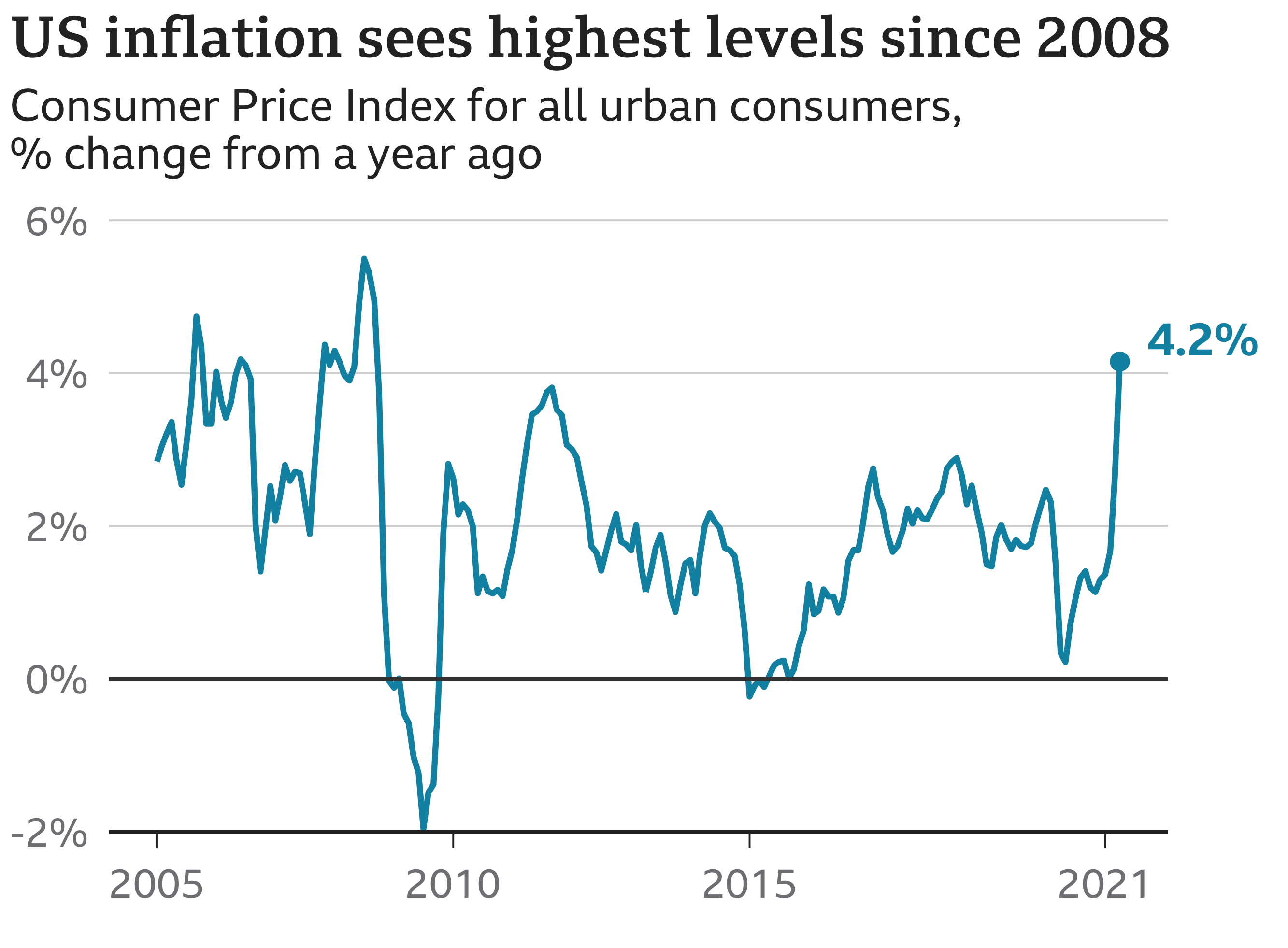
- We hear all of the economy experts constantly raising fears about rising inflation. Here is why! At the height of inflation in Germany in the early 1920s, one American dollar was the equal of 4.2 trillion German marks.
💲💲💲
WORK-EARN-SPEND-OWE
Christmas has always been a season of giving from the Salvation Army Santa’s to Soup Kitchens, and the efforts of almost every religious group I can think of. I was curious about the generosity of previous generations but not only for the Christmas Season but generosity in general. So, here are a few samples of it from the past that have been long forgotten.
- John D Rockefeller made his first contribution to a philanthropic cause at the age of 16, which was in 1855. By the time he died, 82 years later, the oil magnate had given away $531,326,842.
- Ernest Hemingway gave to The Shrine of the Virgin in eastern Cuba, where he lived, Nobel Prize money he had won for the novel The Old Man and the Sea. “You don’t,” he said, “ever have a thing until you give it away.”
- When he learned, in 1905, that one of his company’s batteries was defective, Thomas Alva Edison offered to refund all buyers. From his own pocket he returned $1 million.
- About $330 million was donated by Andrew Carnegie to libraries, research projects, and world peace endeavors.
- Gerrit Smith, a trader of Dutch descent, made available 120,000 acres of Adirondack wilderness to runaway slaves – a noble experiment with the help of his son, who was a professional reformer active in the Underground Railroad.
- To help raise funds for the starving poor of Berlin, Albert Einstein in 1930 sold his autograph for three dollars for a signature and autographed photographs for five dollars each.
- In his will, Tadeusz Kosciuszko, the Polish patriot who fought in Washington’s army in the American Revolution, specified that the US land tracts he had received should be sold and the money from the sales be used to purchase the freedom of black slaves.
- From his own pocket, Superintendent of Finance, Robert Morris, met the American army’s demobilization pay in 1783. He was later thrown into the debtor’s prison, financially ruined in land speculation.
- The Swiss philanthropist Henri Dunant devoted so much of his money and his energy to the establishment of the Red Cross that his textile business failed, and he became penniless. He was a cowinner of the first Nobel Peace Prize, in 1901, and left all of the prize money to charities, not to his family.
After reading all of these examples it just proves to me that generosity has always been around but in many cases, never acknowledged. It’s nice to know there’s a certain percentage of the population willing to make pesonal sacrifices to help others. That’s a Christmas wish if there ever was one.
19 SHOPPING DAYS LEFT
Being a lover of trivia has always been fun and games. There’s so much information available about so many people and the majority of that information is almost never published. The past I’ve centered a lot of my trivia on celebrities and certain politicians especially former Presidents. Today I thought I would take a look at presidents’ wives and some of the information available that you’ve probably never heard of. Some of them are actually more interesting than their husbands.
- Andrew Carnegie personally paid pensions to widows of former presidents before Congress decided that the responsibility was the country’s and not a steel magnate.
- President. Ulysses S Grant’s wife was cross-eyed and wanted to correct the problem. Grant refused to let her have the operation because he liked her that way.
- Abraham Lincoln’s wife – like Lincoln himself – was born in Kentucky. During the Civil War, she was accused of being a spy for the South, for her brothers were members of the Confederate Army.
- President Calvin Coolidge did not allow his wife to supervise any details of White House life. He did it all. Even the menus and other housekeeping plans were submitted to him and not to the First Lady. She did not even buy her own clothes without Coolidge’s approval.
- When the First Lady, Eleanor Roosevelt, received an alarming number of letters threatening her life, soon after her husband, Franklin D Roosevelt, took office as President during the depression, the Secret Service insisted that she carried a pistol in her purse.
- Martha Washington and was nearly 60 years of age when she became “Lady Washington,” as she was called during her husband’s Presidency. She did not enjoy the role. Privately, she wrote that she was “more like a state prisoner than anything else.”
- Mary Todd Lincoln was tried for insanity before a jury after her husband’s assassination. Her son Robert attempted to have her declared legally incompetent when she began suffering hallucinations and phobias, but the law required a trial before a person can be institutionalized. Mrs. Lincoln attempted suicide after she was judged insane by the court, and was taken to a sanitarium, where she received treatment. She improved to the point that another court reversed the insanity verdict in 1876.
- Pres. Andrew Johnson’s daughter, who ran the White House domestic affairs in place of her invalid mother, bought 2 Jersey cows, which she kept on the White House grounds, to assure her family of fresh milk and butter.
- Mrs. William Howard Taft also bought a cow which grazed on the White House lawn. Twice a day, milk from the cow was delivered to the White House kitchen.
- Mrs. Woodrow Wilson purchased a flock of sheep to help crop the White House lawn, and then auctioned their wool for the benefit of the Red Cross. She was proved a good businesswoman when the auction netted $100,000.
BEHIND EVERY MAN IS A WOMAN WITH A CATTLE PROD
With tax time approaching I decided to harken back to maybe not a better time, but a time when our citizenry lived within their means. There was a national debt, but it was a mere drop in the bucket compared with our current situation. It motivated me to take a look back and see how our economics have changed in the intervening years.
- In 1900, the United States treasury showed a surplus of nearly $47 million in income over expenditures. The last time the federal budget was balanced was in 1969.
- President Carter’s “lean and tight” budget of $500 billion for the fiscal year 1979 equals the spending of $690,000 a day since the birth of Christ. To dispose of this amount of money in a year, the government has to spend $951,000 a minute, $57 million an hour, or $1.37 billion a day, including holidays and Sundays.
- Andrew Carnegie, one of the richest Americans ever, practically became allergic to money as he grew richer and older. He was offended, he said, just by the sight and touch of it, and never carried any. Because he had no money with him with which to pay the fare, Carnegie was once put off of a London Tram.
- According to the 1970 US Census, only 5000 Americans had a net worth of $10 million or more.
- The longest jury trial ever in the United States federal courts began on June 20, 1977 and ended on July 10, 1978. It took the judge almost an hour to read the verdicts on 49 separate questions. During this antitrust action, by SCM Corporation against Xerox, it is estimated that both sides spent well in excess of $60 million in attorney’s fees.
- The federal government keeps billions of dollars – much of it taxes collected by the Internal Revenue Service – in bank accounts that draw no interest. Banks turnaround and invest much of these deposits in U.S. Treasury bills, on which the government frequently pays more than 9% interest. Incredibly, the government is paying the banks to borrow back its own money.
- It costs $4000 per inch to build an interstate highway project on the fringe of New York City in the late 1970s – over 215 million per mile. Just imagine what the current costs must be.
- Until there was a pay raise in 1814, US Congressmen were paid six dollars per diem when Congress was in session. I think it might be just a little higher these days.
- To finance the Civil War, a 3% income tax on all incomes over $800 was enacted by the federal government in 1864. It was the first time in income tax was enacted in the United States. The law was discontinued in 1872. The United States Supreme Court declared the law unconstitutional in 1894. Not until 1913, with the adoption of the 16th amendment, the income tax become law.
- In the 1800s, big industry began to set up trusts to monopolize production and distribution. The first big trust was Rockefeller’s Standard Oil Corporation, in 1882. The first international trust was Nobels Dynamite Trust, in 1886.
LOOKS LIKE DINNER AT JOE’S HOUSE
Unfortunately, the word “Greed” is used to describe our country by many foreigners and also from many of our own citizens. I can’t say that I disagree because in too many cases it’s absolutely true. “Money is the root of all evil” immediately comes to mind when I hear that word. It’s not something we should be proud of but “It is what it is.” I thought today I would examine the statements made by an assortment of well-off persons who are well enough known to be quoted in publications. For those of you out there who are not rich let me inform you.
- “People will swim through shit if you put a few bob in it.” Peter Sellers
- “Time is money.” Ben Franklin
- “Money isn’t everything as long as you have enough.” Malcolm Forbes
- “It isn’t enough for you to love money – it’s also necessary that money should love you”. Baron James D Rothschild
- “If I had my life to live over again, I’d be a $30 a week librarian.” Andrew Carnegie
🤑🤑🤑
- “In some ways, a millionaire just can’t win. If he spends too freely, he is criticized for being extravagant and ostentatious. If, on the other hand, he lives quietly and thriftily, the same people who would have criticized him for being profligate will call him a miser.” J. Paul Getty
- “There is always the question. You wonder if people like you for you or the inevitable disturbing question: Are they after something?” Mary Leah Johnson (heir to the Johnson & Johnson fortune)
- “The best reason to read about the very rich, of course, is to be reassured that money cannot buy happiness and indeed, often seems to buy trouble.” Maureen Dowd
- “As a cousin of mine once said about money, money is always there but the pockets change; it is not in the same pockets after a change, and that is all there is to say about money.” Gertrude Stein
- “Money talks. The more money, the louder it talks.” Arnold Rothstein
One final thought, a quote from my late down-to-earth father concerning money. It’s as true today as it was fifty years ago when I first heard him say it:
“MONEY TALKS AND BULLSHIT WALKS!”









 everyuselessthing.com