We woke up to five inches of snow this AM. I was forced into snow-blowing the driveway at 7:15. I’m really glad I didn’t wait because the snow was slowly melting and getting heavy making the snow-blower work extra hard. The driveway is now clear making it possible for my shopaholic better-half to get out and about. I really haven’t decided what to post today so taking a tip from some of my teachers of years ago, when in doubt they just gave us a pop quiz. Since food always seems to interest everyone, here are ten questions for you foodies out there. The answers will be listed below.
What animal is the source of milk used in making Roquefort cheese?
What part of the banana is used to make banana oil?
Two states have official beverages. Florida is orange juice, what is the other?
What words are found on the three rings of the Ballentine beer label?
How many quarts of milk does it take to make one pound of butter?
How much money did American Airlines claim to have saved in 1987 by eliminating one olive from each of it’s salads served in the first-class sections?
What fruit did the Visigoths demand in ransom when they laid siege of Rome?
What is the BRAT diet to eliminate diarrhea?
What do Eskimos use to prevent their food from freezing?
If you ordered the Five B’s breakfast in New England, what will you be served?
Answers
The Ewe (female sheep), None-banana oil is a synthetic, Ohio-tomato juice, Purity-Body-Flavor, 9.86 quarts, $40,000.00, 3,000 lbs. of peppercorns, Bananas-Rice-Applesauce-Toast, Refrigerators, Boston Baked Beans and Brown Bread
I find it amazing that the longer I live the less I seem to know. I’ve spent many years compiling and posting odd facts and there’s no end in sight. Here are two questions that most people have wondered about at one time or another but never really obtained a reasonable answer for. Here’s your reasonable answers.
HOW DID THE WORD “COCKTAIL” ORIGINATE?
A cocktail is an alcoholic drink that comprises a number of ingredients that are mixed or shaken together. There are hundreds of different concoctions and their often sweet, colorful and interestingly named, such as the Grasshopper, the Rusty Nail, Sex on the Beach and the Slippery Nipple. There seem to be hundreds of explanations for the origination of that word but many of them are utter nonsense. This is one explanation that caught my attention, and I immediately chose to believe it. In the 18th century an innkeeper named Betsy Flanigan stole chickens from her neighbors and cooked them for her patrons. After the meal, she would serve mixed drinks and place a chicken feather in each of them. At this display, one French customer yelled, “Vive le cocktail.“ I know that sounds silly but it’s no sillier than many of the others I’ve read about. This is my favorite explanation, and I hope it’s true.
WHEN AND HOW WAS TOILET PAPER INVENTED?
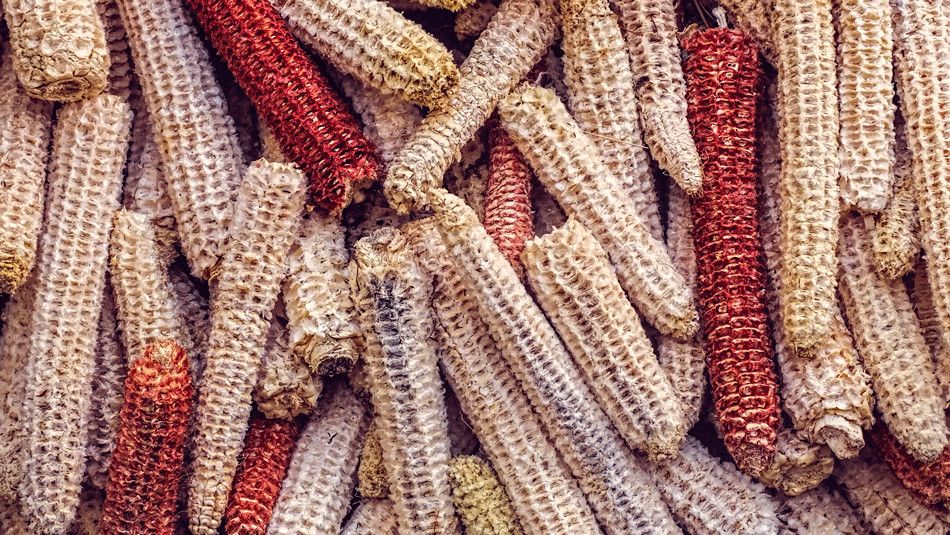
The Chinese invented toilet paper in the 14th century, and the Bureau of Imperial Supplies produced paper for use by the Chinese emperors. In 1857 the first factory producing toilet paper was made by American Joseph Cayetty who named his product Therapeutic Paper, and it was sold in packs of 500 sheets. Before the invention of toilet paper, different areas of the world use different things. Public toilets in ancient Rome provided a moist sponge on the end of the stick, while the Vikings who occupied England used discarded wool, and later in the Middle Ages that was replaced by a balls of hay. In Hawaii, meanwhile, coconut husks were used, while the early Eskimos used snow and tundra moss. French royalty used strips of lace and British lords used pages from books. In the United States, newspapers and telephone directories were commonly used, as were other books. The Old Farmer’s Almanac was actually printed with a hole punched through the corner of each page so that it could be hung in outhouses, and the Sears catalog was widely used until it began being printed on glossy paper. It’s use as a hygiene product became instantly unpopular as did corncobs in farm country.
As all of you should be aware, I am a lover of history. Not just that run-of-the-mill American history that everybody knows about and has read about in textbooks. I like quirky, odd, and obscure stories of American history. Here are a few samples of some historical notes about the United States that the majority of you never heard of.
The United States has profited greatly twice at the hands of a nation that viewed Great Britain as their enemy. In 1803, France, aware it could not hang on to the vast Louisiana Territory, sold it to the United States for 2 1/2 cents per acre rather than have it fall into Great Britain’s hands. In 1867, Russia sold the 586,400 square miles of Alaska to the United States for less than two cents an acre. The logical purchaser would have been Great Britain, whose minions in Canada bordered the land on the East, but Russia considered Great Britain to be an enemy (Britain had won the Crimean War against the Russians and sided with the Confederacy in the United States Civil War).
The Pony Express, which has lived in legend for more than a century, lived in fact for less than two years. Indian raids curtailed service on the 1966-mile route between St. Joseph, Missouri, and Sacramento, California. The transcontinental telegraph finally replaced it in late 1861.
In 1813, Major George Armistead, command of Fort McHenry, placed an order for a flag “so large that the British would have no difficulty in seeing it from a distance.” In fulfilling the commission for that flag, subsequently celebrated as “Old Glory” and “The Star-spangled Banner,” Mary Pickersgill and members of her family sewed over 400 yards of bunting into a banner 30′ x 42′, costing $405.90. This was the flag that Francis Scott Key saw that “was still there.” It hangs today in the Smithsonian Institution.
The American Colonization Society was formed, in 1816, by the Rev. Robert Finley of New Jersey, for the purpose of establishing an Africa colony to which the 200,000 U.S. blacks freed by slaveholders or born to free parents could be sent. Prominent slaveholders like Calhoun, Clay, Randolph, and Jackson supported the Society because they feared the threat to slavery posed by free blacks. Congress was persuaded to lend aid for land purchases. In all, about 15,000 blacks left America for the colony, which came to be called Liberia. The capital is named Monrovia, for President James Monroe.
The first nation to receive foreign aid from the United States was Venezuela. In 1812, Venezuela, fighting for its independence from Spain, suffered a severe and damaging earthquake. Congress appropriated $50,000 to help the victims.
Eskimos use refrigerators to keep food from freezing.
I wish I could live seventy-five more years and then be able to read a blog similar to this explaining to the citizens of that time how weird, stupid and crazy we were. It would probably be worth a million laughs to those future citizens. The Clinton years alone could supply enough weirdness laughter and gagging for many blog postings.





 everyuselessthing.com