Here is the fourth installment of retro trivia from the decade of the 1970’s. These questions should be a little easier than the last three decades. As always the answers are listed below.
Who was court-martialed in 1971 for atrocities committed in Southeast Asia?
What became the capital of the reunited North and South Vietnam?
What was the name of the Russian spacecraft that linked with an Apollo module in 1975?
In 1974 what building became the tallest in the world?
What woman won the Nobel Prize in 1979?
What nation tried “The Gang of Four”?
Name the senator that presided over the Watergate hearings?
Where was the Queen Elizabeth when it caught fire and sank in 1972?
Who was the first native American to be canonized by the Catholic church?
Name the war hero who quit the Israeli cabinet in 1979?
BONUS QUESTION
What caused Iceland and England to sever diplomatic relations in 1976?
👇👇👇
Answers
Lt. William Calley, Hanoi, Soyuz, The Sears Tower, Mother Teresa, China, Sam Ervin, Hong Kong, Mother Seton, Moshe Dayan, BONUS-Cod Fishing Rights
I’ve been posting quite a few quizzes in recent months with some truly difficult answers. Todays quiz is a general knowledge quiz from the 1960’s and the answers should be somewhat easier to remember unless you were a teenager during that time. Drugs will do that to anyone’s memory. As always the answers will be listed below.
Which Academy-Award winning film about two misfits was originally rated X?
What Nobel Prize winning author shot himself to death in 1961?
What animal did the Yippies run for president in 1968?
What disastrous military maneuver did the US back in 1961?
What was the center piece of the Seattle World Fair?
TWIGGY
What London street rose to prominence in the fashion conscious 60’s?
Which member of the Kennedy family survived the crash of a small plane?
What was the better-known name of the decades most famous model, Lesley Hornby?
What was the fourth nation to detonate a nuclear bomb?
Complete this anti-war chant, Hell, no . . .”
☮️☮️☮️☮️☮️
🥎My Required Baseball Item🥎
Name the two Yankee baseball players who chased Babe Ruth’s homerun record in 1961?
❤️❤️❤️
Answers
Midnight Cowboy, Ernest Hemingway, A Pig, The Bay of Pigs invasion, The Space Needle, Carnaby, Ted Kennedy, Twiggy, China, . . . we won’t go!, Roger Maris & Mickey Mantle.
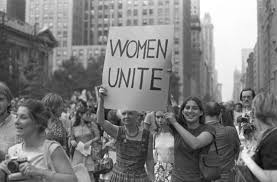
Here’s a collection of facts concerning some of the history of the battle for women’s rights. Some good ones, some bad ones, but all are certainly interesting.
Epicurus (341-241 BC), to whom good and pleasure were synonymous, was the first important philosopher to accept women as students.
In 17th and 18th century America, women were employed in all of the same occupations that men worked, and men and women earned equal pay. A female blacksmith charged the same as a man to shoe a horse. Women sextons and printers were paid at the same rate as men. Women were also silversmiths, gunsmiths, shipwrights, and undertakers.
The first woman governor in U.S. history was Mrs. Nelly Taylor Ross. She was elected governor of Wyoming in 1925.
$10,000 was offered by Marion Hovey, of Boston, to the Harvard Medical School, to be used to educate women on equal terms with men. A committee approved the proposal, but the Hovey offer was rejected by the board of overseers. The year was 1878.
Though she was a Nobel Prize winner (and soon would become the first person to win two), Marie Curie (1867-1934) was denied membership in the august French Academy simply because she was a woman.
A woman agreed in 1952 to play in organized baseball, with the Harrisburg, Pennsylvania, Senators of the Interstate League. However, minor league commissioner George Trautman, with the support of major league baseball commissioner Ford Frick, unilaterally voided Mrs. Eleanor Angles contract.
During the American Revolution, many brides did not wear white wedding gowns; instead, they wore red as a symbol of the rebellion.
She was 87 years old when she became the first woman U.S. Senator, and she served for only one day, November 21, 1922. Rebecca Lattimer Felton, a Democrat and the widow of a Georgia representative who had opposed reactionary machine politics, had long worked for women’s suffrage, which became national law in 1920. She was appointed for a day to the Senate in a token gesture by the governor of Georgia, who had opposed the suffrage movement. “The word ‘sex’ has been obliterated from the Constitution,” Mrs. Felton said on excepting her appointment. There are now no limitations upon the ambitions of women.
There are 15 nations that had given women the right to vote before the U.S. did in 1920. The earliest were New Zealand, in 1893, Australia, in 1902, and Finland, in 1906.
Abigail Adams wrote to her husband, John, in 1776: “If particular care and attention is not paid to the ladies, we are determined to foment a rebellion, and will not hold ourselves bound by any laws in which we have no voice or representation.”
Christmas has always been a season of giving from the Salvation Army Santa’s to Soup Kitchens, and the efforts of almost every religious group I can think of. I was curious about the generosity of previous generations but not only for the Christmas Season but generosity in general. So, here are a few samples of it from the past that have been long forgotten.
John D Rockefeller made his first contribution to a philanthropic cause at the age of 16, which was in 1855. By the time he died, 82 years later, the oil magnate had given away $531,326,842.
Ernest Hemingway gave to The Shrine of the Virgin in eastern Cuba, where he lived, Nobel Prize money he had won for the novel The Old Man and the Sea. “You don’t,” he said, “ever have a thing until you give it away.”
When he learned, in 1905, that one of his company’s batteries was defective, Thomas Alva Edison offered to refund all buyers. From his own pocket he returned $1 million.
About $330 million was donated by Andrew Carnegie to libraries, research projects, and world peace endeavors.
Gerrit Smith, a trader of Dutch descent, made available 120,000 acres of Adirondack wilderness to runaway slaves – a noble experiment with the help of his son, who was a professional reformer active in the Underground Railroad.
To help raise funds for the starving poor of Berlin, Albert Einstein in 1930 sold his autograph for three dollars for a signature and autographed photographs for five dollars each.
In his will, Tadeusz Kosciuszko, the Polish patriot who fought in Washington’s army in the American Revolution, specified that the US land tracts he had received should be sold and the money from the sales be used to purchase the freedom of black slaves.
From his own pocket, Superintendent of Finance, Robert Morris, met the American army’s demobilization pay in 1783. He was later thrown into the debtor’s prison, financially ruined in land speculation.
The Swiss philanthropist Henri Dunant devoted so much of his money and his energy to the establishment of the Red Cross that his textile business failed, and he became penniless. He was a cowinner of the first Nobel Peace Prize, in 1901, and left all of the prize money to charities, not to his family.
After reading all of these examples it just proves to me that generosity has always been around but in many cases, never acknowledged. It’s nice to know there’s a certain percentage of the population willing to make pesonal sacrifices to help others. That’s a Christmas wish if there ever was one.







 everyuselessthing.com