Archive for the ‘opium’ Tag
I’ve spent the last five and a half years being tended to by a score of doctors and nurses and it saved my life. It’s given me time to really examine their profession and the the abilities they have to save lives. Todays post will introduce odd facts and historical information where the roots of our current medical treatments began. Some of it is a little strange and also a little frightening but that’s how we’ve learned the skills being used today.
- The first image of the doctors stitching up a wound can be found on the Edwin Smith Papyrus (1600 B.C.).
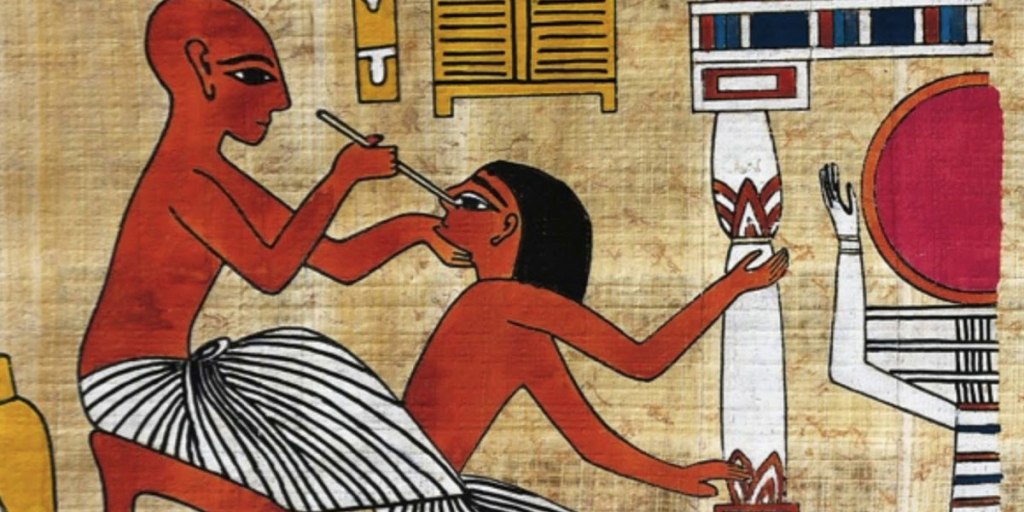
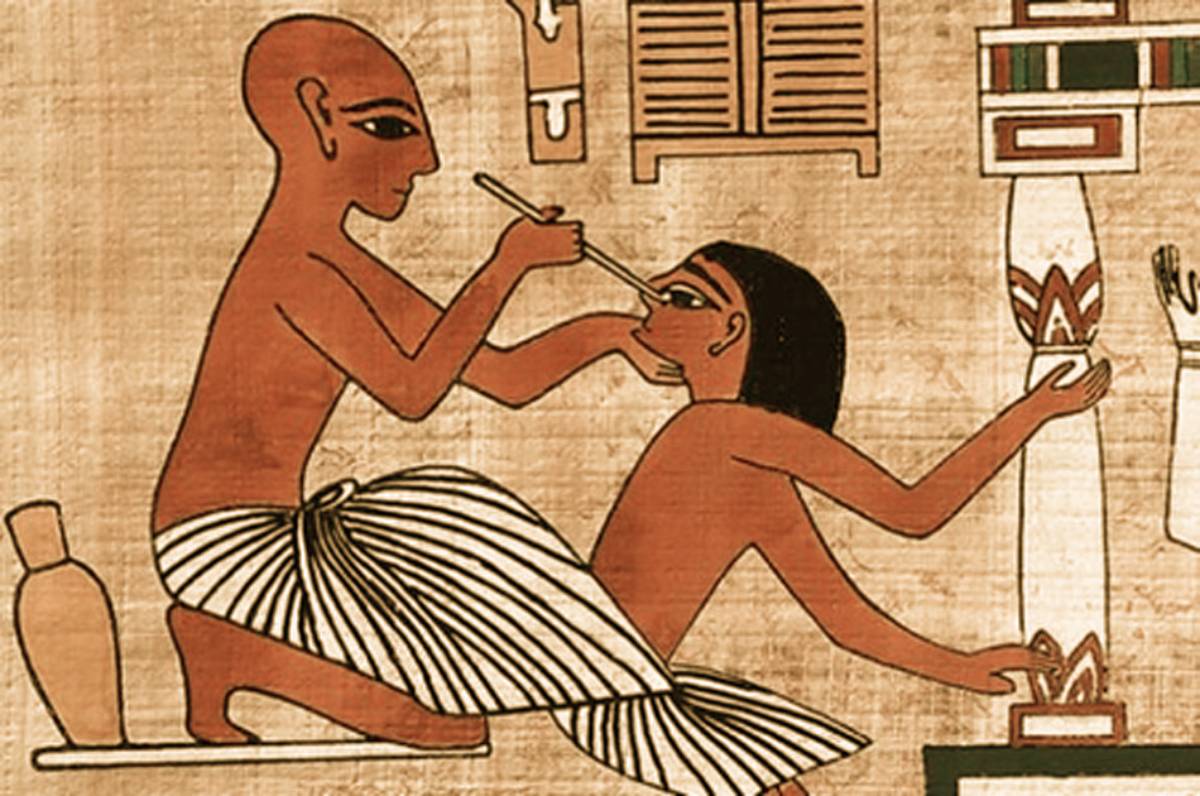
- Ancient Egyptian medicine was considered so advanced that the rulers of neighboring kingdoms would often bribe, cajole, or even send someone to kidnap the Pharaoh’s best doctors.
- The 3000-year-old “Ebers Papyrus” was written on a 65 foot long scroll and describes treatments for the eyes, skin, extremities, and organs. It also lists medicinal plants such as mustard, saffron, onions, garlic, thyme, sesame, caraway, and poppy seed, and offers more than 800 recipes for their use.
- The Egyptians used opium as crude forms of anesthesia when operating on patients. They also created a milder painkiller by mixing water with vinegar and adding ground Memphite stone. The resulting “laughing gas” was inhaled.
- The first known surgery for cataracts was performed in the Egyptian city of Alexandria in about A.D. 100.
- A collection of 37 surgical instruments is engraved on the wall in the Egyptian Temple of Kom-Ombo (2d century B.C.). Some show amazing similarities to modern surgical instruments and includes scalpels, scissors, needles, forceps, lancets, hooks, and pincers.
- The original Hippocratic Oath was written by a school of philosophers known as the Pythagoreans and was actually a reaction against the writings of Hippocrates. The Pythagoreans were conservative and even backward looking in many ways forbidding many medical practices, including the surgery.
- The Romans considered cabbage to be a magically protective food. The philosopher Cato wrote that Romans should not only eat cabbage at every meal, but also drink the urine of someone who’d eaten cabbage two days before.
- In both ancient Greece and Rome, doctors didn’t need licenses or any formal training to practice. Anyone could call himself a doctor. If his methods worked, he attracted more patients, if not, he found himself another job.
- Most Roman surgical instruments were made of bronze, or occasionally of silver. Iron was considered taboo by both Greeks and Romans and was never used for surgical instruments on religious grounds.
I’M FEELING BETTER ALREADY . . . HOW ABOUT YOU.
Over the last three years I’ve been forced by circumstance to become somewhat knowledgeable about the medical profession and its many practices. It’s not something I ever wanted to know but fear is a great motivator. It motivated me to do a great deal of research to find out exactly what all my health problems were and suggested remedies. The following 10 items will give you a short education on trivia concerning the medical profession that you might find interesting. It’s much better to read them in a blog posting than in person.
- The first contraceptive diaphragm – centuries ago – were citrus rinds – halves of oranges for example.
- Male embryos, fetuses, and babies have a higher incidence of morbidity than females. Correspondingly, there is a higher rate of language disability among boys than girls.
- Ketchup once was sold as a patent medicine. In the 1830s it enjoyed a measure of popularity in the United States as Dr. Miles Compound Extract of Tomato.
- Victims of disease -people and animals – are buried underground, and yet the soil remains fairly free of disease germs. Germs are destroyed by the bacteria and other microscopic organisms living in the soil.
- For every ounce of alcohol you drink, it takes an hour to regain full driving faculties, that is, normal, alert, clearheaded reactions. If you have 5 ounces of alcohol around 8 PM, you should not drive until at least 1 AM the following day.
- Influenza was so named because the cause of the disease was supposedly the evil “influence” of the stars. This “influence” was believed also to be the cause of plagues and pestilences.
- Opium frequently was used as a pain killer by army doctors during the U.S. Civil War. By the end of the war, according to conservative estimates, 100,000 soldiers were addicted to opium – at a time when the total population of the country was only 40 million.
- In 1777, George Washington had the entire Continental Army – then 4000 men- vaccinated. This action was considered controversial at the time because few American doctors believed in vaccination. It may have saved the Army as a fighting force.
- The use of antibiotics did not begin in this century. Early folk medicine included the use of moldy foods or soil for infections. In ancient Egypt, for example, infections were treated with moldy bread.
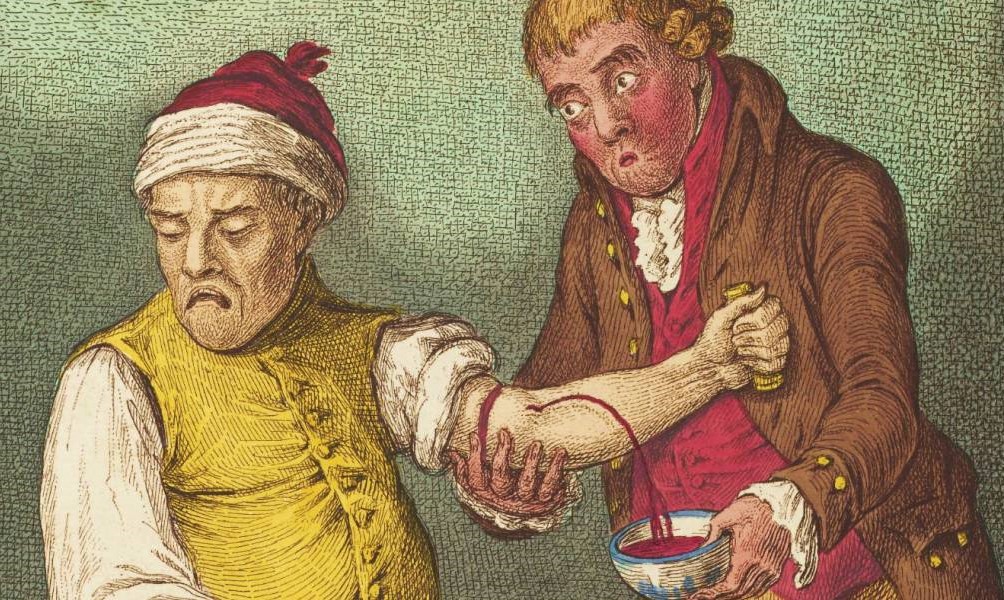
- About 8 ounces of lamb’s blood were injected into the veins of a dying boy, temporarily restoring him, in the first blood transfusion on record. It was performed in 1667 by Gene Baptiste Dennis, physician to King Louis XIV of France.
ALL THIS AND NO HEALTH INSURANCE



 everyuselessthing.com