

I’ve always thought of myself as being a well-read and informed person. I’ve been an avid reader from a very early age and I’ll read anything I can from matchbook covers to the Bible, Koran, Torah, even the Egyptian Book of the Dead. So, when I discover backstories of everyday normal things, I become amazed and stunned at how much I really don’t know. Todays post will give you two examples of amazing backstories. See what you think.
#1 – Here’s the question – How did Nome, Alaska get it’s name?
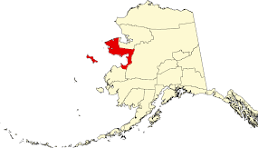
It was just a stupid spelling error. In the 1850’s a British ship exploring the coast noticed a prominent but unnamed point of land in Alaska. A ships officer scribbled “Name” next to that point on a manuscript map. When the map was being copied later at the Admiralty, a map maker misread the scribble and wrote the points new name as Cape Nome. In 1899 the burgers of Nome attempted to rename the area as Anvil City, but the all knowing U.S. Postal Service objected claiming it would cause confusion with the nearby town of Anvik, so the name stuck. To quote the cities website www.nomealaska.org, “There’s No Place like Nome”.
#2 – Here’s the question – What man-made artifacts can be seen from the moon?
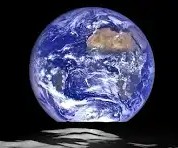
If you said the Great Wall of China you’d be wrong. No human artifacts at all can be seen with the naked eye from the moon. The idea that the Great Wall is the only man-made object is all-pervasive, but it confuses the moon with space. Space is quite close and starts at approximately 60 miles from the earth’s surface. However, at an altitude of only a few thousand miles after leaving the earth’s orbit, no man made objects are visible at all. From the moon – more than 250,000 miles away – even the continents are barely visible. Now you know that somewhat disappointing and incorrect trivia is wrong.
🌜🌝🌛
THANKS TO JOHN LLOYD & JOHN MITCHINSON

