Archive for the ‘snow storms’ Tag
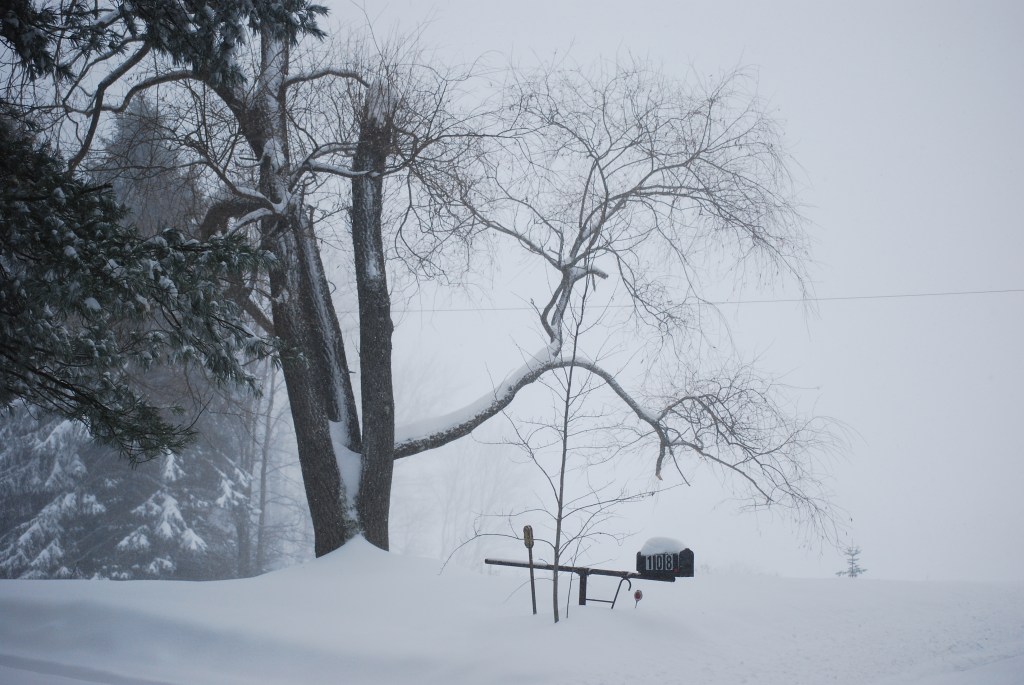
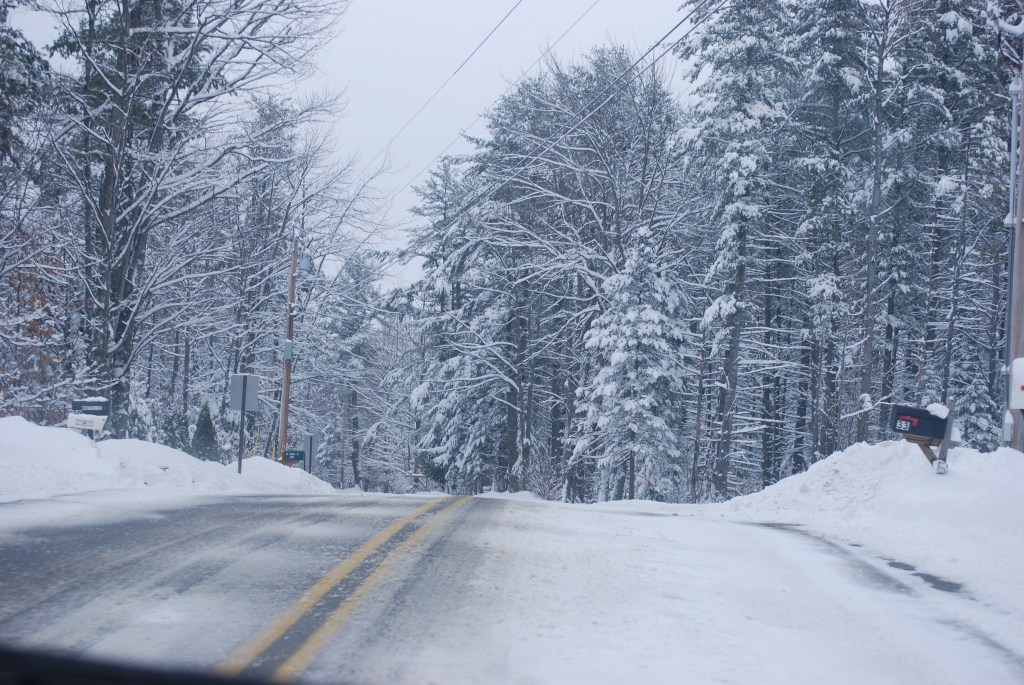
Living in Maine is always an adventure especially concerning the changing weather patterns. Lots of snow, lots of wind, lots of ice, and lots of SNERT (melted snow mixed with dirt). I’ve always been a fan of cold weather and snow but my first three years in Maine gave me an entirely new perspective. My first winter purchase in Maine was a kick-ass snow blower which has become over the years my best winter friend. Other required purchases were skis, snow shoes, and layered clothing. I loved taking winter photos in the forests but that was taken to a whole other level when the snow was more than two feet deep. Todays post will be a list of weather related facts that might interest you. Mother Nature is a real bitch and she visits Maine and New England way too frequently.
- Snow fell for thirty-six hours in New York in 1888. The storm dropped 50 inches of snow and became known as Great Blizzard of 1888.
- Mt. Washington in New Hampshire holds the world-record of 231 mph wind gusts measured on the summit on April 12, 1934.
- The Farmers Almanac lists various information, including information on the best days to castrate animals, to quit smoking, and to can jellies and jams.
- Hurricane-force winds (74+ mph) occur on average every other day on Mt. Washington during the winter months.
- The Blizzard of 1978 paralyzed New England for a week, dropping 27.1 inches of snow in Boston and over 40 inches in parts of Rhode Island, Massachusetts and Maine. Severe flooding occurred as the storm stalled off Long Island, combining hurricane-force wind gusts (up to 93 mph) with four destructive high-tide cycles. 99 fatalities were recorded across the states, with thousands of stranded motorists left on major highways throughout New England.
- Ice storms are also common in Maine and our last major storm a few years back brought down thousands of trees and left us without electricity, water, and internet, for more than two weeks. Unfortunately that was before we purchased our whole-house generator. We did learn how to sleep with five or six blankets on the bed while wearing parkas, tassel hats, and ear muffs.
All of that being said I wouldn’t want to live anywhere else. Maine is a beautiful state regardless of Mother Nature’s whims and the seacoast and beaches are second to none. It’s called America’s Vacationland for a reason.
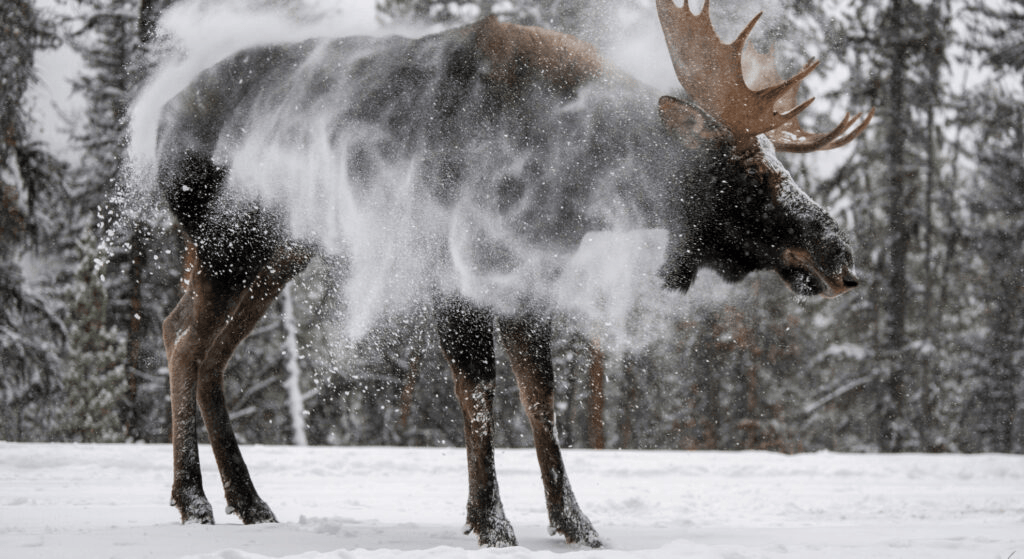
DRIVE CAREFULLY – THE MOOSE IS LOOSE
Living in northern New England requires a certain amount of love for snow. Skiers, skaters, snow boarders, and sledders love it here. Unfortunately, I’m none of those. I’m too clumsy for any winter sports. My favorite winter sport consists of a comfortable stool in a comfortable bar with a huge picture window looking out at the bottom of the ski run. The only way I could be injured under those circumstances is if some amateur skier loses control, crashes through the window, and knocks me off my stool. I can’t be too careful around here with all these snow bunnies and snow freaks running loose among us. I was up this morning a 4:30 am snow blowing my driveway. I just came in from the second trip because this damn snow just keeps falling. I thought I’d pass along some weather-related trivia to save me from losing my mind.
- New Hampshire’s Mount Washington, located just a stone’s throw from this house is only 6288 feet in altitude, is often considered to have the worst weather in the world. The highest wind velocity ever recorded on Earth, 231 mi./h, swept across the summit of Mount Washington in April of 1934. More than 30 people have died there as a result of sudden changes in the weather.
- Continental snow cover would advance to the equator, and the oceans would eventually freeze, if there were a permanent drop of just 1.6% to 2% in energy reaching the earth.
- Because air is denser in cold weather, a wind of the same speed exerts 25% more force during the winter than it does during the summer.
- Gigantic snowfalls may be crippling to big cities, but at least in New York City they have a tendency to fall mainly on the day’s most convenient for the urban population. A study of the biggest snows in the last 68 years shows that 54% of them fall on a Friday or Sunday when the cleanup can be accomplished with minimal inconvenience to those millions who must go to work and school.
- In 1816, there was no summer in many areas of the world. In parts of New England, snow stayed on the ground all year. Crops there and in Europe were ruined. Volcanic dust from the eruption of Tomboro in Indonesia blocked the rays of the sun and was blamed for the unusual weather as well as for the red and brown snow that fell in the United States, Hungary, and Italy.
I’d love to chat A little more, but Mother Nature insists on filling my driveway with more snow. I’ll be snow blowing a few more times before this day is over.
MOTHER NATURE SUCKS!
Living in Maine has given me a great appreciation for monitoring the weather. Our winter here starts in late October and extends itself to the end of April, a full six months of snow, sleet, and cold. If you’re not a lover of miserable weather, I recommend you never move here. Today’s posting contains random weather tidbits you haven’t likely heard before. Enjoy!
- Lightning strikes the earth of hundred times every second, from the 1800 thunderstorms in progress at any given moment.
- Rain contains vitamin B-12.
- Observations of increased rain after US Civil War battles led to abortive experiments with weather control. Cannon volleys were fired into the clouds in order to induce rain.
- Nearly 100 pollution-filled, weather-beaten years in New York have done more damage to Cleopatra’s Needle – a granite obelisk covered with hieroglyphics – than did 3500 arid years in Egypt.
- 17 1/2 inches in circumference and 1.67 pounds in weight: that’s the size of the largest hailstone known to have fallen in the United States. It struck during a severe storm at Coffeyville, Kansas, in September of 1970.
- In 1816, there was no summer in many areas of the world. In parts of New England, snow stayed on the ground all year. Crops there and in Europe were ruined. Volcanic dust from the corruption of Tomboro in Indonesia that blocked the rays of the sun has been blamed.
- In living memory, it was not until February 18, 1979, that snow fell on the Sahara Desert. A half-hour storm in southern Algeria stopped traffic but within a few hours all of the snow had melted away.
- Residents in a small village in Scotland schedule their television viewing according to the tides. At low tide, the nearby mudflats absorbed the broadcast “waves”. Thank God for cable.
- On June 10, 1958, a tornado was crashing through El Dorado, Kansas. The storm pulled a woman out of her house and carried her 60 feet away. She landed, relatively unharmed, next to a phonograph record titled “Stormy Weather”.
- Due to friction with the surface of the planet, the wind retards or accelerates the spin of the Earth very slightly. A peak in the seasonal slowing of the planet is most evident during the northern winter.
C’MON WINTER