As you’re probably aware I collect weird and odd trivia. I stumbled upon a book by a Mr. Russ Kick titled “50 Things You’re Not Supposed to Know”. It’s a collection of somewhat obscure facts collected by Kick. I’ll list ten of the facts from the book without the accompanying lengthy explanations provided to prove his points. Some facts appear outrageous, but it seems his research was well done. If you want to check his facts, then you’ll need to find and buy the book or do some lengthy research online.
Barbie is based on a German sex doll
Fetuses masturbate
George Washington embezzled government funds
Scientists are re-creating the highly lethal 1918 Spanish Flu virus
Several thousand Americans were held in Nazi concentration camps during WW2
Well over 300,000 tons of chemical weapons have been dumped into the sea
Men have clitorises
Native Americans were once kept as slaves
James Audubon killed all the birds he painted
The Environmental Protection Agency lied about New York’s air quality after the 9/11 disaster.
I’ve made it clear over the years that I’m a huge fan of Isaac Asimov. I’ve tried to read as many of his writings as I could find, and his limericks are outstandingly bawdy. He also has another talent which I really appreciate and that was his ability to collect odd facts. It never ceases to amaze me how diverse his level of knowledge became over the years, and it still fascinates me. It was one of my motivations for starting this blog because there are just so many interesting odd and weird facts available and most of them never see the light of day. This blog is my way of bringing as many of those facts as possible to light so you all can enjoy them. Today’s topic of discussion will be the world of entertainment. Where else could you find the appropriate amount of weirdness that Asimov so religiously documented. Here we go.
Not until 1959 was a play by a black woman produced on Broadway. 29-year-old Lorraine Hansberry’s starred in, A Raisin in the Sun, which concerned the problems (comic and serious) of a black family in modern day America. It was highly successful and eventually made into a motion picture.
The great French actress Sarah Bernhardt was obsessed with death. As a teenager, she made frequent visits to the Paris morgue to look at corpses of derelicts dragged up from the Seine, and she begged her mother to buy her a pretty rosewood coffin with white satin lining. The coffin became part of the Bernhardt legend. Occasionally, she slept in it, and eventually she was buried in it when she died at the age of 79.
A U.S. television network’s dramatic representation of the trial of Nazi judges was sponsored by the natural gas industry. The word “gas” was excised from the script, but a few “gases” slipped by the censors; those had to be blipped before the program was aired.
During the pre-Broadway tour of the 1936 musical Red, Hot and Blue, Cole Porter had to do a lot of rewriting. Rather than hire a professional stenographer to take his dictations and transcribe the changes, he used the services of one of the stars of the show, Ethel Merman. Before she went into show business, Ms. Merman had been a secretary. Porter described her as “among the best stenographers I’ve ever had.”
A tambourinelike instrument used in old time minstrel shows was made from the jawbone of a horse or ass, from which the instrument got its name, “Bones.” When the bone was thoroughly dried, the teeth were so loose they rattled and produced sounds as loud as a castanet. Every minstrel troupe had a “Mr. Bones.”
Rin Tin Tin, for years the most famous dog in the world, was born to a war-dog mother in a German trench in France during World War I. Deserted when the Germans retreated, the German-shepherd puppy was found by an American officer who just happened to be a police dog-trainer from California. He trained Rin Tin Tin when they returned home. The dog was so intelligent he came to the notice of Warner Brothers Studios, which signed him up for what turned out to be a long career as one of the biggest box office draws of the silent screen era.
I just love these hidden stories and facts and envy Azimov’s ability to research and publish all of them. I’m happy to share them with you and I hope you enjoyed them.
I’m feeling a little weird today as you’ll see when you read the following post. I always like to have a reasonable amount of weirdness in my life but today I have more than my share. Therefore, I’ll pass the following items on to you to help me shed some of my current level of weirdness. Oh yeah, “You’re welcome.”
An agoraphobic man who had vowed never to leave his house again after he was assaulted at age 18 decided, after 30 years of self-induced imprisonment, to take a walk outside. But the strain of being outside was too much for him and he suffered a heart attack while strolling along.
A man was speeding down the highway at 110 mph when he struck the rear of a car, immediately killing the two people inside. The victims? The man’s mother and her elderly neighbor, who she was taking on a leisurely drive to see the town’s Christmas lights.
Author Morgan Robertson wrote his story of a gigantic luxury ship, the Titan, in 1898. In his fictional tale, the ship, advertised as unsinkable, hits an iceberg and tragic tragically goes down, killing many passengers and crew. In 1912, the real-life ship the Titanic met a shockingly similar fate.
A man attempting to rob a convenience store in Cherry Hill, North Carolina, thwarted his own plans when he dropped his gun. The gun hit the ground, went off, and the bullet lodged in the robber’s foot.
“I became insane, with long intervals of horrible sanity.”
Edgar Allen Poe
A wealthy Connecticut woman named Helen Dow Peck believed messages she received from Ouija boards. One day in 1919, the board spelled out that she should leave her entire estate to a man named John Gale Forbes. She did but the only problem was she didn’t know anybody by that name. In fact, after she died in 1956, her lawyer did a search throughout the world and discovered that, despite what all the all-knowing spirits had said, there was nobody with that name.
Four men dressed like Elvis Presley jumped out of a plane to promote a Boston nightclub opening in 1996. Three of them lived, but one unlucky Elvis died when he caught a gust of wind and was blown out to sea.
“Those who dream by day are cognizant of many
things that escape those who dream only at night.”
Have you ever been reading a book and all of a sudden WHAM, something grabs your attention. That happened to me last night at midnight as I was reading book five of the Dune series. I read this paragraph, and it just encapsulated how I feel about the current state of the country after years of Obama and Bidens leadership. I’ll also throw in the idiot WOKE generation as well since they’re just another arm of the liberal establishment trying desperately to turn the USA into a sad copy of any number of European countries verging on socialism. Here it is . . .
“Most civilization is based on cowardice. It’s so easy to civilize by teaching cowardice. You water down the standards which would lead to bravery, you restrain the will. You regulate the appetites; you fence in the horizons. You make a law for every moment. You deny the existence of chaos. You teach even the children to breathe slowly. You tame.”
Frank Herbert
WARNING – WARNING – WARNING
WELCOME TO THE MILLENNIAL UNITED STATES OF AMERICA
After writing this blog for so many years, I tend to write and read everything six times trying to correct my many mistakes. Unfortunately, it doesn’t seem to be the norm for other people to edit themselves, even those who are magazine and newspaper editors. It’s commonplace in everyday advertisements to see misspelled words, bad grammar and a general lack of concern for accuracy. It appears that our education system may be partially responsible for some of these issues, and it drives me effing crazy. Here are a few examples of “malaprops” collected from grade school, high school, and college examination papers. What do you think?
The American colonists won their Revolutionary War and no longer had to pay for taxis.
The air is thin high up in the sky, down here, it’s fat.
The flood damage was so bad they had to evaporate the city.
A horse divided against itself cannot stand.
The U.S. Constitution was adopted to secure domestic hostility.
Columbus discovered America while cursing about the Atlantic.
Brigham Young led the Morons to Utah.
Socrates died from taking a poison called wedlock.
The police surrounded the building and threw an accordion around the block.
To prevent head colds, use an agonizer to spray medicine into your nose.
Here’s one of my favorites:
Achilles’ mother dipped him in the River Stinks until he became immoral.
I’m a bit of a history lover but that usually involves old history like the Romans, Egyptians, and the Greeks. Today I thought I’d go into the past back to 1940. That’s well before my time and I’m pretty sure there aren’t many people left who were born in 1940. I’m also sure you’ve heard many people say it was always better back in “the good old days.”, so let’s find out.
The top three radio shows of 1940 were The Adventures of Ellery Queen, Edgar Bergen and Charlie McCarthy, and Fibber McGee and Molly. I wonder if they were appreciated by their audience as much as some of the TV shows are today.
1940 was also the first and only year for the production of the Mercury 8, a new model car. Also available was the Chevrolet Special Deluxe Sport Sedan, the new Ford V-8, and the Buick Super Model 51 Four-Door Sedan.
It was the year of the World’s Fair held at Flushing Meadows-Corona Park in New York and was the largest world’s fair at that time.
Because of the war there were shortages of many things but one of the first new items to return to the stores was a new product, nylon stockings. They went on sale for the first time on May 15, 1940.
The 1940 college football season ended with the University of Minnesota Golden Gophers being named the national champions and Stanford in second place. The Heisman Trophy winner was Michigan halfback Tom Harmon. In the National Football League, the Chicago Bears defeated the Washington Redskins 73-0 in one of the most one-sided games in professional football history.
Here some facts and figures of 1940. The president of the United States was Franklin D. Roosevelt, and the vice president was John Nance Garner. The population of the United States was 132,122,000, and the average salary for a full-time employee was $1200. per year. The minimum wage per hour was $.30.
On May 15, 1940, the first McDonald’s restaurant is opened in San Bernardino, California by brothers Dick and Mac McDonald.
On January 31, 1940, Ida M. Fuller became the first American citizen to receive a Social Security check. Her first check was for $22.54.
On January 17, 1940, Eleanor Roosevelt publicly endorsed birth control in a statement that she was not against the “planning of children”.
Now let’s get down to the important stuff. Here are the average costs for many of their everyday foodstuffs and we can only wish to have these prices back again. A loaf of bread was $.08, a pound of bacon was $.27, a dozen eggs was $.33, a gallon of milk was $.26, 1 pound of coffee was $.21, gasoline was $.11 per gallon, postage stamps were .03, the average car cost was $990.00, and a single-family home averaged just $2938.00.
Born: December 10, 1830, Died: May 15, 1886 (aged 55)
*****
I’m something of a fan of serious poetry and an even bigger fan of those bawdy limericks I post so often. I guess I’m simply a fan of creative people who aren’t afraid to bare their souls to us. I’ve noticed over the years that creative types are a breed all their own. Many are looked upon as being a little strange or weird which has always seemed unfair. Being strange or weird for me is a badge of honor. Let me share the following with you.
Emily Dickinson, whose poetry thrills millions today, fantasized about the earth and sky and heaven itself, but left her home state, Massachusetts, exactly once, and that was to visit her father in Washington DC. She became such a recluse that she would not stay in the same room with her guests but would speak to them from an adjoining room.
Only seven of her poems were published in her lifetime. After her death in 1886, over 1,000 poems were discovered in a bureau. They were subsequently published, but often after word and punctuation changes were made by overzealous editors. A definitive edition of her works did not appear until the 1950’s.
As with all artists and other creative types, you never seem to get the recognition and fame you deserve until you’re dead.
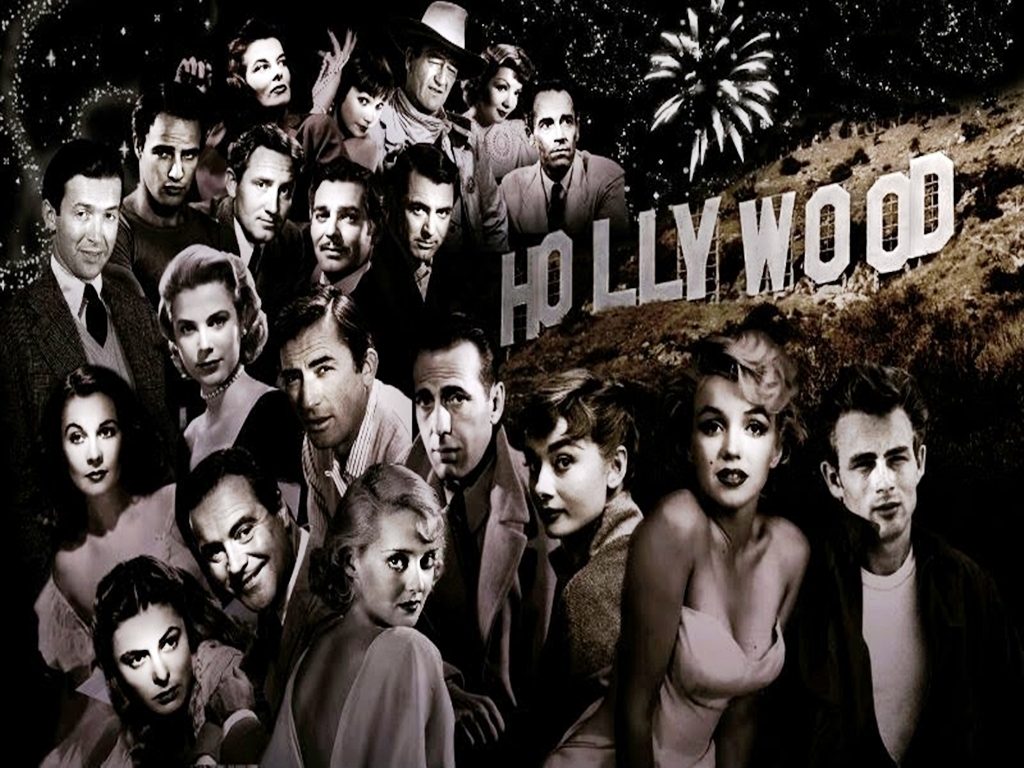
I thought I’d pander to my readership today since so many of you love information about celebrities and Hollywood and blah, blah, blah. I won’t be writing too much on the current list of celebrities that everyone seems to adore but will step back into the near past for some actual interesting trivia. I don’t care who they’re currently dating, I don’t care what they have to say about anything, and least of all who they might or might not be sleeping with. I find historical trivia when it comes to the Entertainment industry much more interesting. Here we go . . .
The American chemist Robert Hare discovered that a blow pipe flame acting upon a block of calcium oxide, which is lime, produces a brilliant white light that can be used to illuminate theater stages. We speak of someone who faces the glare of publicity as being in the “limelight”.
In the mid-1960’s, the motion picture director-producer Stanley Kubrick wanted from Lloyds of London an insurance policy protecting against losses should extraterrestrial intelligences be discovered before completion and release of his far-out motion picture 2001: A Space Odyssey. Lloyds declined.
By 1929, two years after the introduction of the “talkies”, motion pictures in the United States were attracting 100 million patrons every week.
Northwestern University once conferred an honorary degree on a dummy of the wooden variety. On ventriloquist Edgar Bergen’s dummy, Charlie McCarthy.
The English indirectly owe the preservation of Shakespeare’s birthplace to P. T. Barnum. In 1850’s, the Stratford-on-Avon cottage was neglected, and Barnum began to negotiate to acquire the house and have it shipped to his museum. The English were horrified and banded together to buy it and turned it into a national monument.
In the 1920’s and 1930’s, Charlie Chaplin was probably the most celebrated man in the world. During a visit to his native London, the motion picture comedian received 73,000 letters in just two days.
Acting was once considered so frivolous an occupation that authorities in Virginia, in 1610, forbade immigration of actors from England. Because of the evils that were thought to be associated with the craft, the cast of the first English play in colonial America in 1665 was arrested in Virginia, but later acquitted.
The stellar cataclysm in the motion picture 2001: A Space Odyssey was filmed by Stanley Kubrick in an abandoned corset factory in New York City. The cataclysm was a close-up shot of paint dripping in a bucket.
There are songs in all of Shakespeare’s plays except for Comedy of Errors. That play was the basis for a Broadway musical in 1938 that won the Pulitzer Prize: The Boys from Syracuse, by Richard Rogers and Larry Hart.
In 1957, Frank Sinatra was quoted as describing “rock-and-roll” as “funny and false and written and played for the most part by cretinous goons”. But when Elvis Presley finished his Army stint three or so years later, Sinatra paid him $125,000 to appear for 6 minutes on a television special.
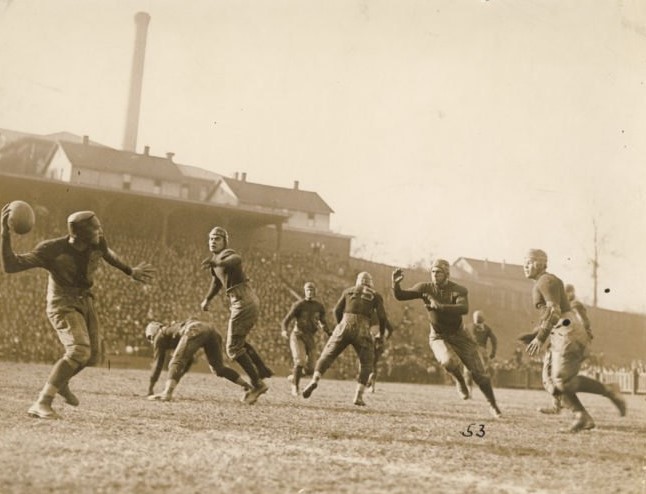
It’s unusual for me to post about sports but occasionally I do so anyway. My favorite sport by far is baseball but over the years football has wormed its way into my life. It all started back in the seventies with the “Steel Curtain” and the “Immaculate Reception” and my one and only hometown team the Steelers. Football has slowly become Americas pastime by not so gently nudging baseball aside. Today I would like to do a short history lesson about football, it’s origins, during the years 1861 – 1946 (my birth year). Read on, you may learn a few interesting things beacuse I certainly did.
1861: The first documented football game that was essentially rugby and was played at the University of Toronto..
1874: McGill University and Harvard play a hybrid version of rugby. The rule changes affect the game in the United States.
1875: The official game ball becomes an egg-shaped rugby ball. The field is now 100 yards long by 53.5 yards wide and teams are cut to 15 players per side referees are also added to the game.
1876: With the addition of the crossbar official goalposts now look like the letter “H”.
1880 – 1885: Game fundamentals are introduced such as the down system (going 5 yards in three downs equals a first down), along with a scrimmage line and yard lines. Teams are now eleven to a side. A field goal is worth five points, a touchdown and conversion, four points each, and a safety is two points. The first play calling signals and planned plays are introduced.
1894: The officiating crew is increased to three; a referee and two bodyguards, also known as the umpire and linesman.
1896: Only one backfield man may now be in motion before the snap, any can be moving forward.
1897: A touchdown now counts as five points.
1909: Now a field goal is worth three points.
1910: Seven players must now be on the line of scrimmage when the ball is snapped, establishing the basic offensive formation concept. The forward pass becomes commonplace in college football.
1912: A rules committee determines that a touchdown is now worth six points and adds a fourth down. It is now practical to punt.
1922: The American Professional Football Association becomes the National Football League.
1932: The NFL begins keeping statistics.
1933: There is a major NFL rule change: the passer can throw from anywhere behind the line of scrimmage.
1934: The modern football takes its current shape after a gradual evolution from the oddly shaped egg like rugby ball.
1939: Helmets became mandatory in college football, and the pros followed within a decade.
1941: It’s the end of the dropkick era. Ray McClean boots a conversion off the turf in the NFL championship game. In 2005, Doug Flutie created a sensation by doing it once again.
1946: The NFL’s first major rival league, the All-American Football Conference begins play. It lasts just four seasons with the Cleveland Browns winning all four titles.
It took another eight years before I realized from my father that I had been born a Pittsburgh Steeler fan. I first became a rabid baseball fan of the Pittsburgh Pirates for the next 20 years. Slowly but surely football reached out and grabbed me and when the 1970’s hit I was hooked. Unfortunately, I haven’t had much to cheer about with the Steelers in recent years. I was fortunate enough to move to New England and got to enjoy all of the years of Tom Brady and the Patriots. My allegiance wavered when Brady moved to Tampa Bay, but everything must come to an end at some point. Now I’m what would be called a fair-weather fan.
I’ve been a lover of history for most of my life, especially American history. That love motivates me to look for unusual or little-known historical facts. It seems the more I find the more there seem to be. Here’s a small collection for all of you history lovers out there.
The oldest seat of government in the United States can be found not in Massachusetts but in Santa Fe, New Mexico, whose governor’s palace was built in 1610, 10 years before the Mayflower landed in the New World.
The person who led the Indians in the battle of Little Big Horn was not Sitting Bull who stayed in the hills making medicine, but Crazy Horse.
There were ten 19th century American presidents who had been generals: Jackson, W.H. Harrison, Taylor, Pierce, A. Johnson, Grant, Hayes, Garfield, Arthur, and B. Harrison.
The longest war fought by the United States was the 46-year campaign against the Apache nation, which ended in 1886 with Geronimo’s surrender in New Mexico.
Lizzie Borden’s verdict was not guilty.
Lizzie Borden
The Pentagon was built with about twice as many bathrooms as would have been expected for a building of its size to comply with Virginia’s then legal code; Virginia law at the time required racial segregation of public buildings.
President Andrew Jackson was called Old Hickory because of his walking stick.
Paul Revere did not shout, “The British are coming”; he shouted, “The regulars are out.” The regulars were British infantry soldiers.
Although many people think that all of the states ratified the Prohibition Amendment, two states (Rhode Island and Connecticut) rejected it.
President Lincoln’s first choice to lead the Union was not General Grant but Robert E. Lee who rejected the offer because of his loyalty to Virginia.














 everyuselessthing.com