I decided today would be a good day to introduce all of you to “limerick time-travel”. This collection of limericks were created prior to 1900 so the wording may sound a bit strange. It just goes to further show that human beings while separated by more than 100 years write their limericks about all the same stuff. He we go . . .
💥
1879
There was a young man of Berlin
Whom disease had despoiled of his skin,
But he said with much pride
“Though deprived of my hide,
I can still enjoy a put in.”
💥💥
1878
There was a young lady of Rheims
Who was terribly plagued with wet dreams.
She saved up a dozen,
And sent to her cousin ,
Who ate them and thought they were creams.
💥💥💥
1870
There was a young lady named Tucker
Who, instructing a novice c*ck sucker,
Said, “Don’t bow out your lips
Like an elephant’s hips,
The boys like it best when they pucker.
💥❤️💥❤️💥❤️💥
And here’s a favorite from the year of my birth – 1946.
I try to be an avid reader of just about everything. I really enjoy reading poetry as well as being hooked on history. With today’s post I’ll try to mix those two interests. We’ll look back many years to the so-called sophisticated British Empire to find some of the most outrageous limericks and dirty jokes. It seems people are just people regardless of the time period they’re born into. The following piece of history (and I use the term loosely) will make some of you smile and some others cringe. The date of this little gem as best that can be determined was the year 1612. I’ll let you determine it’s value (if you can find any). Enjoy this piece from our sophisticated and disturbing ancestors titled “The Wooing Rogue”.
Come live with me and be my Whore
And we will beg from door to door,
Then under a hedge we’ll sit and delouse us.
Until the Beatle and come to rouse us.
And if they’ll give us no relief
Thou shalt turn Whore and I’ll turn Thief.
❤️❤️❤️
If thou can’st rob them I can steal
And we’ll eat roast-meat at every meal:
Nay! We’ll eat White bread every day
And throw out mouldy Crusts away,
And twice a day we will be drunk
And then at Night I’ll kiss my punk.
❤️❤️❤️
And when we both shall have the Pox,
We then shall want Shirts and Smocks
To shift each others mangy hide
Is with itch so pockified:
We’ll take some clean ones from a hedge
And leave our old ones for a Pledge.
❤️❤️❤️
Isn’t that the most romantic love poem ever? I agree it wasn’t nearly as interesting as works by Emily Dickenson or Robert Frost but it grabbed my heart and soul tightly and rightly. I sure wish I could have lived back then just to met the unknown author and to shake his hand. (Only after it had been thoroughly washed, of course). (SATIRE OFF)
Now that my never-ending retro trivia posts have been completed, it’s time to return to my first love those funny and bawdy LIMERICKS. As I’ve always said, I love limericks and I also love history. I’ve decided today to combine the two with a few limericks made famous during the World War II era. I assume some of these may have been written by a few GI’s but I can’t be sure. I find it refreshing that even during the worst war we’ve ever experienced, a sense of humor was still maintained. Some of these might be considered a little much for younger children. Be warned!
It’s been a long week of limericks and I’ve had my fill. I enjoyed the week immensely but it has had it’s drawbacks. I still find myself at odd hours of the night and early morning lying in bed thinking about how to rhyme words. Then I start mentally composing my own limericks and it’s driving me a little nuts. Todays post should help me to clear all of those limerick cobwebs from my brain. Her we go . . .
“To say of what is that it is not, or of what is not
that it is, is false, while to say of what is that it is,
and of what is not that it is not, is true.”
(Aristotle)
I feel better now that Aristotle has explained things for me.
In the Jurassic Park movies. the fierce Velociraptors are about as tall as an adult human. In real life, however, they were only as tall as a turkey.
Confucius has more than three million living descendants.
Pablo Picasso, the influential Spanish cubist, wasn’t breathing when he was born in 1881. His face was so blue that the midwife left him for dead. One of his uncles revived him by blowing cigar smoke up his nose.
From the 1300’s to the 1600’s, the heads of England’s slain enemies – including William Wallace and Thomas More – were displayed on London Bridge.
The first recorded mastectomy was performed in A.D. 548 on Theodora, Empress of Byzantium.
The word “hooch” comes from the Hoochinoo Indians of Alaska. They made a liquor so strong it could knock a person out.
Spoons were such a rare novelty in Elizabethan England that wealthy aristocrats would bring their own folding spoons to fancy banquets.
AND LAST BUT NOT LEAST
Here is a riddle found inscribed about 3500 years ago on a stone slab. It’s mainly for my better-half who should have no problem coming up with the correct answer.
In your mouth and your urine, constantly stared at you,
It’s time to end this series of posts about limericks. It’s been fun writing and researching all of these older limericks and I’ll continue to do so with periodic posts of this type. I became enamored with limericks as a ten year old boy listening at the door of a card game while my father and his friends were playing poker. One of them recited the following limerick and I’ve never forgotten it. It imbodies everything I like in poetry. It’s both a little funny and a little bawdy. Enjoy. . .
☘️
There was a man from Cass
Whose balls were made of brass.
During inclement weather he’d rub them together
And lightning would shoot out of his ass.
☘️☘️
If you aren’t smiling at that one then limericks aren’t for you. Over the years I’ve written many myself and upset both friends and family because I lean to the bawdy side of things. The following ditty was written by me just a few days ago and it reminded just how much fun it is to create one. Here it is . . .
I’ve always been a huge fan of Asimov even before I learned he was a proficient writer of limericks. I’ve been reading his novels for many years and have always considered him to be fellow lover of science fiction. After reading some of his limericks I discovered his relationship with John Ciardi and their famous limerick wars. For those of you not familiar with Azimov and his works I’d recommend you read his greatest work, The Foundation Series. I love reading long and involved stories and I’d put Asimov right up there with J.R.R Tolkien and J. K Rowling. Here’s a few samples of his well constructed limericks.
David McCord was a notable American author, best known for his contributions to children’s poetry and also serving as the executive director of the Harvard Fund Council for several decades. His limerick are still somewhat mild as seen in Mr. Lear’s contribution.
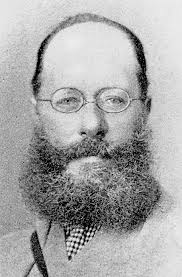
I’d like to introduce to you Mr. Edward Lear. He was a prolific writer of hundreds of limericks in the early days. They are much milder in content than what we are currently seeing. Enjoy!
I pride myself on having a huge and varied collection of limericks as you well know. Most of them are very old with the identity of the writers long forgotten. For the next two weeks I’ll be highlighting some of the more famous limerick writers with samples of their work. Most were well known poets, writers, and authors. Some of their limericks will be off-color and a bit sexual so I recommend that younger children be monitored. Over the next two weeks you’ll be introduced to some of histories best limerick authors. I hope you enjoy them as much as I have.
The first thing I’d like to do is give you a short history lesson on limericks because they’ve been around a lot longer than you might think. The first known limericks appeared in the early 18th century and they just happened to be written in French (and they weren’t called limericks then). Around that same time the Irish Brigade was serving in France (1691 to 1780). The short poems were eventually imported to Limerick, Ireland where their current name originated. Edward Lear 1812-1888, initially wrote many rather mild limericks. It wasn’t until the Victorian Era that the citizenry seized upon the limerick as a way to vent as many four-letter words as possible, much to the delight of young schoolboys. It seems that the bawdiest limericks of that time tended to be written by the British. A few samples of Lear’s tamer limericks will be featured in my next post in two days.
Here is a sample a moderately bawdy limerick of the era:
💥💥❤️💥💥
Said a widow whose singular vice
Was to keep her dead husband on ice,
“It’s been hard since I lost him.
I’ll never defrost him,
Cold comfort, but cheap at the price.”
❤️❤️❤️
My next post will be an introduction to Edward Lear who authored many limericks over many years.
I thought today I would post a few sports related limericks. I need to cheer up a little after finding out the NFL morons put the screws to Coach Belichick. They couldn’t find a way to beat him on the field so they they took their cheap shot by denying him a first ballot entry into the Hall of Fame. If they had any balls at all they’d step forward and explain their reasoning. We need to know just who these stupid vindictive bastards are.
💥
I was told by a football-mad chum
He’d been badly mauled in a scrum.
One poor ear, I hear,
Ended up in the beer,
And his teeth in a quarterback’s bum!
💥💥
A golfer, employing a wedge,
Chipped his chip-shot behind a thick hedge.
But he hadn’t been seen,
So he strolled to the green
And dropped a new ball on the edge.
💥💥💥
A basketball player named Small,
Who was actually fourteen foot tall,
Could score just by standing
And putting his hand in
The basket and simply dropping the ball.
💥💥💥💥
There’s no-one so dreadful as Bender,
For batters whose bodies are tender.
He gets on their nerves
With his murderous curves
That demand either death or surrender.
🏈🏈🏈🏈🏈
I trashed the NFL because of their mistreatment of Belichick. That was coming from a life-long Steeler fan whose teams regularly had their asses kicked by Belichick. Good is just good and admiration lasts forever.
❤️❤️❤️❤️❤️
GO STEELERS & PATS AS LONG AS THEY AREN’T PLAYING EACH OTHER




 everyuselessthing.com