Do you own a cowboy hat or other articles of western clothing. The American Old West has fans around the globe as reflected in thousands of Japanese cowboys who live for the fantasy. I was a big fan at an early age when I received my first two-gun cap pistol rig. When the novelty of that wore off, I was pretty much finished with my desire to be a cowboy, so I moved on to wanting to be a professional baseball player and later still a first-class skirt chaser. I’m not wearing a cowboy hat, boots, or assless chaps but I still can offer a few limericks from the Old West.
To all of the baseball lovers out there, here’s a little trivia that goes back seventy-two years. It’s nice to know that the tradition of the game remains as frustrating and fascinating as ever.
In baseball there is no clock. A pro basketball game lasts 48 minutes while hockey and football games last 60 minutes. But as the old saying goes, a baseball game (or the inning) isn’t over until the final out. A game on May 21, 1952, between the Cincinnati Reds and the Brooklyn Dodgers proved the old saying true.
The first half-inning had lasted one hour. Twenty-one batters had gotten hits and seven walks, and two batters had been hit by a pitched ball. Fifteen runs had scored, and three men were left on base. The following day the New York Times printed some of the records the Brooklyn team had broken in that that first-half inning:
Most runs scored in one inning (15)
Most runs scored in the first inning (15)
Most runs scored with two outs (12)
Most batters to bat in one inning (21)
Most batters to reach base safely in a row (19)
This last record may be the most amazing of all. Only the first batter and the last had not gotten on base safely. The 19 batters in between had all made it – even the man who was put out on the basepaths for the second out. The Times confessed it couldn’t be sure that 19 batters in a row was a record, but if any major league team ever did better, no one remembers the occasion.
I’ve been a baseball lover my whole life. I have a hard time watching baseball games these days because it’s always been more fun to play than to watch. Thank God for highlights provided on the Internet which makes watching much more pleasant. I was born in the Pittsburgh area and was required to be a rabid Pirates fan by my father and grandfathers. Unfortunately, the team has been a serious disappointment for the last twenty or so years. I still follow the team but not too closely anymore. Maybe that would change if the management of the team ever decides to pry open their fat wallets and spend a little extra money for next level players.
I’m also big into trivia and as I’m surfing the net or reading books, I constantly look for baseball trivia. Fortunately, or unfortunately some of the greatest stories were from the early years of the game before rule changes that made it impossible for players to show much emotion. The current whinny umpires are a tad too sensitive for my liking and really need their moms to show up and hug them. Those nasty baseball players are just soooooooo mean and they apparently hurt the poor umpires’ feelings. Just step-up guys and grow a pair!!! If it’s too upsetting for you – get the hell out of the business. They are one of the reasons that will eventually cause the league to turn over all umpiring duties to computers.
Here are a few trivia facts for you for a taste of baseball at its best.
One of the most popular baseball players of the 1880’s was a catcher-outfielder named Michael Joseph “King” Kelly, who played for Cincinnati, Chicago, New York and Boston. Kelly was a good hitter and a great baserunner. When he tried to steal a base his fans would shout, “Slide, Kelly, Slide!” This phrase was soon printed in the newspapers and made Kelly famous. Kelly was also an alert ballplayer who was always looking for a way to get an advantage over the other team. One day, when he was sitting on the bench, an opposing batter hit a high foul ball that none of Kelly’s teammates would be able to catch. Kelly leaped off the bench and went after the ball. At the same time, he was shouting to the umpire, “Kelly now catching!” Kelly caught the ball, but the umpire refused to allow the catch. “It’s not against the rules,” Kelly declared. “It says in the book that substitutions can be made any time.” The umpire still wouldn’t call the batter out. But Kelly was right. That winter, a new rule was written into the book. Because of Kelly’s alert play, the new rule said that a player could not enter the game while the ball is in play.
On August 13, 1910, the Pittsburgh Pirates played the Brooklyn Dodgers. After nine innings the game was tied, but darkness stopped play. The nine-inning statistics showed that each team had scored 8 runs on 13 hits and committed 2 errors. Both clubs had sent 38 men to the plate, with both sets of fielders credited with 27 put-outs and 12 assists. There were 5 strikeouts recorded against each team, and each side had given up three walks. It was the evenest game ever played.
One day in a Southern League game a batter for Knoxville smashed a long, high fly to center field. Arnie Moser, the centerfielder for Nashville, ran all the way to the scoreboard. The ball was over Moser’s head, and he leaped for it but missed. The ball hit the scoreboard and came down. Moser also hit the scoreboard but did not come down. His belt had caught on a wooden peg, and he was hanging helplessly on the fence, unable to chase the ball and get it back to the infield. Moser’s teammate left-fielder Oris Hockett came racing over to back-up the play. “I’m stuck! Get me down!” yelled Moser. Hockett looked up at his friend, looked for the ball, and looked at the runner rounding second base. He had to make a choice quickly. “Get me down!” yelled Mosier again. “Wait a minute”! hollered Hockett. He picked up the ball and threw it back to the infield to keep the runner from scoring. Only then did he go back to the fence and help get Arnie Moser off the scoreboard peg.
In my younger days I considered myself a scratch golfer. I played with many of my friends, family, and people I worked with for years and always had a great time. I thought today I’d lighten things up a little with some golfing jokes. I’m sure all of you golfers out there will appreciate these three jokes but I can honestly say they can’t compare to the experiences I actually had with my friends and family. Enjoy . . .
One day a man came home from work and was greeted by his wife dressed up in a very sexy nightie. “Tie me up,” she purred, “and you can do anything you want with me.” So, he tied her up and went golfing.
So, there are three golfers, (Bob, Max and Ted) who are looking for a fourth. Bob mentions that his friend George is a pretty good golfer, so they decide to invite him for the following Saturday. “Sure, I’d love to play, says George, but I may be about 10 minutes late, so wait for me.” So, Saturday rolls around. Bob, Max, and Ted arrive promptly at 9 AM and find George already waiting for them. He plays right-handed and beats them all. Quite pleased with their new fourth, they ask him if he’d like to play again the following Saturday. “Yeah, sounds great”, says George. “But I may be about 10 minutes late, so wait for me.” The following Saturday, again, all four golfers, show up on time, but this time George plays left-handed and beats them all. As they’re getting ready to leave, George says, “See you next Saturday, but I may be about 10 minutes late, so wait for me.” Every week, George is right on time and plays great with whichever hand he decides to use and every week, he departs with the same message. After a couple of months, Ted is pretty damn tired of this routine, so he says, “Wait a minute, George. Every week you say you may be about 10 minutes late, but you’re right on time. You then beat us either left-handed or right-handed, what’s the story? “Well,” George says, “I’m kind of superstitious. When I get up in the morning, I look over at my wife. If she’s sleeping on her left side, I play left-handed, and if she’s sleeping on her right side, I play right-handed.” “So, what do you do if she’s sleeping on her back?” “Well . . . That’s one of days I’ll be 10 minutes late.”
A man constantly and continuously talked only about golf. His angry wife threatened to leave him if he didn’t talk about something else. She: “Let’s talk about sex.” He: “I wonder if Tiger Woods got laid last night?”
Well, it’s Sunday and the Steeler game has been canceled until Monday due to weather concerns. It’s a little annoying but not all that surprising for anyone who’s ever been in Buffalo during the winter. In my previous life as a regional manager for a national chain I was assigned stores in Buffalo and Niagara Falls. I swear to God that every time I made a trip there during the winter, I ended up getting snowed in and spending an extra day or two in order to give the citizens time to clean up the snow, open the roads, and allow me to fly the hell out of there. Buffalo is a nice town (sarcasm) but not a place I’d like to spend any extra time in. I’ve been to Niagara Falls and unfortunately if you’ve seen one waterfall you’ve seen them all. With that being said and since my day has been interrupted, I thought I’d get a little silly. Everyone seems to love the limericks I post so I offer you a few odd ball limericks today. These are tongue twister limericks written by a gentleman named Lou Brooks in 2009 in a book of the same name. Enjoy . . .
❄️❄️❄️
Nosy Rose got closed in a closet of clothes,
The clothes closet closed on Rose’s red rosy nose,
She tweaked on her beak,
For over a week,
Rose’s nosy red nose now hangs close to her toes.
🌨️🌨️🌨️
Walt walked and talked on his wife’s walkie-talkie,
Walt’s wife’s walkie-talkie made Walt’s talky-talk squawky.
Wide awake while Walt walked,
Was what Walt was while he talked,
While Walt’s wife walked her way to Milwaukee.
Two of these should be sufficient. Trying to get a computer program to type these as I speak is ridiculous. Here’s a description of my day in a nutshell.
The internet has become famous for anonymous facts claiming to be true as well and out-and-out fake news and scams of all kinds. Here are ten facts that are surprising and amazingly TRUE.
More tickets were sold to see the movie Gone With the Wind in theaters than people living in America at its release.
John Lennon signed the official paperwork formalizing the split of the Beatles while staying at a Disney World hotel.
Yoda from the movie Star Wars, cookie monster from Sesame Street, and Miss Piggy from the Muppet Show were all voiced by the same person.
The leading role in the movie Forrest Gump was originally offered to John Travolta.
Leonardo DiCaprio didn’t draw the sketch of Kate Winslet in Titanic, but director James Cameron did.
Gene Roddenberry originally wanted Patrick Stewart to wear a wig for his iconic Star Trek role as Captain Jean-Luc Picard.
Stephen Spielberg submitted Schindler’s List as his final project for film school.
Brad Pitt’s first acting gig was dressing up as a giant chicken.
The NFL, NBA, and MLB have all had one player win the championship MVP while playing for the losing team.
Violet Jessop was the one passenger who was aboard both the Titanic and its sister ship the Britannic when they were sunk.
As the title suggests here are a few humorous stories and one gratuitous limerick. They’re all pearls of wisdom and I hope they help make you a little wiser. Here goes . . .
Once Yogi Berra, in his younger days, was in a batting slump. The manager felt this was because he was swinging at too many bad pitches. He therefore called Yogi to one side during a slow day in the schedule and gave him an intensive course in judging incoming baseball to determine whether they were outside the strike zone. Yogi’s batting promptly grew even worse, he said “It’s this judging of balls. I just can’t hit and think at the same time.”
And here’s a limerick for all of you aficionados:
To moralists, sex is a sin
Yet Nature suggests we begin.
She arranged it, no doubt,
That a fellow juts out
In the place where a damsel juts in.
🤣🤣🤣
A friend of mine was on a plane. It had achieved a high and steady flight and was set on autopilot. The pilot stretched, yawned, and said, “What I need now is a cup of coffee and a blow job. “What the pilot didn’t know was that the public address system was still on, and his words were heard throughout the plane. A stewardess hurriedly ran forward to the cockpit to tell the pilot to shut off the PA system before he committed any further indiscretions. As she ran by, an elderly female passenger yelled out, “Don’t forget, honey. He wants coffee, too.”
Julius Caesar was once asked what kind of death was the best. He gave the best conceivable answer, for he said, “A sudden one.” Unfortunately for Caesar he was assassinated the next day – suddenly.
An irate woman once told Winston Churchill, when he was a young man and temporarily sporting a small mustache, “Young man, I like neither your politics nor your mustache.” To which Churchill replied, “Madam, you are not likely to come into contact with either.”
I seem to be on a sports mission this week even though I’m not a devoted sports fan. Fortunately, or unfortunately I have a family member who is a professional sports analyst and as I watch him a lot of sports information and misinformation has made its way into my brain. I then decided to look for some of the more obscure and interesting facts about baseball that you may never have heard before. I think you’ll find them interesting.
Abner Doubleday
Though a U. S. Army officer, Abner Doubleday, is generally hailed as having invented baseball at Cooperstown, New York, in 1839. Games called baseball, embodying the idea of hitting a ball and running bases were mentioned in English publications as early as 1744 and later in America 14 years before the Declaration of Independence.
During the baseball rivalries between the two major leagues in the 1890’s, the Pittsburgh Nationals, taking advantage of a technicality, signed a player from another club. For that reason, the Nationals president, J. Palmer O’Neill, and his club later became known as the Pittsburgh Pirates
Hugh L. Daily
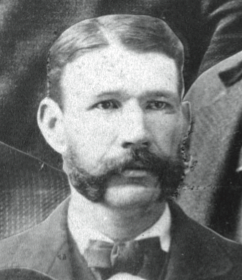
Between 1882 and 1887, Hugh L. Daily played second base, shortstop, and pitched for several major league baseball teams. As a pitcher, he won 74 games, including a no-hitter, and he registered a long-standing record of striking out 19 batters in a game. Not bad for a man with only one arm.
The first formal rules for playing baseball required the winning team to score 21 runs.
Hoyt Wilhelm
The famous knuckleball baseball pitcher Hoyt Wilhelm hit a homerun in his very first time at bat in the major leagues, and never hit another in more than 400 times at bat in a 20-year career. In his second season, he hit a triple and never had another, and two doubles and hit only one more of them. His career batting average was .088.
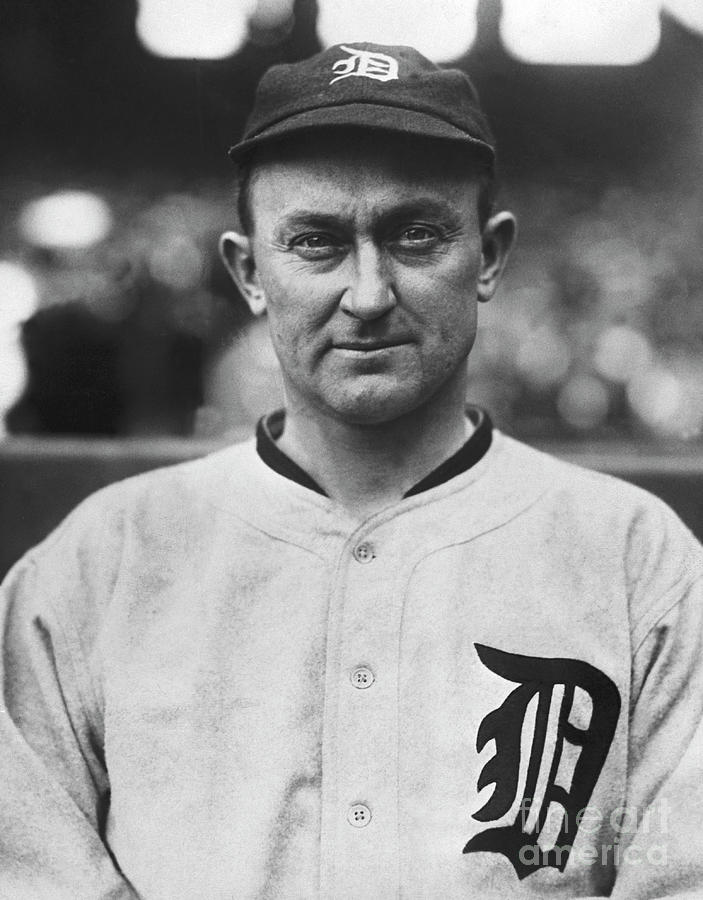
Ty Cobb
Ty Cobb, of the Detroit Tigers played slightly more than a score of baseball seasons in the American League. He banged out 4,191 hits and posted a lifetime batting average of .367.
To boost attendance, the St. Louis Browns of the American League signed up a midget in the 1951 season. Eddie Gaedel was 3’7″ tall and wore uniform number 1/8th. He went to bat only once, in a game against the Detroit Tigers, and walked on four pitches. Midgets are now banned by the major leagues.
Babe Ruth
For 62 years, baseball’s greatest slugger, Babe Ruth, alone held the record (nine) for pitching the most one-season shutouts in the American League. In 1978 he became the co-holder, with Ron Guidry, of the record.
Growing up I was expected to play as much sports as possible by my ever so athletic father. I completed one year of varsity basketball which I absolutely hated and two years of football which ended with my being unconscious on the sidelines after being drilled by a rather large and muscular defensive player. Baseball was always my main thing, and I began playing at seven years of age and played until I went off to college. Unfortunately for me the college I attended had no baseball team and that really pissed me off as well. I had many coaches throughout the years and was required to sit and listen to endless “pep talks” prior to our games and endless criticisms if and when we lost. There were only one or two coaches who actually took the time to create and deliver a pep talk that accomplished what they wanted. A few others believed in blatant terrorism and threats to help motivate us to a victory. Today’s post is a short story about some real coaches with real methods that showed real results.
⚾⚾⚾ 🏈🏈🏈
Coaches use all kinds of psychology to lift the spirits of their players. Notre Dame football coach Knute Rockne once refused to sit with his team in the second half of a game. He sat up in the stands, which got the team so fired up they went out onto the field and wonthe game.
One of the most unusual pep talks was delivered by coach Dana X. Bible during the Indiana-Nebraska football game of 1936. Nebraska was losing, 9-0, at halftime. Coach Bible looked scornfully around the dressing room and berated the players unmercifully. “You don’t have the desire to win!” he thundered. “You don’t have the courage to fight back!” Then he said, “The first eleven players who go out that door will start the second half and the rest of you will sit on the bench.” Immediately, the fired-up team jumped to their feet trying to quickly reach the door. But Bible got there first and barred the way. “That’s not good enough,” he snarled. “You’re not ready to win.” A slugging match followed with teammates who really liked each other pushing and shoving, and then scrambling for the door. It became a free-for-all but finally, eleven players managed to squirm through. Bible immediately put those eleven on the field and they beat Indiana 14-9.
I’m a bit of a history lover but that usually involves old history like the Romans, Egyptians, and the Greeks. Today I thought I’d go into the past back to 1940. That’s well before my time and I’m pretty sure there aren’t many people left who were born in 1940. I’m also sure you’ve heard many people say it was always better back in “the good old days.”, so let’s find out.
The top three radio shows of 1940 were The Adventures of Ellery Queen, Edgar Bergen and Charlie McCarthy, and Fibber McGee and Molly. I wonder if they were appreciated by their audience as much as some of the TV shows are today.
1940 was also the first and only year for the production of the Mercury 8, a new model car. Also available was the Chevrolet Special Deluxe Sport Sedan, the new Ford V-8, and the Buick Super Model 51 Four-Door Sedan.
It was the year of the World’s Fair held at Flushing Meadows-Corona Park in New York and was the largest world’s fair at that time.
Because of the war there were shortages of many things but one of the first new items to return to the stores was a new product, nylon stockings. They went on sale for the first time on May 15, 1940.
The 1940 college football season ended with the University of Minnesota Golden Gophers being named the national champions and Stanford in second place. The Heisman Trophy winner was Michigan halfback Tom Harmon. In the National Football League, the Chicago Bears defeated the Washington Redskins 73-0 in one of the most one-sided games in professional football history.
Here some facts and figures of 1940. The president of the United States was Franklin D. Roosevelt, and the vice president was John Nance Garner. The population of the United States was 132,122,000, and the average salary for a full-time employee was $1200. per year. The minimum wage per hour was $.30.
On May 15, 1940, the first McDonald’s restaurant is opened in San Bernardino, California by brothers Dick and Mac McDonald.
On January 31, 1940, Ida M. Fuller became the first American citizen to receive a Social Security check. Her first check was for $22.54.
On January 17, 1940, Eleanor Roosevelt publicly endorsed birth control in a statement that she was not against the “planning of children”.
Now let’s get down to the important stuff. Here are the average costs for many of their everyday foodstuffs and we can only wish to have these prices back again. A loaf of bread was $.08, a pound of bacon was $.27, a dozen eggs was $.33, a gallon of milk was $.26, 1 pound of coffee was $.21, gasoline was $.11 per gallon, postage stamps were .03, the average car cost was $990.00, and a single-family home averaged just $2938.00.