Seventy percent of Swedish women claim to have participated in a threesome.
Every year more than 11,000 Americans hurt themselves trying out bizarre sexual positions.
The average person spends two weeks of their life kissing.
Forty-six percent of women say a good night’s sleep is better than sex.
Elvis Presley called his penis “Little Elvis.”
The sperm count of American men is down thirty percent from thirty years ago.
Americans spend more money each year at strip clubs than that all the theaters and classical concert halls in the country combined.
In ancient Greece and Rome dildos were made out of animal horns, ivory, gold, silver, and even glass.
Only thirty-one percent of men admit to looking at other women when in the company of their spouse or girlfriend. Their partners say the figure is actually closer to sixty-four percent.
In ancient Rome, men found guilty of rape had their testicles crushed between two stones as a punishment.
And here’s one of my all-time favorite sexual facts: Four popes have died while participating in sexual acts.
It seems that almost everyone is obsessed with their body image and that’s understandable considering the wide range of odd, shaped bodies we see every day. Even though there are so many variations, the functions and organs of the body are all too similar. Here are a few trivia facts about our bodies. They can be a thing of beauty or not and they can be a bit disgusting or not. Beauty is definitely in the eye of the beholder.
Did you know that approximately 1 in every 18 men have a third nipple. People who have the condition will sometimes suffer from atelophobia, the fear of being imperfect. Celebrities Tilda Swinton, Carrie Underwood, Lily Allen, and Mark Wahlberg have third nipples. Mark Wahlberg’s third nipple was airbrushed out of his famous Calvin Klein underwear ad.
If you have a fear of facial hair, you could be suffering from pogonophobia. In ancient times beards were a sign of strength and wisdom and were only cut or sheared off as punishment or if someone was in mourning.
Were you aware that your left lung is slightly smaller than your right. It’s to allow room for your heart.
Did you know that women need more sleep at night than men. Women need an extra hour of sleep but sometimes don’t get it. Not getting that extra hour is believed to be one reason why women are more susceptible to depression than men.
My cat’s hairballs creep me out. I discovered recently that human beings can also have hairballs and they’re even more disgusting than the cats. The largest human hairball ever removed from the body measured 15 inches in diameter and weighed 10 pounds. The patient also happened to suffer from a condition called trichophagia (the eating of one’s own hair).
The heart is life. Over the course of a lifetime the human heart beats 3 billion times. Your heartbeat mimics the music you listen to and can trigger physiological changes that increase or decrease your blood pressure. The heart is a massive blood pump circulating blood through an average body every 23 seconds or approximately 4000 gallons of blood each day.
Over the last three years I’ve been forced by circumstance to become somewhat knowledgeable about the medical profession and its many practices. It’s not something I ever wanted to know but fear is a great motivator. It motivated me to do a great deal of research to find out exactly what all my health problems were and suggested remedies. The following 10 items will give you a short education on trivia concerning the medical profession that you might find interesting. It’s much better to read them in a blog posting than in person.
The first contraceptive diaphragm – centuries ago – were citrus rinds – halves of oranges for example.
Male embryos, fetuses, and babies have a higher incidence of morbidity than females. Correspondingly, there is a higher rate of language disability among boys than girls.
Ketchup once was sold as a patent medicine. In the 1830s it enjoyed a measure of popularity in the United States as Dr. Miles Compound Extract of Tomato.
Victims of disease -people and animals – are buried underground, and yet the soil remains fairly free of disease germs. Germs are destroyed by the bacteria and other microscopic organisms living in the soil.
For every ounce of alcohol you drink, it takes an hour to regain full driving faculties, that is, normal, alert, clearheaded reactions. If you have 5 ounces of alcohol around 8 PM, you should not drive until at least 1 AM the following day.
Influenza was so named because the cause of the disease was supposedly the evil “influence” of the stars. This “influence” was believed also to be the cause of plagues and pestilences.
Opium frequently was used as a pain killer by army doctors during the U.S. Civil War. By the end of the war, according to conservative estimates, 100,000 soldiers were addicted to opium – at a time when the total population of the country was only 40 million.
In 1777, George Washington had the entire Continental Army – then 4000 men- vaccinated. This action was considered controversial at the time because few American doctors believed in vaccination. It may have saved the Army as a fighting force.
The use of antibiotics did not begin in this century. Early folk medicine included the use of moldy foods or soil for infections. In ancient Egypt, for example, infections were treated with moldy bread.
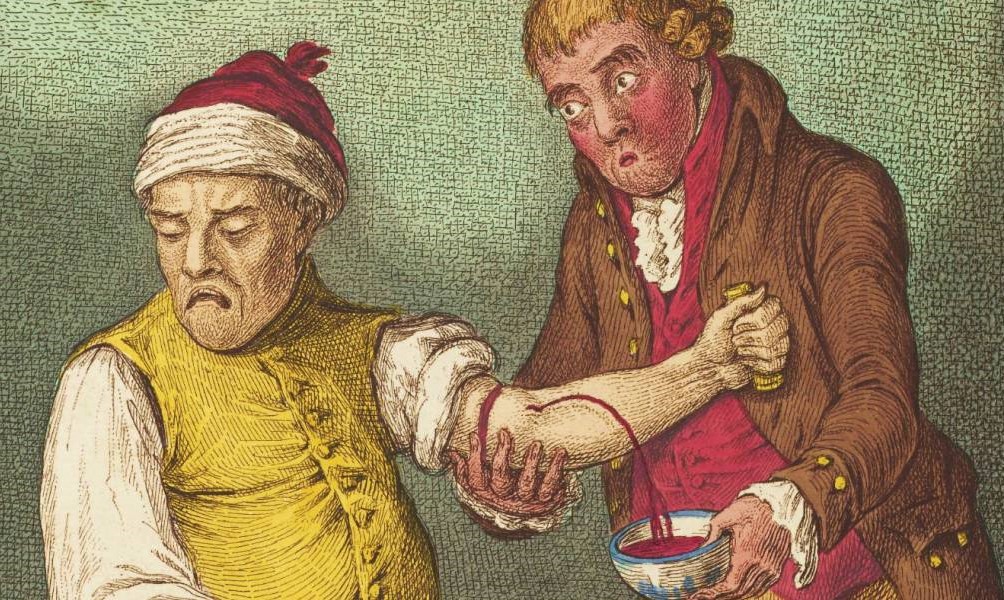
About 8 ounces of lamb’s blood were injected into the veins of a dying boy, temporarily restoring him, in the first blood transfusion on record. It was performed in 1667 by Gene Baptiste Dennis, physician to King Louis XIV of France.
As you’re probably aware I collect weird and odd trivia. I stumbled upon a book by a Mr. Russ Kick titled “50 Things You’re Not Supposed to Know”. It’s a collection of somewhat obscure facts collected by Kick. I’ll list ten of the facts from the book without the accompanying lengthy explanations provided to prove his points. Some facts appear outrageous, but it seems his research was well done. If you want to check his facts, then you’ll need to find and buy the book or do some lengthy research online.
Barbie is based on a German sex doll
Fetuses masturbate
George Washington embezzled government funds
Scientists are re-creating the highly lethal 1918 Spanish Flu virus
Several thousand Americans were held in Nazi concentration camps during WW2
Well over 300,000 tons of chemical weapons have been dumped into the sea
Men have clitorises
Native Americans were once kept as slaves
James Audubon killed all the birds he painted
The Environmental Protection Agency lied about New York’s air quality after the 9/11 disaster.
Well yesterday was when the ever-so-lame Earth Day was celebrated. I’ve never celebrated this day the same way I don’t recognize or celebrate Kwanza. All of you so-called “Greenies” out there can get as excited as you’d like but not me. My concern for the environment is ongoing every day and not just on one day. Many people are truly “Green” but they’re in the minority. The majority of citizens when polled all love Earth Day but ask them again a week later. They aren’t quite that serious about it as they’d like everyone to believe. It’s become a social stigma not to beat the environmental drum.
This is a partial repost from April of 2013 to show that my opinions remain unchanged. Here are a few facts about how Earth Day was started and by the POS who was responsible. Read and learn you “Green” fools about one of your demi-gods who cared more for the planet than the life of an innocent women.
I’ve been around since the inception of Earth Day by Ira Einhorn and his half-assed hippy movement and while some of the initial ideas were valid concerning abuses of the environment it has now evolved into a semi-religious movement with goals and political aims that go way too far and are harming the country. Everything green becomes more important than life itself. The movement has no respect about another person’s property rights, their jobs, or the devastating effect many of the stupid EPA laws have had on unsuspecting citizens and businesses.
As in any political movement you must look at the leader for his ideas and credibility. Einhorn to me is just a stone-cold killer who thinks the laws of society don’t apply to him.
Ira Samuel Einhorn, a.k.a. “The Unicorn Killer” (born May 15, 1940), is a convicted murderer, and American activist of the 1960s and 1970s. He is now serving a life sentence for the 1977 murder of Holly Maddux.
How many Earth Days has “Holly Maddux” missed since she was beaten to death by Einhorn, stuffed into a trunk, and stuck in a closet. It took more than twenty years to find, arrest, return him to this country, and convict him.
To quote the murderer: “Underlying the themes of Earth Day is a call for mankind to align itself with nature, and against itself, enlisting human beings to take part in a battle that seeks to place humanity under the control of an enlightened elite, one that values the interests of nature above that of people.
If you’re interested and want more information about Einhorn and Earth Day, just click here to learn more about the case:
I’ve made it clear over the years that I’m a huge fan of Isaac Asimov. I’ve tried to read as many of his writings as I could find, and his limericks are outstandingly bawdy. He also has another talent which I really appreciate and that was his ability to collect odd facts. It never ceases to amaze me how diverse his level of knowledge became over the years, and it still fascinates me. It was one of my motivations for starting this blog because there are just so many interesting odd and weird facts available and most of them never see the light of day. This blog is my way of bringing as many of those facts as possible to light so you all can enjoy them. Today’s topic of discussion will be the world of entertainment. Where else could you find the appropriate amount of weirdness that Asimov so religiously documented. Here we go.
Not until 1959 was a play by a black woman produced on Broadway. 29-year-old Lorraine Hansberry’s starred in, A Raisin in the Sun, which concerned the problems (comic and serious) of a black family in modern day America. It was highly successful and eventually made into a motion picture.
The great French actress Sarah Bernhardt was obsessed with death. As a teenager, she made frequent visits to the Paris morgue to look at corpses of derelicts dragged up from the Seine, and she begged her mother to buy her a pretty rosewood coffin with white satin lining. The coffin became part of the Bernhardt legend. Occasionally, she slept in it, and eventually she was buried in it when she died at the age of 79.
A U.S. television network’s dramatic representation of the trial of Nazi judges was sponsored by the natural gas industry. The word “gas” was excised from the script, but a few “gases” slipped by the censors; those had to be blipped before the program was aired.
During the pre-Broadway tour of the 1936 musical Red, Hot and Blue, Cole Porter had to do a lot of rewriting. Rather than hire a professional stenographer to take his dictations and transcribe the changes, he used the services of one of the stars of the show, Ethel Merman. Before she went into show business, Ms. Merman had been a secretary. Porter described her as “among the best stenographers I’ve ever had.”
A tambourinelike instrument used in old time minstrel shows was made from the jawbone of a horse or ass, from which the instrument got its name, “Bones.” When the bone was thoroughly dried, the teeth were so loose they rattled and produced sounds as loud as a castanet. Every minstrel troupe had a “Mr. Bones.”
Rin Tin Tin, for years the most famous dog in the world, was born to a war-dog mother in a German trench in France during World War I. Deserted when the Germans retreated, the German-shepherd puppy was found by an American officer who just happened to be a police dog-trainer from California. He trained Rin Tin Tin when they returned home. The dog was so intelligent he came to the notice of Warner Brothers Studios, which signed him up for what turned out to be a long career as one of the biggest box office draws of the silent screen era.
I just love these hidden stories and facts and envy Azimov’s ability to research and publish all of them. I’m happy to share them with you and I hope you enjoyed them.
The human body never ceases to amaze. Just when you think you’ve heard everything you could possibly hear about human bodies and their uses and peculiarities, you find out you had no idea just how strange they can be. So, let me start your education with more facts about your human body.
Fingernails grow four times faster than toenails.
Bright light and sunshine can make you sneeze.
Right-handed people live on average, nine years longer than left-handed people.
Redheads are more likely than other people to be left-handed.
Humans sweat up to a pint of fluid each night.
Humans can survive longer without food than they can without sleep.
Sleeping with an electric blanket can interrupt your sleep patterns and make it difficult to get a good night’s sleep.
Earwax is not wax.
Your belly button is home to more than 60 strains of bacteria.
The average adult toenail is home to 43 species of fungi.
And here’s an historical fun fact that is one of my favorites:
Benjamin Franklin wrote an essay about farts and flatulence called “Fart Proudly”.
Is it just me or is the media using the term “genius” way too often. It seems that if your successful at anything you’re a genius until the novelty wears off and then your back to being a regular schmuck like everyone else. Real geniuses are a rarity, and they bring their own baggage along with them. They are usually a genius in a specific area but in other areas not so much. I went to college with a guy who could pick up a #2 pencil and in mere minutes, completely copy works by Michaelangelo. It was effortless and left many of us absolutely amazed. What most people didn’t know was that he was something of a recluse. He hated groups of people and was barely able to attend classes. Many times, he would complete wonderful projects at his apartment and then contact his fellow students to deliver them to the teacher. He was unable to speak before groups of more than 2 or 3 without panicking. Was he a genius? Yes! Was he happy? I don’t honestly know.
I decided to checkout a few well know geniuses to get a better feel about how they handled their gift. Here are a few facts.
The eccentric English chemist and physicist Henry Cavendish (1731-1810) had no appropriate instruments for that purpose, so he measured the strength of an electrical current in a direct way. He shocked himself with the electrical current and estimated the pain. He still managed to live to be nearly 80 years old.
The first person to work out the manner in which a telescope handled light according to strict scientific principles was the German astronomer Johann Kepler. His eyesight was so bad, however, that it was useless for him to try to use a telescope himself.
Thomas Edison, who bordered on being totally deaf, do not think of the phonograph in terms of music and entertainment. He was interested in the business and educational potential of the invention.
Henry Ford in 1921 proposed that milk be made synthetically. His disregard for dairy cows as being inefficient and unsanitary stemmed from unpleasant experiences on his father’s farm. Milking had been an exasperating and disagreeable labor.
Charles Dickens believed that a good night’s sleep was possible only if the bed was aligned from north to south. In this manner, he thought, the magnetic currents of the earth would flow straight through the resting body.
Geniuses require powers of concentration. But even that can be carried too far. In 1807, the mathematician Johann Karl Frederich Gaus was caught up in a problem while his wife lay sick upstairs. When the doctor told him his wife was dying, Gaus waved him away and never looking up from his problem, muttered, “Tell her to wait a moment till I’m through.”
Louis Pasteur, whose work on wine, vinegar, and beer led to pasteurization, had an excessive fear of dirt and infection. He refused to shake hands, and he carefully whipped his plate and glass before dining.
Sigmund Freud never learned to read a railway timetable. It was necessary that he be accompanied on any journey.
After the last few years, I’ve become something of an expert on the human body and all of its frailties. It’s not something I ever wanted to know but when you’re put in a position where you have no choice, you learn. I thought I’d pass along a short list of interesting items about the human body that might help you learn some things you didn’t know. Let’s see . . .
The longest hiccupping attack lasted 65 years; the longest sneezing fit lasted 978 days; and the longest yawning ordeal lasted for five weeks.
The average human body has 14 to 18 square feet of skin.
The average human head contains approximately 100,000 hairs.
Assuming that the heart beats at least once a second, by the time a person is 70, his or her heart will have beat at least 2.8 billion times.
Approximately 200,000,000 to 300,000,000 sperm cells are contained in a single human ejaculation.
Every human being will drink approximately 16,000 gallons of water in their lifetime.
It takes 17 muscles to smile and 43 to frown.
A human being will lose 1/2 to 3/4 of the bodies heat by not covering the head in cold weather.
The hyoid bone resides by itself in the throat, and it supports the tongue and its muscles. It is the only bone in the body that does not connect with another bone.
Whether the person is male or female, the number of hairs lost in a given day is approximately 25-225 hairs.
And for my final entry I’ll explain how religion manages to involve itself in virtually everything. We’ve all heard during our lives about the “Adam’s Apple”. It refers to a religious legend that claims a piece of the forbidden fruit in the Garden of Eden was stuck in Adam’s throat. My only question is why Eve didn’t never had one.
I love finding odd facts. Her are a collection of fifteen interesting and somewhat puzzling tidbits.
60% of sports related injuries occur during practice.
Golf may be considered a benign sport, but can carry a risk of injury and death, most often from lightning, power lines, heart attack, and heatstroke.
Experts estimate that more than 21 billion diapers are dumped into US landfills each year.
Adolf Hitler suffered from chronic flatulence.
Omorashi is a fetish subculture in Japan dedicated to arousal from the feeling of having a full bladder.
The average human will spend three years on the toilet during his lifetime.
The most germ laden place on the toilet isn’t the seat or even the bowl: it’s the handle.
Feces in the water supply causes 10% of the world’s communicable diseases.
Women are up to five times more likely than men to have urinary incontinence problems, primarily due to the trauma the body experiences during pregnancy and childbirth.
More Americans choke on toothpicks than any other object. Toothpicks injure approximately 9000 people every year.
Thanks to the technology like TV screens in grocery stores and airports, cell phone videos, and digital movie libraries, the average American sees 61 minutes of ads and promotions each day.
A bezoar is a ball of swallowed fiber or hair that gathers in the stomach and get stuck in the intestines.
Ancient Romans used human urine as an ingredient in their toothpaste.
A mummified hand has been on display in City Hall in Munster, Germany for 400 years. It belonged to a notary who falsely certified a document, and had his hand chopped off as punishment, then displayed as a warning.
The world’s oceans contain enough salt to cover every continent to a depth of approximately 500 feet.

























 everyuselessthing.com