Today is as good a day as any to be silly. Here are fifteen quotes from a group of somewhat silly people. I do suspect some of them aren’t as silly as they seem to be.
“Always look out for Number One and be careful not to step in Number Two.” Rodney Dangerfield
“Men are superior to women. For one thing they can urinate from a speeding car.” Willl Durst
“Men are nicotine-soaked, beer-besmirched, whiskey-greased, red-eyed devils.” Carry Nation
“Every time I look at you, I get the fierce desire to be lonesome.” Oscar Levant
“Women with pasts interest men because they hope history will repeat itself. Mae West
“Condoms aren’t completely safe. A friend of mine was wearing one and got hit by a bus.” Bob Rubin
“This gum tastes funny.” Sign on a condom machine.
“It’s OK to laugh in the bedroom so long as you don’t point.” Will Durst
“Sometimes a cigar is just a cigar.” Sigmund Freud
“Formula for Success: Rise early, work hard, strike oil.” John Paul Getty
“I had plastic surgery last week. I cut up my credit cards.” Henny Youngman
“The toughest part of being on a diet is shutting up about it.” Gerald Nachman
“I’m not a vegetarian because I love animals; I’m a vegetarian because I hate plants.” A. Whitney Brown
“Your medical tests results are in. You’re short, fat, and bald.” Ziggy
“My grandmother’s brain was dead, but her heart was still beating. It was the first time we ever had a Democrat in the family.” Emo Philips
I don’t know about you, but the last week of news seems to have taken over any and all discussions about everything. Today is as good a day as any for a break from the landslide of BS from the liberal left. I’ll supply all of you with some bawdy humor to take the edge off of all the whining and crying I’ve been hearing. Turmoil is exactly what this government needs but we mustn’t let them destroy our sense of humor along with it. If these jokes make anyone smile then that’s a “mission success” for me.
It was his wedding night, and the minister finished undressing in the bathroom and walked into the bedroom. He was surprised to see that his bride had already slipped between the sheets. “My dear,” he said, “I thought I would find you on your knees.” She said, “Well, honey, I can do it that way too, but it gives me the hiccoughs.”
👴🏻👴🏻👴🏻
Here’s one for my fellow retirees.
***
So, this elderly couple were sitting in their tiny flat on the lower east side when the husband said, “Doris, we’re in bad shape. Inflation has eaten up our Social Security check. The next one isn’t due until next week and we’ve got no money for food.” “Could I do anything to help?” she asked. “Yes” he said. “I hate to see you do this but it’s the only way. You’re going to have to go out and hustle your ass on the street.” “Me?” she said. “At the age of sixty-five?” “It’s the only way,” he said. Resigned to the situation, she went out into the hot night. She came staggering early the next morning. “How did you do?” asked the husband. “Here,” she said, “I’ve got four dollars and ten cents.” “Four dollars and ten cents,” he said. “Who gave you the ten cents?” “Everybody,” she exclaimed.
👮🏻♀️👮🏻♀️👮🏻♀️
And finally, one for our law enforcement community.
I thought today I’d share a few samples of poetry written by children. I love good poetry, but it seems to me that the poems written by the young are much more genuine that some of the not-so-wonderful professional poets. I prefer simple and beautiful poetry like the following. The subject of these poems is SUMMER.
❣️
By Gillian Sellers, Age 9, England
Summer is golden,
Summer is green,
The freshly cut grass.
Down, down, down, we go, from the peak of the hill,
I ‘ve always enjoyed writing this blog because along with the fun interaction with readers I’m forced to continue my education into the use and misuse of the English language. Needless to say, after reading many of the somewhat illiterate emails I receive it’s obvious that more English needs to be taught at all levels of our education system and those of nearby countries. I suppose it would probably help a lot if the English language was mandated as the official language of this country, but until then my advice for potential legal immigrants is to learn passable conversational English and then go through the legal processes put in place to make you a future citizen. Unfortunately, that’s a subject for another day because today’s post is about WORDS.
Dr. Seuss is credited with the first use of the word “Nerd”.
The word “Geek” comes from the German word “geck” which means fool.
Another classier word for “stripper” is ecdysiast.
The longest made-up word in the Oxford English Dictionary is “pneumonoultramicroscopicsilicovolcanokoniosis”
In 1972 comedian George Carlin was arrested during a performance for publicly speaking seven unacceptable words: shit, piss, f*ck, c*nt, c**ksucker, motherf**ker, and tits. (I cleaned them up for all of you delicate types)
Only oysters, shellfish, and clams can be “shucked”.
There are 15 three letter words starting with the letter “Z”: zag, zap, zas, zax, zed, zee, zek, zep, zig, zin, zip, zit, zoa, zoo, and zuz. (That may help your Scrabble game)
The toughest tongue twister in the English language is “The sixth sick sheik’s sixth sheep is sick.”
The word “earthling” was first used in Science Fiction in Robert Heinlein’s 1949 novel Red Planet.
After seeing the great response to my recent Cowboy/Western limericks, I decided to expand my Cowboy/Western repertoire to include some western humor that was once appreciated by some of our older generations. To me, funny is funny, regardless of when it was introduced so get out those Cowboy hats, have a cold beer, and give me a huge YEE HAW!
The worst record ever cut came out of a local Nashville studio. The song is so bad it’s already replaced capital punishment in 15 states. It’s also #1 on the Billboard charts throughout Central America.
A scientist in Tennessee has spent twenty years studying the mating habits of the Smokey Mountain squirrels. His findings will be released to the public in a new book titled: “Everything You Always Wanted to Know About Sex in a Nutshell.”
A rancher paid an enormous stud fee for the use of a neighbor’s prize bull. The bull had a choice of twenty lovely cows, but a month went by and nothing happened. Finally, the rancher called his friend and complained. “Relax, “soothed the studs owner. “He’s just not in the moo-o-o-o-d!”
FRONTIER FACT
Since no insurance was available to the early settlers our ancestors really went west in “uncovered” wagons.
C & W POETRY:
There once was a singer name Dolly
Who had loads of great talent by golly.
She out croons the rest
But the best is her chest
That shakes like a quake when she’s jolly.
Did you hear about the country boy who became a nudist. He wanted to get his soul and body in Harmony. Harmony’s father shot him.
A girl was hired to wait tables in a Country/Western nightclub. She was given a cowboy hat, boots, and a very scanty outfit. Being the modest type, she stood in front of the dressing room mirror for thirty minutes adjusting the costume until she was satisfied that she was showing as little as possible. She walked nervously into the barroom and went to work. Later that evening her boss called her aside. “Well, did you like the job? The people?” “Yes sir”, she replied. And how are your tips?”, he asked. “Oh God”, she muttered. “Do they show?”
It seems that the whole world is fascinated by the American west and cowboy lifestyles in general. But I’ve noticed over the years, being a limerick collector, there seem to be a huge gap of limericks relating to that time period. I think today is as good as any day to begin remedying that problem. I’d like to give a shout out to the memory of the late Ray Allen Billington, who spent many years writing about the American West. He edited and authored twenty-five books prior to his passing in 1981 and many contained limericks. So, put on your cowboy hat, slip on those fancy leather boots and spurs, sit back and enjoy a few wild west limericks to help kick start your libido.
It’s said that most geniuses are borderline crazy. Herre are a few facts that might interest you.
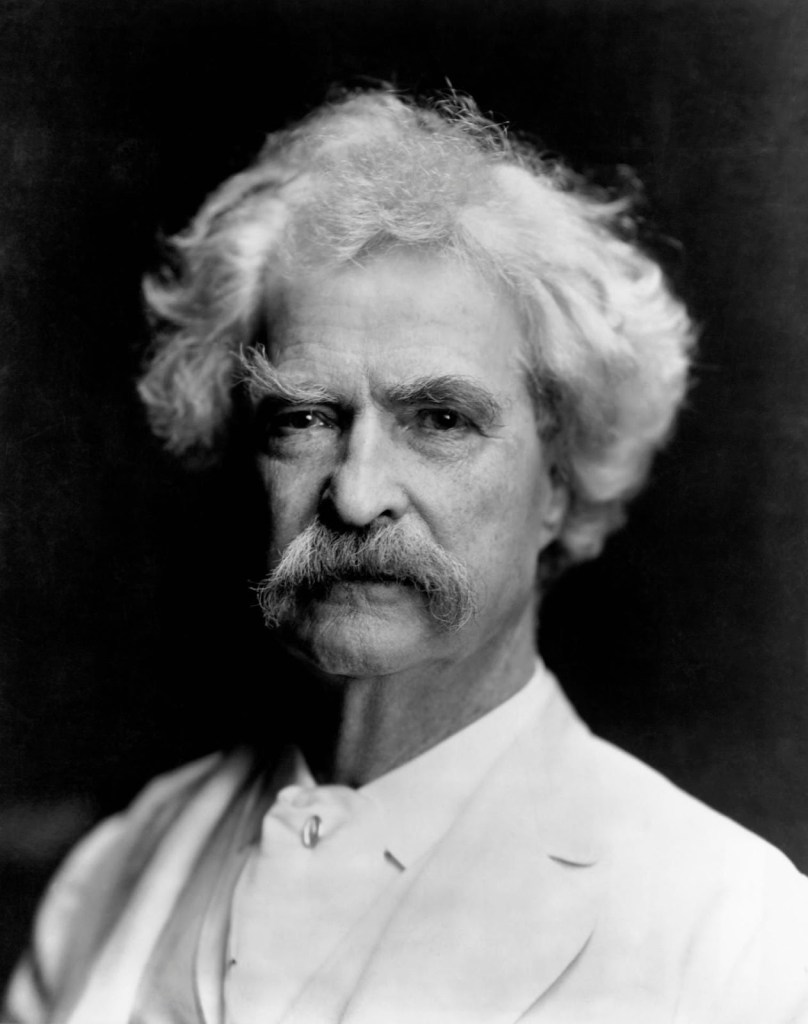
MARK TWAIN
Mark Twain was born in 1835 in the year when Haley’s Comet could be seen from Earth, and fulfilling his own death prophecy, he died in 1910, the next time the comet cycled near the Earth, 76 years later.
The Museum of Modern Art in New York City hung Henri Matisse’s painting Le Bateau upside down for 47 days before an alert art student noticed the error.
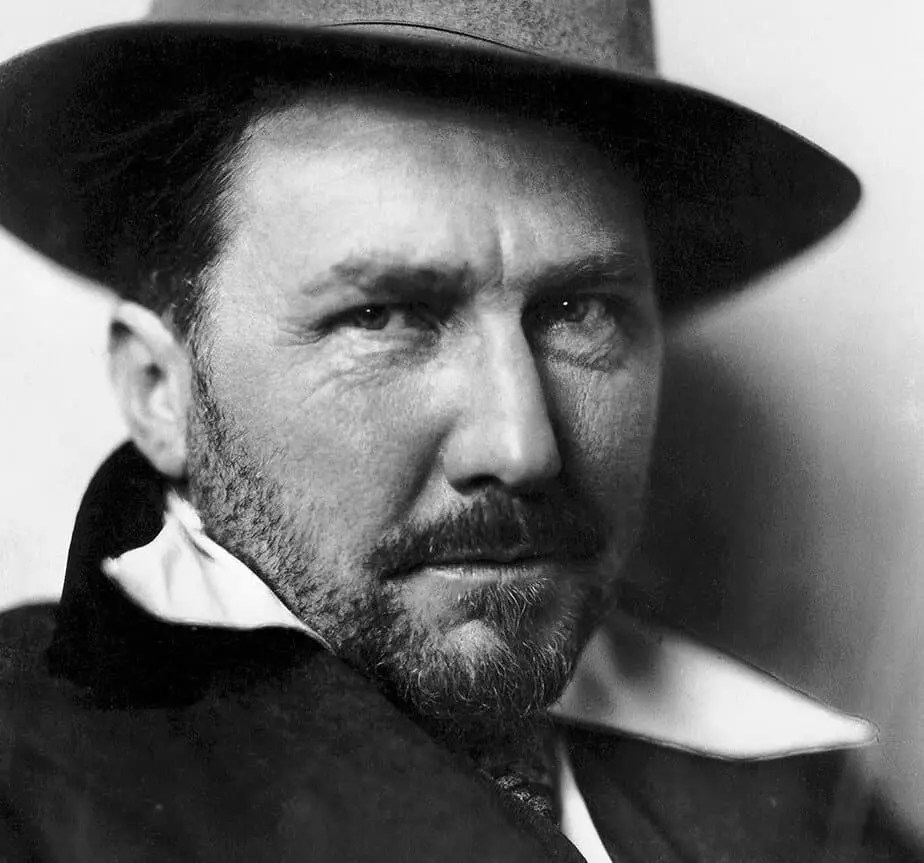
Poet Ezra Pound wrote The Pisan Cantos while imprisoned in a U.S. army camp in Pisa, Italy. He had been arrested for treason because he had broadcasted Fascist propaganda from Italy during World War II. Eventually judged insane, Pound spent 12 years in a Washington D.C. mental hospital before finally returning to Italy.
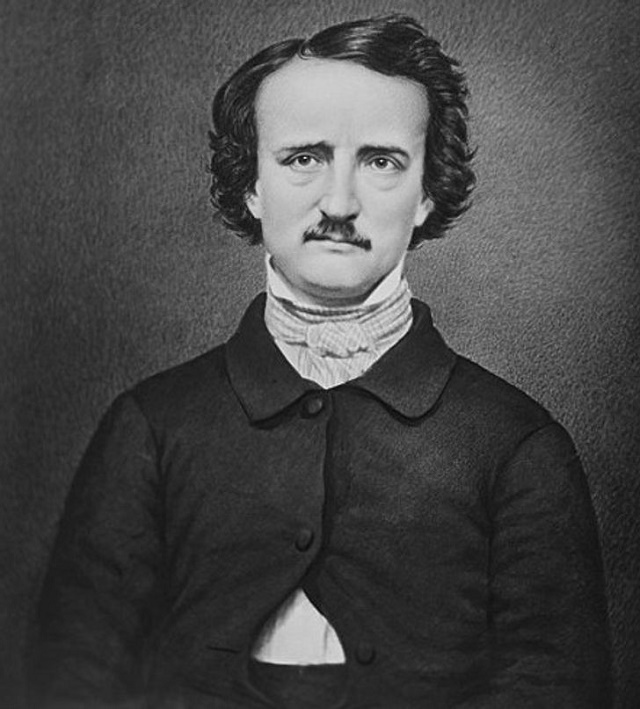
Novelist Edgar Allan Poe was once a student at the U.S. Military Academy at West Point. Poe flunked out in a particularly spectacular way. An order came for all cadets to show up for a full-dress parade “wearing white belt and gloves, under arms.” He followed the order all too literally, appearing wearing nothing but a belt and carrying his gloves under his naked arms.
EZRA POUND
Robert Lewis Stevenson (1850-1894) wrote Dr. Jekyll and Mr. Hyde, a book of 60,000 words, during a six-day cocaine binge. He was also reported to have been suffering from tuberculosis at the time.
British writers Aldous Huxley and C.S. Lewis both died on November 22nd, 1963, the day of John Kennedy’s assassination.
American author Norman Mailer once stabbed his wife and then wrote a novel about it called An American Dream.
Both William Shakespeare and Miguel de Cervantes, who was considered by some to be Shakespeare’s literary equivalent, died on the same day: April 23, 1616.
Now that the new year has begun and the obligatory resolutions have been posted, I thought it would be nice to return to one of the mainstays of this blog, LIMERICKS! I have a large and varied collection but today I’ll be reaching way back to 1979 for some inspiration. I hope you enjoy them.
There are times that self-reflection can be a dangerous and disappointing endeavor. As you get older you will tend to spend a great deal of time reviewing your life. If you’re a truthful person (at least to yourself) you may discover a number of things that aren’t all that wonderful. I thought for most of my life that I was quite the romantic. I was never going to be a Don Juan, but I thought I was able to hold my own in that department. I’ve finally came to the realization that I may have been mistaken. After all my years of reading, writing, and talking with thousands of people, it finally became clear that I was somewhat lacking in that area. Today’s post is a short collection of poetry by some well-known people whose romantic writings put mine to shame.
By Franz Kafka, “From A Letter to Milena Jesenska”
I am just walking around here between
the line (of my letter), under the light
of your eyes, in the breath of your
mouth as in a beautiful happy day.
❤️❤️❤️
By Lorrie Moore, 1957
Need: Something to lift you from your boots
out into the sky, something to make you like
little things again, to whirl around the
curves of your ears and muss up your hair
and call you every day.
❤️❤️❤️
By Elizabeth Jennings, 1916, from “Absence”.
It was because the place was just the same
that made your absence seem a savage force.
For under all the gentleness there came
an earthquake tremor: fountains, birds
and grass were shaken by my thinking
of your name.
❤️❤️❤️
By Ralph Waldo Emerson, from “Thine Eyes Still Shined.”
Don’t get me wrong, I don’t really dislike Christmas, but I certainly dislike the never-ending and relentless commercialization of what is supposed to be a religious celebration. I have to credit Amazon for doubling down on the holidays like never before because they’ve made it entirely too easy for people to overspend which in turn requires me to discipline myself like never before. Just too many gadgets, too many commercials and an endless supply of scammers who may be the hardest workers of all during the holidays. For every email I get from friends and family members, I get 100 from scammers and spammers. I’ve slowly been turned into a paranoid person like never before. It feels good to have the holiday over so I can get back to what I call normal (and I use that term loosely).
The post today will be taking a sharp left turn from the holidays to celebrate three things I love: poetry, young children, and Winter. Here are a few samples of great poetry by a few up-and-coming young poets.