As a human being we all have likes and dislikes. I like computers, science fiction, books and especially really well-done sarcasm. I’ve posted many times about sarcasm, and I’ve listed all of the reasons why I’ve used it over the years and how it has benefited my life. I’m going to share with you some examples of sarcasm which might help clarify things and possibly help you to better understand it. Here we go . . .
ENLIGHTENMENT is a deeper, more transcendent understanding of life that usually hits about a quarter of a second before you die.
EQUALITY is the noble principle of fairness and equal representation for all, as evidenced on television by the fact that Hispanic people get to play all the domestics, African Americans get to play all the gang bangers, and Asians get to play all the convenience store owners.
EXECUTIVE is a distinction given to certain bathrooms, denoting that those allowed into them are, unlike the rest of us, able to produce defecation that smells like fragrant fields of flowers.
EXTREME is often used as a preface to imply that everything from your energy bar to your facial tissue is that much more kick-ass.
FAMILY is a group of people you spend eighteen years having dinner with every night before realizing you have plenty of better things to do.
FEMALE is a person whose ability to generate human life pisses men off to such an extent that they decided to pay them anywhere from 5-25% less for doing the same job they do.
INTIMIDATION is using fear to browbeat or coerce. A tactic often employed by Marine boot camp drill instructors, Mafia enforcers, and people trying to sell you a quality preowned Kia.
LEATHER is a type of material that when worn as a jacket helps even a bad-ass biker look like a member of the Village People.
SOCIAL NETWORKINGis a way of imagining that you still have social skills and can network even though you are surgically attached to your computer and never leave your house.
SHAME is the realization that nobody else thinks the thing you were caught doing was as wholesome as you thought it was.
There you have it, a few prime examples of what sarcasm really is. Here’s a challenge for you, write a paragraph full of sarcasm and then read and explain it to the person who you are in a relationship with. It will undoubtably be a real learning experience for you both.
Here’s something I’m often called but trust me, it isn’t Sarcasm.
GEEK
(Either someone who bites the heads off chickens or anyone who is inordinately obsessed by a particular area of interest such as computers, science fiction, books, and sarcasm)
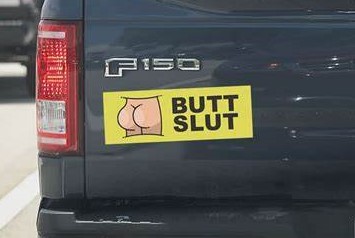
I went out early this morning to do a little food shopping and I noticed something that’s been bugging me for a while now. It seems to me that people these days are just criminally boring. One of the few pleasures that I’ve had over the years has been locating and reading funny bumper stickers. Those types of bumper stickers are damn hard to find anymore and I’m not sure why. I guess we can thank the WOKE generation for all of those good influences (that was sarcasm). The only thing you see these days are decals on their rear windows telling the entire world how many kids they have, what pets they have, what sports they like, and what schools they attend. It’s like a shopping list for perverts and pedophiles.
One of my favorite things when I purchased a new car was to always find just the right bumper sticker. Many years ago, I purchased a cute little orange Gremlin. It was a cool little car, and I immediately chose an appropriate bumper sticker that said, “Honk If Your Horny.” I received lots of comments from a variety of people and it was always good for a chuckle or two. I once loaned that car to my sixty-five-year-old very Catholic mother for her weekend shopping trip to Pittsburgh. When she got home, she couldn’t wait to tell me how friendly the people in Pittsburgh were because they were honking and waving to her wherever she went. I didn’t have the heart to tell her about the bumper sticker, but she eventually found out. Funny, she never asked to borrow that car again.
I just never see those interesting kind of bumper stickers anymore. Here are a few samples of bumper stickers that are still out there but they’re few and far between. Most drivers these days are deathly afraid of offending someone. So, with that being said, here are a few you might enjoy but be careful about who you show them to, they might get offended.
I’m looking for true love, but I’ll settle for cheap sex.
Ask me if I care.
Good girls go to heaven. Bad girls go everywhere.
Love is a four-letter word.
If your phone doesn’t ring, it’s me.
See Dick drink. See Dick drive. See Dick die. Don’t be a dead Dick.
Nobody’s ugly after 2 A.M.
Fight Crime. Shoot Back.
Ask me. I might.
It is as bad as you think, and yes, they are out to get you.
Seventy percent of Swedish women claim to have participated in a threesome.
Every year more than 11,000 Americans hurt themselves trying out bizarre sexual positions.
The average person spends two weeks of their life kissing.
Forty-six percent of women say a good night’s sleep is better than sex.
Elvis Presley called his penis “Little Elvis.”
The sperm count of American men is down thirty percent from thirty years ago.
Americans spend more money each year at strip clubs than that all the theaters and classical concert halls in the country combined.
In ancient Greece and Rome dildos were made out of animal horns, ivory, gold, silver, and even glass.
Only thirty-one percent of men admit to looking at other women when in the company of their spouse or girlfriend. Their partners say the figure is actually closer to sixty-four percent.
In ancient Rome, men found guilty of rape had their testicles crushed between two stones as a punishment.
And here’s one of my all-time favorite sexual facts: Four popes have died while participating in sexual acts.
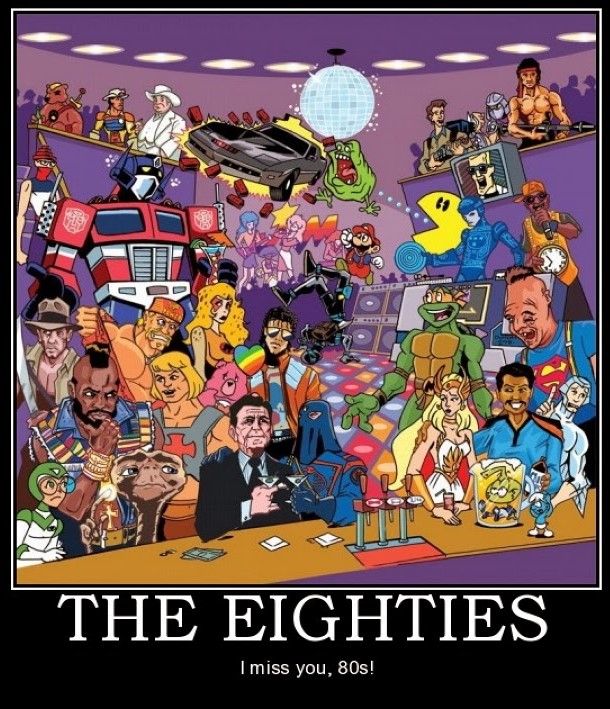
I was perusing through my library this morning when I accidentally tripped and fell back into the 1980’s once again. It always amazes me just how different the sense of humor in the 1980’s compares to now. With that thought in mind I hope you enjoy these little pearls of humor. Cmon, yuck it up a little.
What’s the difference between a gynecologist and a proctologist? Their point of view.
What’s the difference between an oral thermometer and a rectal thermometer? The taste.
Why in the traditional wedding picture is the groom in a chair and the bride is standing? Because he’s too tired to get up, and she’s too sore to sit down!
What’s worse than picking up the soap in an Army shower? Playing leapfrog in the Greek Navy.
How many lesbians does it take to screw in a lightbulb? Four. One to screw it in, and three to discuss how it’s so much more gratifying than with a man!
What does the sign inside of whorehouse say? “No smoking! Use a lubricant!”
What’s a loud wet dream? A snorgasm!
What happens if a young couple mixes up their Vaseline and putty? All their windows fall out!
What’s the easiest way to get a date with a “10”? Ask out two “threes” and a “four!”
What do you get when you cross a donkey with a jar of peanut butter? A piece of ass that sticks to the roof of your mouth!
I’m trying desperately to remain cool here in my man-cave. Our house is not airconditioned so needless to say I’ve been spending most of my time in my cave which is so much cooler than the upper floors. I’ve located fans all around to help keep my computer system from overheating and it also helps to have a fridge nearby filled with cold beer, chilled wine, and icy cold water. I’ll remain here until the weather breaks or until hell freezes over, whichever comes first.
So, let me think. What could possibly make a hot and steamy day better? Hmm! Raunchy limericks immediately come to mind, and I intend to share a few with you.
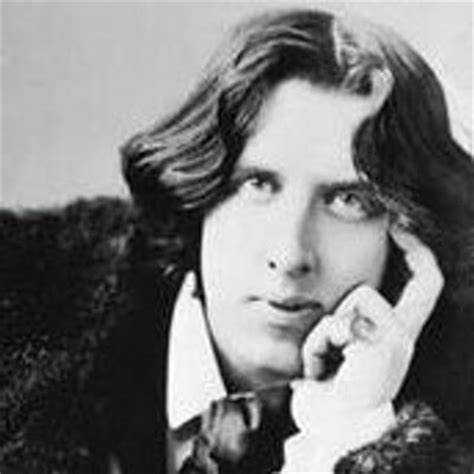
Oscar Wilde passed away in Paris in 1900. He spent the last few years of his life penniless and eventually died of neglect. He was a master playwright, poet and intellectual who was well known for his thousands of epigrams. It seems to me he would have been much more successful if he’d been born in the 20th or 21st century. To experience his wit and knowledge on an open forum talk show would have been absolutely amazing. Today I’ll post a few of my all-time favorites of his epigrams. I hope you enjoy them as much as I have over the years.
No great artist ever sees things as they really are; if he did, he would cease to be an artist.
Never trust a woman who tells you her real age; a woman who tells you that will tell you anything.
The proper basis for a marriage is mutual misunderstanding.
Men marry because they are tired, women because they are curious; both are disappointed.
Education is a wonderful thing, provided you always remember that nothing worth knowing can ever be taught.
We are all in the gutter, but some of us are looking at the stars.
Consistency is the last refuge of the unimaginative.
A cynic is a man who knows the price of everything but the value of nothing.
The old believe everything, the middle-aged suspect everything, and the young know everything.
To regain my youth, I would do anything in the world, except take exercise, get up early, or become respectable.
*****
Here is one of my favorite quotes of his and it is partially responsible for the creation of this blog.
“It is a very sad thing that nowadays there is so little useless information around.”
Since it’s the Fourth of July I assume everyone is celebrating. I just wonder what exactly it is that they are actually celebrating. Some say it’s for the nation’s birthday, but I think in most cases that’s disingenuous. I celebrate this holiday with respect for the individuals who were responsible for the creation and continuing protection of America. That’s the extent of my feelings on the matter So . . .
HAPPY FOURTH OF JULY!
I think it’s time to turn over the celebration to some worthy children and their poetry. Anything non-political is always the way to go for me. Poetry is always interesting, especially the work of younger children whose approach is often simple and powerful. Let’s go . . .
Written By Stefan Martul, Age 7, New Zealand
I feel drops of rain,
And it goes;SPLISH! SPLOSH!
On my head,
And sometimes it goes; SPLASH! BANG! CRASH!
on my coconut.
📝📝📝
Written by Hannah Hodgins, Age 11, United States
THE SACRED CLOUDS
The clouds are stuck and scared to move
For fear the trees might pinch them
✍🏻✍🏻✍🏻
Written by Geeta Mohanty, Age 13, India
PEARLS ON THE GRASS
After the beautiful rain,
The rocks shine under the sun,
Like the droplets on the cobweb
Amongst the green, green grass.
✒️✒️✒️
Written by V. Cokeham, Age 10, England
There is an umbrella
In the sky,
It must be raining
In Heaven
I have one prayer to say to God
Don’t let it rain tomorrow.
*****
“The world is never the same once a good poem has been added to it.”
I’ve always thought of myself as quite the romantic but unfortunately there weren’t many women who agreed. All you really can do is accept your failings and keep on trying. I admit that after hearing ‘you’re not very romantic” a dozen or more times I finally got the message. Unfortunately, I never seemed to get it right and after discussions with other men I discovered it was quite possible that I wasn’t the entire problem. I continued to stumble along like a kid in a candy store with no pennies in his pocket. These limericks are for all of those ladies (and I use the term loosely) that didn’t appreciate my hundreds of romantic moves. These beautiful poems are a little dated, but they all have important information concerning men and women involved in “Little Romances”.
I love trivia that is unusual and odd. So today I’ll list a few items from one of the top three areas most requested from readers? SEX as always leads the list so for today, I’ll just eliminate FOOD & LIMERICKS. Here’s everything you need to know about SEX (LOL).
A recent survey revealed that 25% of Swedish women have had sex with more than 50 men.
The average sexually active woman has sex 83 times per year.
Sex burns off 360 calories an hour.
The heart beats faster during a brisk walk or a good argument then it does during sexual intercourse.
America’s first manufactured condoms appeared in 1870 and were made of vulcanized rubber. They were thick, insensitive, and intended to be reused.
Men are four times more likely to sleep in the nude than women.
One in every 300 births in the United States occurs in a vehicle.
11% of women and 5% of men claimed never to have masturbated.
Being retired has had one advantage I never bargained on and that was “streaming”. I retired in 2008 and “streaming” hadn’t really come into its own just yet. Today I’m even more hooked on television than ever before due in part to another new term of the 21st century, “bingeing.” I’ve watched hundreds of newly produced shows from Netflix and others as well as thousands of the old shows. I rediscovered just how much I truly disliked most of them back in the day. I’ve now gotten to the point where I’ve seen all I want to see of most of the more familiar streaming services and watching all those old shows is just pure torture. I really don’t need to see a once young, buxom and sexy Suzanne Somers romping around or reruns of All in the Family. The attraction there is still watching Sally Struthers strutting her stuff before a few of her things (two in particular) had begun to sag. I’ve been spending more and more of my time reading my Kindle or rummaging through my library to read actual books. I decided today’s trivia facts about the Cinema were more than a little appropriate for all you cinephiles out there.
What was the name of the mechanical shark in the 1975 smash hit Jaws? Bruce
Robert Redford was paid $6 million for his role in the 1985 film Out of Africa. How much was leading lady Meryl Streep paid? She received $3 million.
At an MGM option in 1970, two items went for the top price of $1500. One was the full-size boat used in the musical Showboat. What was the other? Judy Garland’s size 4 1/2 red shoes from the Wizard of Oz.
Who coined the phrase “cameo role” to describe the appearance of a top movie star in a bit part? Showmen Mike Todd, when he produced the Oscar-winning Around the World in 80 days in 1955.
OMG – YUM!!
What two tough guy actors turned down the role of the avenging “Man with No Name” in Sergio Leone’s spaghetti western A Fistful of Dollars before Clint Eastwood was offered the part? James Coburn and Charles Bronson. Henry Fonda was the first choice, but he was too expensive.
In 1980, who were the Top 10 box office stars in Hollywood, according to the nation’s film exhibitor? From 1 to 10: Bert Reynolds, Robert Redford, Clint Eastwood, Jane Fonda, Dustin Hoffman, John Travolta, Sally Field, Sissy Spacek, Barbra Streisand and Steve Martin.
Why was popcorn not permitted in most movie theaters in the 1920’s? It was deemed to be too noisy.
How old was actor Jeff Bridges when he made his screen debut? Four months. He appeared as a crying baby in the 1950’s film The Company She Keeps.