Archive for the ‘History’ Category
I always make a point of searching out odd facts from as many sources as possible. Today’s list is what this blog is really all about, totally useless information and totally useless statistics. Some are humorous and some are silly but never doubt my ability to come up with useless information that has absolutely no value whatsoever.
- Thirty-nine percent of women who think their legs are fat still wear short skirts.
- In seventy-five percent of American households, the women manage the money and pay the bills.
- If the population of China began walking past you in single file, the line would never end because of the rate of reproduction.
- There is a lawsuit filed every thirty seconds in the United States.
- Approximately 30,000 Americans are injured by toilets every year.
- Forty-five percent of cat owners buy holiday gifts for their pet.
- A four-year-old child asks an average of 437 questions a day.
- The average American spends eight years of his life watching television.
- The average human produces 50,000 pints of spit in a lifetime – the equivalent of two small swimming pools.
- The average person over the age of 50 will have spent a year of their life looking for lost or mislaid items.
“I think about this fact every time I eat a gummy.”
The Declaration of Independence was written on hemp paper.
🥇🥇🥇
“On the whole, I’d rather be in Philadelphia.”
(The last words of W.C. Fields)
It’s a slow day here in Maine, it’s raining, it’s gray, and I need something to make me smile. I decided to share some of those things with you. Enjoy!
- A couple just got married, and on the night of their honeymoon before making passionate love, the wife tells the husband, “Please be gentle, I’m still a virgin.” The husband, being shocked, replies, “How is this possible? You’ve been married three times before.” The wife responds, “Well my first husband was a gynecologist and all he wanted to do was look at it. My second husband was a psychiatrist and all he wanted to do was talk about it. Finally, my third husband was a stamp collector and all he wanted to do was . . . Oh, do I ever miss him!
- An old man and an old lady are getting ready for bed one night when all of a sudden, the woman bursts out of the bathroom, flings open her robe and yells, “SUPER PUSSY!” The old man says, “I’ll just have the soup.”
- The old man went into the confessional and told the priest, “Father, I’m 81 years old and married with six children and 13 grandchildren. Last night I had an affair and made love to 2 18-year-old girls. Twice!” “I see,” said the priest. “When was the last time you were in confession?” “Never”, Father,” replied the old man, “I’m Jewish.” The priest asked, “So why are you telling me about it?” The man answered, “Hell, I’m telling absolutely everyone!”
- Thor, the God of Thunder, assumes mortal form, comes down to earth on a Friday night and goes to a singles bar. He ends up going home with a beautiful woman and they spend the weekend in her place making passionate love, over and over again. Come Monday morning, Thor decides to reveal his true identity, saying, “I am Thor!” The woman looks at him and replies, “”Your thor! I’m so thor I can hardly pith.”
Q. What doesn’t belong in this list: meat, eggs, wife, blow job?
A. Blow job: You can beat your meat, eggs or wife, but you can’t beat a blow job.
ARE YOU SMILING YET?
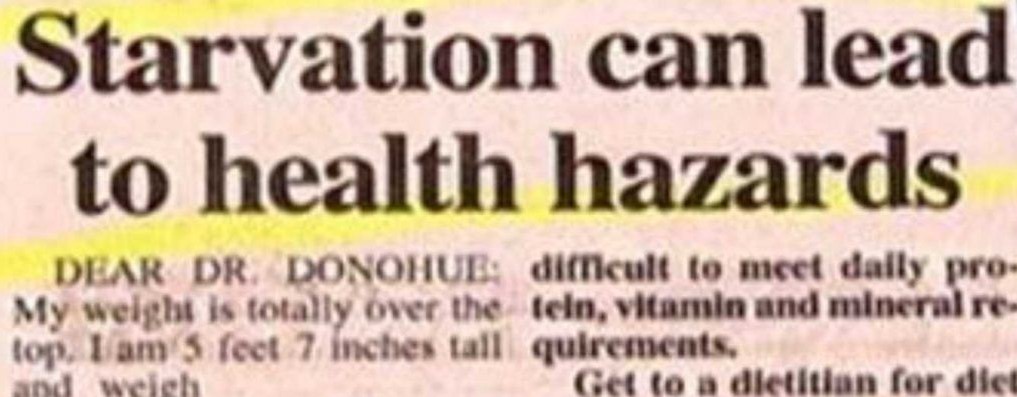
Is there anyone out there who doesn’t think the media is a problem these days? I do miss the days of reading newspapers because there were so many inaccuracies and misstatements, it was fun just to search them out and have a laugh or two. Now if we want to read a newspaper you got to go online and sign up for their website, fill out a form with all of your information, and agree to accept all the crappy spam they decide to send you. Then they can and will sell your information to damn near anyone. In the past I’ve made a lot of fun of the written media only because there’s so much information out there that’s worth a laugh or three. Apparently, the worst job you can have in written media is being an editor. It’s also apparent from the information I’ve been reading that if they have editors, they aren’t all that bright. Here’s a short selection of headlines from newspapers and I cannot believe any alleged editors were doing their job. Here we go . . .
- Statistics Show That Mortality Increases Perceptively in the Military During Wartime What editor in his right mind let this one slip through?
- Two Sisters Reunited After 18 Years in Checkout Counter Unbelievable!!!
- Safety Experts Say School Bus Passengers Should Be Belted We live in a time of geniuses.
- NJ Judge to Rule on Nude Beach I wonder if he’s required to wear a robe for that.
- Never Withhold Herpes from Loved One There some good dating advice . . . NOT!
- If Strike Isn’t Settled Quickly It May Last a While Another Rhodes scholar.
- Smokers Are Productive, But Death Cuts Efficiency Thanks to the tobacco lobby for this one.
- Dirty-Air Cities Far Deadlier than Clean Ones, Study Shows Another genius observation.
- Fish Lurk in Streams This might be great for a Bass Pro Shop logo.
GOD HELP US ALL
Do you like hot, humid, and sticky weather? Do you really and truly love having everything you own covered in green pollen? I’ve spent most of my life dreading the arrival of Spring and Summer and hay fever season. I have no known allergies to food or medicines but the one allergy I do have is the worst, Pollen. I spent many summers playing baseball in all kinds of weather and suffered through pollen attacks every year. Over the years doctors have tried every medicine known to man to help me with this allergy with absolutely no positive results.
Just as an example, I cut the grass yesterday, and I was partially incapacitated for a couple hours after I was done because I couldn’t catch my breath, and I couldn’t stop sneezing. I’m sure there are hundreds of thousands of people out there with the same allergy and they have my sympathies because no matter what you’re told nobody has a clue on how to properly deal with it. I guess that’s why the company that makes Benadryl has done so well through the years. I have a large jar of Benadryl in my nightstand and for about two weeks every Spring I eat them like jellybeans (and sleep a lot).
The only good thing that comes out of this allergy is my ability to sneeze 20-25 times a day. This might sound a little weird, but I love sneezing. I had a dear friend explain to me many years ago that one sneeze equals approximately 1/8 of an orgasm. So, if I sneeze 24 times a day I get three free orgasms, no charge. You know what they say, when life gives you free orgasms, smile and enjoy them. Here are a few things you might also want to know about sneezing . . .
- The Greeks believed if you sneeze to the left, bad luck was in your future. If you turn to the right during the sneeze, you will prosper.
- Ancient people believed a sneeze could give you an advantage in an argument. If your opposer believed evil spirits escaped the body during a sneeze, you could easily ‘spook‘ him by sneezing near him. This would throw him off guard and help you win the argument.
- Good luck is in your future if you sneeze when going to bed. But don’t sneeze on your partner. Otherwise, good luck or not, you will not have a partner for long.
- If you feel a sneeze coming on, but you don’t sneeze, watch out! That means you are going to lose someone or something dear to you.
- There are some ‘cures’ for sneezing. Press your upper lip hard and recite the alphabet backwards. No particular alphabet is recommended.
- You can stop a sneeze just by pressing on your lip, just below your nostrils. That apparently deactivates the sneeze mechanism.
- Every culture has the custom of invoking some god or spirit after a sneeze. The “God Bless You” originated with the Christians. But it’s a carryover from the Romans who took to invoking Jupiter to preserve them every time they sneezed.
- A Zulu child is taught to say “Grow.” To the Zulus, sneezing is a sign of good health. In Persian culture, everyone in the presence of someone who sneezes prays. The Arabs avoid sneezing entirely by washing out their noses with water each evening.
- Sneezes have even inspired a rhyme. It even matters what day of the week you sneeze. Here’s the rules . . .
Sneeze on Monday, sneeze for danger.
Sneeze on Tuesday, kiss a stranger.
Sneeze on Wednesday, receive a letter.
Sneeze on Thursday, receive something better.
Sneeze on Friday, sneeze for sorrow.
Sneeze on Saturday, see your lover tomorrow.
Sneeze on Sunday, your safety seat,
Or the Devil will have you, the rest of the week.
MAY BUDDHA BLESS YOU
- Seventy percent of Swedish women claim to have participated in a threesome.
- Every year more than 11,000 Americans hurt themselves trying out bizarre sexual positions.
- The average person spends two weeks of their life kissing.
- Forty-six percent of women say a good night’s sleep is better than sex.
- Elvis Presley called his penis “Little Elvis.”
- The sperm count of American men is down thirty percent from thirty years ago.
- Americans spend more money each year at strip clubs than that all the theaters and classical concert halls in the country combined.
- In ancient Greece and Rome dildos were made out of animal horns, ivory, gold, silver, and even glass.
- Only thirty-one percent of men admit to looking at other women when in the company of their spouse or girlfriend. Their partners say the figure is actually closer to sixty-four percent.
- In ancient Rome, men found guilty of rape had their testicles crushed between two stones as a punishment.
And here’s one of my all-time favorite sexual facts: Four popes have died while participating in sexual acts.
(and)
I was perusing through my library this morning when I accidentally tripped and fell back into the 1980’s once again. It always amazes me just how different the sense of humor in the 1980’s compares to now. With that thought in mind I hope you enjoy these little pearls of humor. Cmon, yuck it up a little.
What’s the difference between a gynecologist and a proctologist? Their point of view.
What’s the difference between an oral thermometer and a rectal thermometer? The taste.
Why in the traditional wedding picture is the groom in a chair and the bride is standing? Because he’s too tired to get up, and she’s too sore to sit down!
What’s worse than picking up the soap in an Army shower? Playing leapfrog in the Greek Navy.
How many lesbians does it take to screw in a lightbulb? Four. One to screw it in, and three to discuss how it’s so much more gratifying than with a man!
What does the sign inside of whorehouse say? “No smoking! Use a lubricant!”
What’s a loud wet dream? A snorgasm!
What happens if a young couple mixes up their Vaseline and putty? All their windows fall out!
What’s the easiest way to get a date with a “10”? Ask out two “threes” and a “four!”
What do you get when you cross a donkey with a jar of peanut butter? A piece of ass that sticks to the roof of your mouth!
GIRLS STILL WANT TO HAVE FUN!
I come from a long line of dog lovers. My parents always had multiple dogs for many years. My father ran a training kennel for beagles and our home and yard was always filled with twenty to thirty puppies. I spent my formative years feeding, grooming, and shoveling many wheelbarrows loads of 💩💩. If I was being punished for any reason (and there were many), I was forced to clean the kennels in my bare feet during a rainstorm. Yes, you guessed it, I am not a dog person. I love most dogs but the ones I like best are those that are owned by someone else. I love playing with dogs and they love playing with me but then I get to go home, and they don’t. I’m sure some of you dog lovers out there will be moaning and groaning over this post but the truth is the truth. I’m a decades long cat lover. To help you get through this post here are a few “dog” jokes for all of you “dog” people and I hope they make you smile.
- A dog walks into a bar, he jumps up on the barstool and says to the bartender, “Hey, today’s my birthday. Do I get a free drink?” The bartender replies, “Sure, the toilet is around the corner.”
Q. What’s a dog’s favorite wine? A. “Please, please, please throw my ball”!
- A great Dane walks into a bar and calls to the bartender, “I’ll have a Scotch and . . . . . . . . water.” The bartender looks at the Dane and says, “What’s with the long pause?” “These?” the dog asks, looking down at his feet, “I’ve had them all my life.”
Dog Haiku’s
My human is home!
Joy oozes from me
Onto the kitchen floor.
🐶🐶🐶
How do I love thee?
The ways are as infinite
As my hairs on the rug.
🐶🐶🐶
I feel it in my fur
The seasons of the fleas
Is upon us again.
BOW WOW DAMMIT!
Being a former police officer has gone a long way to make me skeptical of virtually every person I talk to. I’ve mellowed over the years but in my dealings with people I’m still very careful. I decided recently to clean out some old files from cabinets in the man cave and a lot of that material was collected during my years as a cop. The following items are actual statements made to traffic accident investigators by drivers who caused the accidents. These are all actual statements made on actual police reports by actual lunatic drivers. Read them, enjoy them, and please don’t use them if you ever have an accident.
- “A pedestrian hit me and went under my car”.
- “The gentleman behind me struck me on the backside. He then went to rest in a bush with just his rear end showing.”
- “I had been shopping for plants all day and was on my way home. As I reached an intersection a hedge sprang up, obscuring my vision. I did not see the other car.”
- “I was taking my canary to the animal hospital. It got loose in the car and flew out the window. The next thing I saw was his rear end and there was a crash.”
- “I saw the slow moving, sad faced old gentleman as he bounced off the hood of my car.”
- “An invisible car came out of nowhere, struck my vehicle and vanished.”
- “The other car attempted to cut in front of me, so I with my right front bumper removed his left rear taillight.”
- “In my attempt to kill a fly, I drove into a telephone pole.”
- “I pulled away from the side of the road glanced at my mother-in-law and headed over the embankment.”
- “The guy was all over the road. I had to swerve a number of times before I hit him.”
- “I thought I could squeeze between two trucks when my car became smashed.”
🚓🚔🚓
BE CAREFUL OUT THERE
I think today we should get a little more intellectual than the run-of-the-mill limericks and off-color jokes. After blogging for more than fifteen years I’ve become a true lover of words. Another plus about words is that they come together to form books, lots and lots of books. Every year when I make my New Year’s resolutions, I normally have one requiring that I read at least one hundred books for the year. I have never ever not accomplished that resolution. The only thing I enjoy more than writing words is reading those written by others, it’s just the coolest thing ever. So today this post will be a short trivia lesson about words, language, and books. I hope you find them interesting . . .
- One of the greatest orators of all time – Demosthenes was once a stutterer who stubbornly trained himself out of it, reportedly by putting pebbles in his mouth and practicing speaking aloud.
- The Polish actress Helena Modjeska was popular with audiences for her realistic and emotional style of acting. She once gave a dramatic reading in her native tongue at a dinner party of people who did know the Polish language, and her listeners were in tears when she finished. It turned out she had merely recited the Polish alphabet.
- The French philosopher Rene Descartes sarcastically speculated that monkeys and apes actually have the ability to speak but choose not to.
- The inhabitants of a slum called Trastevere, near Rome, speak a dialect all their own. They claim to have more than 2000 vulgar words to describe human genitalia.
- The phrase “What a guy!” is a cry of derision in Great Britain and a cry of adoration in the United States.
- The average daily issue of the Congressional Record carries more than 4 million words – the approximate equivalent of 20 long novels. It is printed and published overnight.
- A forty-five-letter word connoting a lung disease, pneumonoultramicroscopicsilicovolcanoconiosis, is the longest word in Webster’s Third New International Dictionary. The longest word in the Oxford English Dictionary means the act of estimating something as worthless- floccipaucinihilipilification, which has twenty-nine letters.
- The Scottish writer Robert Bontine Conningshame Graham, who had won a seat as a Liberal member of Parliament in 1886, was suspended from the House of Commons for having the audacity to use the word “damn” in a public speech.
- The word “ozone” got its name from the Greek ozo, which means “I smell.” It was first officially used in 1840.
- All of the world’s main alphabets have developed from an alphabet invented 3600 years ago in the Middle East and known as the North Semitic Alphabet.
EVERYTHING YOU ALWAY WANTED TO KNOW
(But were afraid to ask)
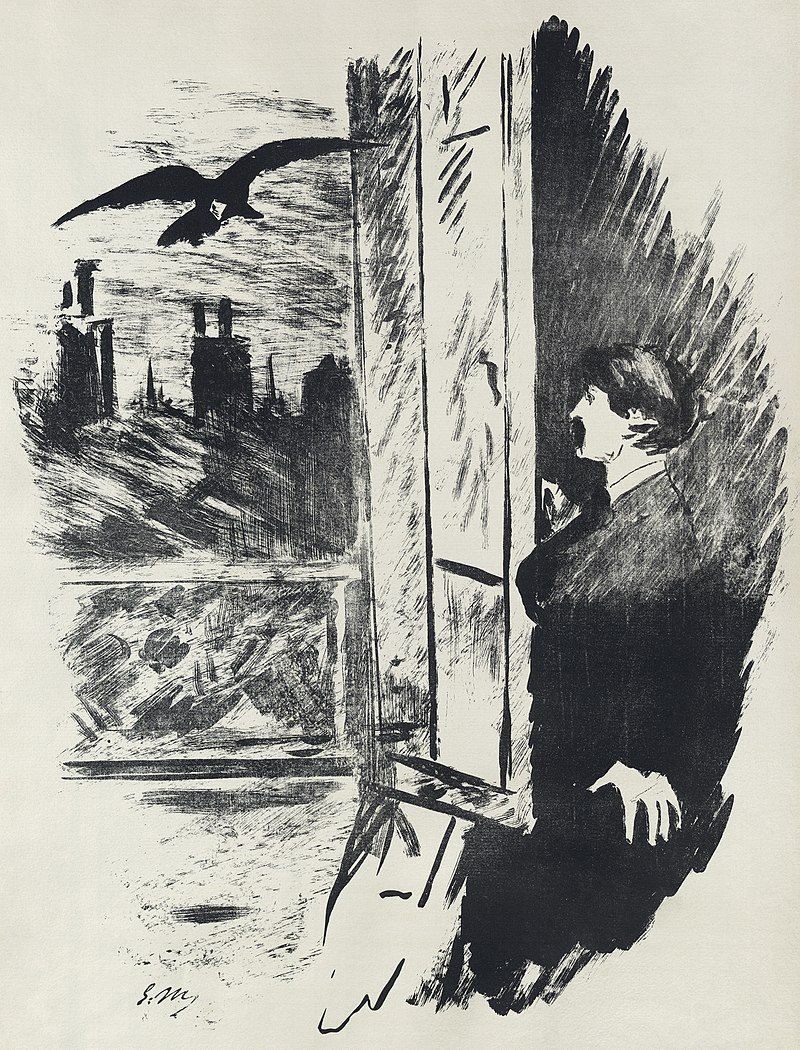
Now that my blog has returned to something close to normal, what better way to start fresh than having a slightly off-color Limerick Alert. I thought I’d start out with this first limerick that hopefully will be appreciated by all of you poets out there. I’m sure you’ll recognize the reference to one of my favorite poets as soon as you see it.
There was a young man from New Haven
Who had an affair with a raven.
He said with a grin
As he wiped off his chin,
“Nevermore!”
😏😏😏
There once was a girl named Mc Goffin
Who was diddled amazingly often.
She was a rogered by scores
Who’d been turned down by whores,
And was finally screwed in her coffin.
😁😁😁
There was a young fellow from Florida
Who liked a friend’s wife, so he borrowed her.
When they got into bed
He cried, “God strike me dead!
This aint a pussy – it’s a corridor!”
😎😎😎
The lady with features cherubic
Was famed for her area pubic.
When they ask her its size
She replied in surprise,
“Are you speaking of square feet, or cubic?”
🥇
E. A. P.